Saturday, March 29, 2008

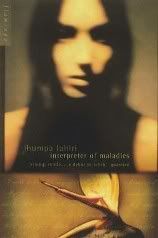
2000: Interpreter of Maladies by Jhumpa Lahiri

Interpreter of Maladies is a collection of nine short stories that all involve Indians – some immigrants in America, some in their homeland. A lot of these stories deal with displacement and isolation, but, needless to say, you don’t need to be Indian, or to be an immigrant, to be able to relate to the emotions they convey. All you need is to have experienced loneliness, loss, longing, intimacy, sorrow or joy in the many ways in which they come – in short, all you need is to be human.

Using a language that is subtle, precise, and disarming in its simplicity, Jhumpa Lahiri writes about unhappy couples, happy ones, affairs, a child’s perception of war, youth and old age, emptiness, satisfaction, frustration, dreams both lost and come true.

Most of these stories really touched me. The first, “A Temporary Matter”, is about a couple whose baby was born dead, and who now have to deal with their grief and with the increasing distance that separates them. When they get a letter warning them that the power will be cut between 8 and 9pm for a week due to some repair work, they begin to use that hour of darkness to tell each other things they had been holding back, and thus to regain some of their lost intimacy. The story ends with revelations that change things forever, and it made me feel such loss on behalf of the characters. It did what the best fiction does – it put me temporarily in the skin of another.

In “Sexy”, a young American woman named Miranda is having an affair with a married Indian man named Dev. We experience all the longing, bittersweetness and ambiguity of her situation along with her, until, when babysitting a young Indian boy, she is told what the word “sexy” means to a child, and consequentially begins to see her relationship in a different light.

“Mrs. Sen's” is a story about homesickness and displacement. Through the perspective of an eleven-year-old boy named Eliot, we witness Mrs Sen’s struggle to adjust to a way of life that is different from everything she has ever known.

The last story, “The Third and Final Continent”, is about growing intimacy and finding a place to call home. The protagonist leaves India for England and then for America. Before going to America, he gets married. The marriage is arranged by his and his bride’s families, and his wife is to join him in American when her papers are ready. In the meantime, he rents a room at Mrs. Croft’s house, and is very surprised to learn that his landlady is 103 years old. It is in the presence of his elderly lady that he and his wife begin to overcome the awkwardness of being two strangers married to each other, and to truly become a couple.

Jhumpa Lahiri is clearly a writer of great perception, and of equally great precision. Nothing in her stories is overstated, and her wording is always exactly right. What really won me over, though, was how superb her characterization is. All her characters are painfully human. Interpreter of Maladies is well worth reading.

Friday, March 28, 2008

Intro: Pulitzer Winners I've Read So Far...


So far, Angle of Repose, by Wallace Stegner, is my favorite read of all time.


It's great to find fellow Pulitzer Prize groupies - these are the Fiction winners I have read so far:

  1. 1925 - So Big (Ferber)
  2. 1939 - The Yearling (Rawlings)
  3. 1940 - The Grapes of Wrath (Steinbeck)
  4. 1947 - All the King’s Men (Warren)
  5. 1958 - A Death in the Family (Agee)
  6. 1961 - To Kill a Mockingbird (Lee)
  7. 1972 - Angle of Repose (Stegner)
  8. 1980 - The Executioner’s Song (Mailer)
  9. 1981 - A Confederacy of Dunces (Toole)
  10. 1982 - Rabbit is Rich (Updike)
  11. 1983 - The Color Purple (Walker)
  12. 1984 - Ironweed (Kennedy)
  13. 1988 - Beloved (Morrison)
  14. 1989 - Breathing Lessons (Tyler)
  15. 1991 - Rabbit at Rest (Updike)
  16. 1994 - The Shipping News (Proulx)
  17. 1995 - The Stone Diaries (Shields)
  18. 1999 - The Hours (Cunningham)
  19. 2002 - Empire Falls (Russo)
  20. 2003 - Middlesex (Eugenides)
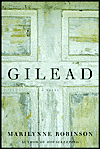
  21. 2005 - Gilead (Robinson)
I'll post my reviews gradually - I'm looking forward to reading the reviews from other readers...

Tuesday, March 11, 2008

Margaret's Introduction & 1972 Angle of Repose by Wallace Stegner

I’m Margaret from BooksPlease blog. I’ve only read a few of the Pulitzer Prize winners, so this is a good opportunity to read some more, without any pressure or deadlines. The prize-winning books I’ve read so far are:

1940 - The Grapes of Wrath, John Steinbeck
1972 - Angle of Repose, Wallace Stegner
1988 – Beloved, Toni Morrison
1995 - The Stone Diaries, Carol Shields
1999 - The Hours, Michael Cunningham
2006 – March, Geraldine Brooks

Apart from Angle of Repose I read these books before I started writing my blog. This is what I wrote about Angle of Repose, which Stegner based on the letters of Mary Hallock Foote.


"This book won the Pullitzer Prize for fiction in 1972. It is the story of Lyman Ward, a wheelchair bound retired historian who is writing his grandparents' life history and also gradually reveals his own story. I now know much more about the early days of the opening up of America's western frontier than I learnt from TV cowbow series and films such as Butch Cassidy and the Sundance Kid etc. The story is of Oliver Ward's struggles with various mining and engineering construction jobs, contrasted with Susan Ward's efforts to support him against great difficulties. This is made more difficult when she compares her life with that of her New York society friend, Augusta.

It's a long book, but completely enthralling. There are long letters from Susan to her friends which I think are taken directly from Mary Foote's own letters and these are such descriptive letters that I could imagine what life was really like at that time and place. My only criticism is that I felt the ending came too quickly and was too compacted. I wanted to know more about Susan and Oliver. It was as though Lyman became too disappointed with how their life turned out, or maybe it was because he was too engrossed in his own problems, his illness and difficulties in his personal life.”

The only other book by Stegner that I’ve read is Crossing To Safety, which is a great book. I wrote about it here.

I read the Grapes of Wrath whilst at school, so I may have to re-read this sometime. The rest I’ve read over the last two years apart from Beloved (which I loved), which I read about 10 years ago. I have a copy of The Color Purple by Alice Walker, so I think I’ll read that first. Depending on which books I can find (borrow) I’d also like to read at least:

1953 The Old Man and the Sea by Ernest Hemingway
1961 - To Kill a Mockingbird by Harper Lee
1994 - The Shipping News by E Annie Proulx

Saturday, March 8, 2008

Bethany's Intro and Progress

I am bethany from B&b ex libris, and am very excited to be joining you all in this project. I am not sure that I will be very fast at this, but that is not the point, is it now? So, I will post below my progress and my goals!

Pulitzer's that I have read already:
2006 - March (Brooks) (finished OCT 2007)
2000 - Interpreter of Maladies (Lahiri) (finished Sept. 2004)
1961 - To Kill a Mockingbird (Lee) (Finished Dec, 1996)
1939 - The Yearling (Rawlings) (?)

Pulitzer's that I own and will be on my reading list:
2005 - Gilead (Robinson)
2001 - The Amazing Adventures of Kavalier & Clay (Chabon)
1999 - The Hours (Cunningham)
1988 - Beloved (Morrison)
1975 - The Killer Angels (Shaara)

1923: One of Ours by Willa Cather

I’ve lived in Nebraska and know well the rolling landscape, the hard-working but easy-going people who farm and ranch the land there. Willa Cather’s prose, as far as I’m concerned, reflects perfectly their characters. That is the first impression that a reader takes away from One of Ours. And its protagonist, Claude Wheeler, reminds me of young people I’ve met there, who love their state and their families, but somehow don’t quite fit in. While Cather was writing about the turn of the 20th century, the story could indeed have taken place over 50 years later.

Claude’s pragmatic father doesn’t see the necessity, for a farmer, of too much education. Thus, Claude has to forego completing his college degree, and forsaking he friends, much different from those at home, he’s made in Lincoln. His mother, a more or less fundamentalist Christian (although the movement itself within Christianity hadn’t yet begun), is quite sensitive to Claude’s moods and aspirations; her emotional pain on behalf of her son is almost physical. Claude, as would be expected of a young man his age, marries—only to have his wife go to China to help her sister. His emotional desolation is nearly complete; he wonders if that’s all there is to life—getting up in the morning, working, going to bed at night. It may satisfy friends his age who ask nothing better than to farm their own land, but Claude longs for something more—what, he’s not sure but something.

Then World War I erupts in Europe. Claude and his mother follow the war through the newspapers and maps they pore over together. When the United States enters the war, Claude enlists—and finds his place in the world.

Cather describes the effect of the war on France and its people. She also writes about little-known facts, such as the toll sickness took of the soldiers on the way over, many dying from pneumonia. She has interesting details about what it was like for the soldiers to live under wartime conditions—bathing in polluted water in shell holes was a nice touch. There is some description—not much—of the fighting but it fits in with her story. Clearly she was more interested in what happened to the people, both French and the Allied soldiers, than she was in the details of the fighting itself.

The last pages break your heart. I think you have to be a stone to be unmoved.

For a relatively short book—371 pages in my edition, One of Ours is beautifully evocative of a time, a place, and a young man’s successful search for himself. One of the best of the early Pulitzer winners.

Friday, March 7, 2008

1922: Alice Adams by Booth Tarkington

Alice Adams is a morality tale about a socially ambitious young woman and her family in a Midwestern city. The family is middle-class, and sliding down in the economic scale. The father has worked in the same job for 20 years and is content. The mother, ambitious for her children, bitterly blames the father for not having made more of himself, for not thinking of his children’s social futures and therefore not having any gumption to do better. Her entire life is focused on her children, especially Alice, being part of upper-class society. The mother is convinced that money and money alone will make the difference and constantly badgers the father to do better.

Alice pours nearly all her energy into making a good “catch”. Quite popular a few years ago, the gentleman callers have vanished. Still, she practices gestures and facial expressions in front of the mirror, works hard at making over clothes (actually, dictating directions to her mother) to keep fashionable, spending all she can on accessories and clothes. She visits a well-to-do friend and basically worms her way into receiving invitations to society events.

Her brother Walter is a bitter young man who hates the situation in which he finds himself, loathes the ‘swells’ that Alice courts so assiduously, and hangs around with a crowd that his mother in particular finds appalling.

A new young man comes to town and is attracted to Alice, who goes all out to land him. But as we see increasingly in her dialogue with him, she misrepresents herself and her family and is terrified of what he will find out from his well-connected society relations.

Meanwhile, her father, goaded beyond endurance by the nagging mother, decides to leave the firm for which he has worked and start a glue factory, using a formula that can be rightly said to belong to his former employer.

The book has a double climax: a dinner party given by the mother for Alice’s young man and the outcome of the father’s business enterprise.

There are no surprises here—in a morality tale, the outcomes are guaranteed. That wouldn’t be a problem if the book were as well written as The Magnificent Ambersons, but in my opinion, it isn’t. The Magnificent Ambersons was a complex story, enriched by Tarkington’s observations on the transformation of a small Midwestern town into and industrialized city and the social changes that accompanied the growth. Alice Adams has a much narrower focus, and while the writing at times is excellent—the description of the dinner party is superb—there is no tension to the story because the reader knows perfectly well how it has to end. Winner of the Pulitzer Prize for 1922, it really suffers by comparison, both in plot, style, and excellence in writing by the previous winner, The Age of Innocence by Edith Wharton. It’s a good read if your goal is to read the Pulitzer winners. Otherwise, I feel it’s not worth the effort.

Tuesday, February 12, 2008

1921: The Age of Innocence by Edith Wharton

The early Pulitzer Prize winners were concerned with documenting and commenting on the effects that rapid social and technological changes had on “society”, whether that of a Midwestern town evolving into a large industrial city or of “old” New York. The most sharply observant, critical, and personal is The Age of Innocence, in which Wharton describes a set of mores governing behavior for the wealthiest families so stultifying that even reading it 85 years later produces claustrophobia and a sense of being unable to breathe.

The protagonist of the book, Newland Archer, is one of the more conscious of his set. At the beginning of the book, as a young man in the early 1870’s, Archer is quite taken up with his own class and wholeheartedly subscribes to “form”, that unwritten code of what is allowed and far more important, NOT allowed in Old New York society. He realizes that these constitute constraints on his actions but accepts them as de rigueur and necessary to the survival of his way of life.

However, he meets an alien who has suddenly appeared in the midst of this hierarchical, rigid society—the beautiful Countess Olenska, a member of one of the most prominent families whom Archer knew as a child, who married a Polish count, and moved to Europe. After an unspecified number of years, she has left her husband and moved back to New York under mysterious and even scandalous circumstances. Being a member of a distinguished family and somehow “foreign”, the Countess Olenska’s behavior baffles society; they alternately rally around and shy away from her depending on which by-law of the social code she has most recently “transgressed”—usually unwittingly.

Archer, engaged and then married to May Welland, one of the most beautiful as well as most unimaginative and uncreative daughters of an Old New York family, falls under the Countess’ spell. She evokes within him a vaguely intuited, dormant but not yet fully suppressed streak of independence and rebellion, a dread of living out the rest of his life in the sterile, iron-clad environment of High Society.

The story centers around Archer’s feeble and ineffectual attempts to transcend the rules and mores of his class and strike out for a life in which he can grow. In one of the more telling quotes:

His whole future seemed suddenly to be unrolled before him; and passing down its endless emptiness he saw the dwindling figure of a man to whom nothing was ever going to happen.

At each critical moment, in which he seems poised to break out, Fate, in the person of May, presents him with a choice between personal freedom and a shot at happiness and duty. Duty, in the form of his refusal to grasp at his own happiness at the expense of others’ pain—and May—win each time. Archer spends the rest of his life conforming to the code of behavior expected of a man of his class; the Countess Olenska moves to Paris. The scenes are underwritten, but in the most chilling prose.

The end of the book is poignant, even heart-rending.

The prose style is quite sharp, even unforgiving, as Wharton, at times in great detail, presents a way of life that worships Form and correct behavior; it is clear that she despises this life. It is a life that is inconceivable to us today, but through near-perfect writing, she makes it real for us, a staggering achievement.

Highly recommended.

1918: His Family

Early 20th century New York City is the setting for His Family. Roger Gale is the head of a well-to-do family of three daughters; all four are very different not only in character but also in the way each embraces or rejects the changes that are occurring so rapidly, particularly as a result of the waves of immigration that crowd the city and change its physical, moral, and social landscape.

Roger, now in his late 50s, is a New Englander who moved to the city as a young man and threw himself into its life. He owns a successful small business. A widower, his life revolves around his three daughters; he views himself as something of their protector and patriarch, even though all three are all of age. He is uncertain about the changes that he sees in New York, a city he loves. He raised his family in a traditional fashion, in a large home he owns. Now, all around him he feels pressed in by the apartment buildings that not only tower over his home but also seem to be populated with hundreds if not thousands of pairs of eyes of stranger, people whom he does not know—not really neighbors in the sense to which he is accustomed.

Edith, his oldest daughter, is married and the mother of 4, expecting a 5th child. She represents in the novel the traditional ways of ‘old’ New York—the pre-immigrant, slower way of life where the wife stayed at home, raised the children, and provided a comfortable, smooth-running home for her husband. Raised in privilege, used to servants, she views the newcomers with disdain, considering them undesirable. At one point in the book, she dismisses the idea of sending them to anything other than private schools for fear that her children will be forced to associate with “them”. She stands for tradition, for what is known and cherished, and all the values, both good and bad, that are associated with a woman’s traditional role in a family.

Deborah, the middle daughter, is of a totally different cut of cloth. A career woman and idealistic reformer, she heads a radically modern (for that day) school, coming into daily and intimate contact with immigrant children and their families. She sees at first hand their struggles and identifies strongly with them. She gives herself tirelessly to her work which is her life. Terrified of marriage and motherhood for fear that she will be then trapped and unable to continue her life’s work, she continually puts off marriage to Allan, a young doctor equally as idealistic as Deborah.

The third daughter, Laura, might as well have arrived from a different galaxy. She is the party girl, the forerunner of the flapper, whose gaiety fills the house and charms each of her family. Suddenly engaged and then married to an up-and-coming wealthy young businessman, Laura is the frivolous one, the grasshopper to Deborah’s and Edith’s hard-working ants.

World War I disrupts this family as it did so many others. Roger’s business falls on hard times, and the family is forced to cope in ways it has never imagined. The changes occurring in the city at large impose themselves on the family in an intimate way. Life changes irrevocably; each of the Gales adapts and grows in accordance with their characters.

This is another novel that really has no plot to speak of, but rather in its own way is a documentary of a white, upper middle-class family caught in overwhelming changes they can neither foresee nor prevent from impacting their lives no matter what their outlook. The story is told from Roger’s point of view, as he observes and reflects on the actions of his family and tries to reconcile it all. It is his book.

Of all the early Pulitzer Prize winners, I found Poole’s writing style the most dated. That doesn’t mean that the book was difficult, but it was slow-going in a way that, for example, The Magnificent Ambersons, published two years later, was not. Still, I found the story interesting, if not absorbing, from a historical perspective, since it documents in such detail the type of changes that were taking place and what was probably a common reaction to them among the more privileged classes. The daughters, although stereotypes, are still interesting figures, because Poole neither judges them nor paints them as all good or all bad; each of their viewpoints has merit. Clearly, though, Poole has the most affinity for Roger, a good man who did his best to raise and nurture his family.

Highly recommended.

1947: All The King's Men

All The King's Men by Robert Penn Warren

All the King’s Men has been touted as the best book written on American politics because of the portrayal of Willie Stark, the politician whose life and career resemble that of Huey Long of Louisiana. But after reading the book, it seems to me that it is much more the story of the personal journey of Jack Burden, one-time reporter and long-time aide to Willie, told by Jack himself as he records the different stages of his personal pain as his relationship with Willie unfolds. There is no question that Willie’s career and evolution from populist to corrupt politician is a vital apart of the book, but more as a subplot and background to what Jack experiences because of his involvement.

What gives power and poignancy to the story is Jack, his family, and his childhood companions: Judge Irwin, Adam and Ann Stanton, his father who abandons the family, and others. In particular, his relationship with Adam and Ann Stanton, which is almost an incestuous triangle, constitutes an insistent background, like a basso continuo, to the public, political events surrounding Willie Stark, elbowing its way into the foreground as the story progresses relentlessly to the powerful and what seems like unavoidable climax. It’s as if a Greek tragedy were taking place in the back country of Louisiana, with the “wooly hats”, the poor country folk on whom Willie built his political empire, serving as the chorus. Jack, as narrator, is able to evaluate Willie’s actions from the point of view of an insider, even though he himself is helpless to influence any of the events.

Warrren’s prose style reflects the fact that he was also a poet. The sentences can be dense and convoluted, making effective use of repetition to convey an image:

Close to the road, a cow would stand knee-deep in the mist, with horns damp enough to have a pearly shine in the starlight, and would look at the black blur we were as we went whirling into the blazing corridor of light which we would never quite get into for it would be always splitting the dark just in front of us. The cow would stand there knee-deep in the mist and look at the black blur and the blaze and then, not turning is head, at the place where the black blur and blaze had been, with the remote, massive, unvindictive indifference of God-Almighty or Fate or me, if I were standing there knee-deep in mist, and the blur and the blaze whizzed past and withered on off between the fields and the patches of woods.

Prose poetry, and much of the book is written in this fashion. At times, however, it seems to me that Warren, perhaps in an attempt to establish local color, becomes a little “cute” in his writing, particularly in the early part of the book’s dialogue. The few times that he does so wring false; he doesn’t need cuteness to convey authenticity. However, this is a minor quibble, and Warren, after the story becomes more developed, never makes the mistake again.

A powerful, absorbing story. Highly recommended.

Thursday, February 7, 2008

The Road - Cormac McCarthy


Title: The Road
Author: Cormac McCarthy
Country: USA
Year: 2006
Rating: 4 out of 5
Pages: 287

First sentence: When he woke in the woods in the dark and the cold of the night he'd reach out to touch the child sleeping beside him.

I meant to read this book for the NYT Notable Challenge last year. I was even fortunate enough to win a copy in the October giveaway at Estella's Revenge. Yet I never got around to it, partially because of the bleak subject matter, and in part because of its selection as an Oprah book. I picked it up on a whim last week, and plunged right in.

The Road is a bleak, dismal novel. A father and son are travelling south on a road in a world utterly destroyed by a cataclysmic event that occurred years prior to the novel's setting, possibly caused by nuclear warfare. The plot consists of a few basic activities: walk, forage, starve, rain, sleep, starve, and walk some more. The whole world has been reduced to ash and gray snow; the only sustenance that remains are canned goods hidden away in long-abandoned homes. The narrative is simple; it is as if the father and son do not have enough energy to utter more words than the practical and essential.

They looked at each other.
One more.
I dont want you to get sick.
I wont get sick.
You havent eaten in a long time.
I know.
Okay. (p.141)

In this world, negative contractions are laid bare without their apostrophe's, and quotation marks are extinct. I wonder if the apocalypse burned all of the punctuation, or if this style is consistent in McCarthy's novels? 

One theme that particularly stood out was the reference to the father and son "carrying the fire".

We wouldnt ever eat anybody, would we?
No. Of course not.
Even if we were starving?
We're starving now.
You said we werent.
I said we werent dying. I didnt say we werent starving.
But we wouldnt.
No. We wouldnt.
No matter what.
No. No matter what.
Because we're the good guys.
Yes.
And we're carrying the fire.
And we're carrying the fire, yes.
Okay.
(p.128)

-and-

You cant. You have to carry the fire.
I dont know how to.
Yes you do.
Is it real? The fire?
Yes it is.
Where is it? I dont know where it is.
Yes you do. It's inside you. It was always there. I can see it.
(p.278)

What is McCarthy's meaning? At first, I thought it meant that the young boy was a symbol of the continuation of the human race. After finishing the whole novel, I'm more inclined to think that "carrying the fire" refers to never losing hope. If you always carry hope, you will survive. I like this interpretation, it creates a positive note in one very depressing book.
 
The Road also introduced some vocabulary unfamiliar to me. McCarthy must be a walking dictionary. Here are a few examples:
Gryke (p.11) - a deep cleft in a bare limestone rock surface.
Gambreled (p.17) - A grambrel is a two-sided roof, usually symmetric, with two slopes on each side.
Laved (p.38) - to wash or flow against.
Soffits (p.106) - the exposed undersides of any overhead component of a building.
Gelid (p.136) - Very cold; icy.
Bivouack[ed] (p. 168) - temporary encampment under little or no shelter

Wednesday, February 6, 2008

The Stone Diaries by Carol Shields

The Stone Diaries by Carol Shields
Fiction, 361 Pages, Penguin Books
1995 Pulitzer Prize Winner

Cross posted here


And the question arises: what is the story of a life? A chronicle of fact or a skillfully wrought impression?
The Stone Diaries by Carol Shields tells of the life of Daisy Goodwill. It is a fictional autobiography, which at times, seems more like a biography. This is due to the fact that the narration shifts continually from one point of view to another. At first, I found this confusing. But I gained a better understanding when reading an interview with the author. As she explains:
“I wanted to have a lot of other voices filtering in and out, representing Daisy’s fantasies of what other people imagined about her. We all wonder how other people see us, and Daisy is no exception.”
When we attempt to describe, or more to the point, define ourselves, how is it that this is accomplished? Is it easier for us to do it in the first person, or try to be objective and write it as if we were simply an observer?

The author has chosen to use both methods. For example, here is Daisy writing about “Daisy”:
The acts of her life form a sequence of definitions, that’s what she tells herself…Sometimes she looks at things close up and sometimes from a distance…Still, hers is the only account there is, written on air, written with imagination’s invisible ink.
This is what makes the narrative so intriguing. It is not simply Daisy’s life we learn about; it is her mind, her thoughts, as they drift through her memories picking out the good and the bad, relating them as one women’s story; her journey towards self-discovery. I was particularly struck by the following passage:
She enlarges on the available material, extends, shrinks, reshapes what’s offered; this mixed potion is her life. She swirls it one way or the other, depending on…the fulcrum of desire, or of necessity.
I cannot say whether or not Daisy Goodwill ever found what she was looking for. Carol Shields creates a story that is very realistic in its intent, but she did not develop a character I could grow close to and learn to understand. However, as Daisy never truly knew herself, it would be presumptuous of me to think that I could do any better.

For me, this is a book about exploring one’s life, and self, in order to determine the meaning behind both. And even though I could not connect with the person of Daisy Goodwill - her story and the way in which it is written, challenges me to think of my own life, and more importantly my place in it.

Saturday, January 26, 2008

2007--Cormac McCarthy----The Road--Gautami's reads

Crossposted from my blog..

Title: The Road
Author: Cormac McCarthy
ISBN: 9780330448628
Publisher: Picador
Pages: 307
Rating: 5/5


It is a story, if we can call it that, about a father and a son who remain nameless throughout the narration. Both are walking through America, which has been ravaged by fire. They are walking towards south to the coasts. On their way to it, there is nothing but ashes, burnt trees, and soulless houses. They have each other and a pistol for a company. They pass through dead towns, looted houses, finding corpses on their way. They are afraid to meet other fellow human beings. Men who kill for food, for any kind of food.

The Man all the while tries to save the boy. Love and despair go hand in hand. Without the boy, he would have been dead long ago. Survival is the key. He does all he can to save himself and his son. However, he also prepares the boy to survive in case he is no longer there. The interactions between the father and the son is very interesting. We do not see dialogues, only narration. The Man instils moral values in the boy even in great adversity. At certain places, we see that he is not disappointed. His son has risen above the father.

The sparseness of languages enhances the harshness of the situation. This is what makes it chilling, scary and very gripping. If we do not take care of our Earth, this might become a reality. A forest burning is not a new phenomenon. The same reaching out cities and destroying can become a fact. What is shocking is that it can become a reality. The nameless people could be us…

Language used can be called poetry in prose. One pauses at certain places to enjoy the sheer beauty of words. One feels sad. However, there is hope too at the end, a salvation of some kind. This book should be read by all. Those who do not care for the Earth and those who truly love it.


Friday, January 25, 2008

The Age of Innocence


Newland Archer and May Welland are two wealthy young people living in New York in the late 1800's. Engaged to be married and looking forward to a respectable if somewhat dull life they were unprepared to meet May’s cousin, the Countess Olenska. Ellen has just arrived from Europe after perpetrating a harrowing escape from her debauched husband and her family greets her as if she just returned from a long vacation.

Traumatized by the experience and baffled by her family’s indifference to it, Ellen seeks some frank advice from Newland and as he is also lonely among the smiling facades, is drawn to her openness and falls in love. Because scandal of any sort is to be avoided at any cost, Newland went ahead and married May while still pining for Ellen. Having been persuaded to not divorce, Ellen finds she has been sacrificed to the god of respectability and her place in society grows dubious as remarriage is impossible.

It is easy in this day and age to misunderstand this superb novel and cast it aside as a simple satire on Victorian manners and repression. It is so much more. We all know about sexual repression of that time but that was only part of the severe restrictions placed on every aspect of what are considered normal relationships. A husband and wife could go through their lives wearing masks of pleasant affability and never show true feelings and express honest opinions.

Think about it. With her attorneys in particular, most everyone understood why the Countess Olenska left her depraved husband but a divorce was still unthinkable. The women who were shocked had no inkling of what she had been through and were kept carefully in the dark as if the knowledge itself would somehow taint them. No one could talk openly to anyone, not even to one’s own husband or wife. Not ever. With full knowledge and a heart full of pain May went to her grave without sharing with Newland his feelings about Ellen and how it affected her as a result. She hinted on her deathbed to her son but still disclosed no details. Hooray for the cult of the family.

Edith Wharton is very candid with Victorian domestic problems and tackles an entire social structure based on appearances. She was the first woman to win the Pulitzer Prize and I feel it is well earned.

March - Geraldine Brooks

Title: March
Author: Geraldine Brooks
Country: USA
Year: 2005
Rating: 5 of 5
Pages: 280

First sentence: This is what I write to her: The clouds tonight embossed the sky.

I always hesitate to pick up books that are based on characters from classics, especially a classic as beloved as Lousia May Alcott's Little Women. March, by Geraldine Brooks, tells the previously untold story of the absent father. Fortunately for readers, it does not disappoint.

In this beautifully written novel, we get to experience life from Mr. March's perspective. Told largely through a series of flashbacks after he enlists as a Chaplain for the Union Army, we hear about March's childhood, his life as a young peddler in the pre-Civil War South, how he makes his fortune, and how he loses it. We learn about his dreams, hopes, failures, hopeless idealism, and indiscretions. The writing is exquisite, and sounds like an authentic voice from the past.

Brooks' detailed research of the Civil War era is evident, and I learned about aspects of the war that I had not previously known about, such as what happened to runaway slaves that crossed the federal lines during the war. Referred to as contraband, they worked on plantations taken over by Northerners for a small wage.

Like Alcott, Geraldine Brooks draws largely from Bronson Alcott's life for inspiration. Yet, this is a novel that easily stands on its own. Lovers of Little Women may not like the freedom that Brooks took with the characters, which were portrayed as an ideal family. Through this novel, they are a bit more realistic, and seen in a different light. It is a book about the harsh realities of life; she does not cast Mr. March in the role of a hero.
I promised her that I would write something every day, and I find myself turning to this obligation when my mind is most troubled. For it is as if she were here with me for a moment, her calming hand resting lightly upon my shoulder. Yet I am thankful she is not here, to see what I must see, to know what I am come to know. And with this thought I exculpate my censorship: I never promised I would write the truth. (p.4)

Thursday, January 24, 2008

The Shipping News by Annie Proulx, 1994

Quoyle is a fat, hulking lump of a man with an odd-shaped head, a chin so large it more or less deforms his face, and a personality to match the disaster of his appearance.

This, then, is one of the protagonists of The Shipping News.

At 36, after his philandering wife Ruby has died in an automobile accident with her current lover, Quoyle’s aunt persuades him to take his two young daughters sunshine and Bunny and move with her back to the family’s origin, Newfoundland, Canada. After an epic journey in survival, Quoyle and his family arrive in Killick-Claw at the family home—a broken-down wreck of a house that will shelter them but just barely; it needs massive repairs. Quoyle snags a job as a newspaper reporter for the local weekly, The Gammy Bird. He has two main responsibilities: dredging up stories and photos of bloody auto wrecks for the front page, and getting the list of ships in port from the harbormaster—in other words, reporting the shipping news.

An odd duck himself, Quoyle fits surprisingly well into what is a non-conformist community. His seemingly boring job at The Gammy Bird presents him with an unanticipated opportunity for real creative journalism, which he eagerly pursues. He strikes up unlikely friendships with his coworkers and neighbors. An attractive but reserved widow confuses Quoyle who does not understand, given his single experience, that love is not synonymous with pain. These, then, are the elements of the novel which does not “go” anywhere, really, once Quoyle, his closeted lesbian aunt (whose name we never find out), and his two daughters reach Newfoundland.

From this beginning, Proulx has crafted an unusual novel in which the second protagonist is Newfoundland itself—or rather, its way of life as evidenced through the beliefs, speech, actions, and cuisine of as iconoclastic a bunch of characters as you are likely to meet. Proulx uses language to terrific effect, incorporating idiomatic words and phrases that are usually—but definitely not always—revealed in meaning through the context (sooner or later). Clearly she found the cuisine of Newfoundland fascinating if weird and maybe even slightly repellent, just by the way she inserts local dishes into scenes. For example, breakfast “oatmeal with a side dish of bologna” in the Bawks Nest (and what is a bawk?—we never find out).

“Now who’s having the scallops,” said the waitress holding a white plate heaped with pallid clumps, a mound of rice, a slice of bleached bead.
“That was my idea,’ said the aunt, frowning at her pale food, whispering to Quoyle. “Should have gone to Skipper Will’s for squidburgers.”


This is not the stuff of which tourist guides are made. While there are other examples, my favorite revolting meal remains the oatmeal with a side of bologna. Or maybe fried eggs being smashed into fish hash. Hard to pick my favorite virtual nausea.

One of the wilder aspects of The Shipping News in the reporting done in the Gammy Bird. Its readers evidently are riveted by the weekly accounts of rape, child molestation, and other sexual exploits. There are so many—7-10 per week—that at times it seems as if 50% of the male population of that part of Newfoundland is actively engaged in sexual deviancy for the delight and delectation of the other 50% and the entire female population.

Another way in which Proulx uses language is in short, choppy sentences with oddly jarring juxtaposition of adjectives and nouns. It is extremely effective descriptively, giving startling images, at times, of the harsh landscape. Her use of language takes some adjustment on the part of the reader, but once you become accustomed to the rhythm or lack of it and the unusual thrown-together sentences, it becomes addictive.

Even the names have this jarring quality: Al Catalog, Ed Punch, Billy Pretty, Jack Buggit, Tert Card, Nutbeen and Quoyle himself. They stop you as you read, hold you up, startle you at first, until like the prose itself, they become part of the odd, jarring, harsh landscape of Newfoundland.

Adding to the pleasure of the book are the chapter headings, almost all of which are taken from the Ashley Book of Knots, published in 1944. The diagrams are clever, and you practically itch to get a piece of rope in your hands and try the mesh knot, the mooring hitch, and others. I’m proud to say that I now know the difference between the clove hitch ands two half hitches, and what a bight is.

Quoyle and the unfolding of his personality is a marvelously touching story that is told without a whiff of sentiment. In fact, that can be said of the whole book, which I think is Proulx’s view of Newfoundland and everyone in it, and is a large part of the genius of the book. Because make no mistake, this is a modern American masterpiece.

Tuesday, January 22, 2008

March - Laura's Review

March
Geraldine Brooks
273 pages


"Then what, pray, is the point?" His voice was a dry, soft rattle, like a breeze through a bough of dead leaves.
"The point is the effort. That you, believing what you believed -- what you sincerely believed, including the commandment 'thou shalt not kill' -- acted upon it. To believe, to act, and to have events confound you--I grant you, that is hard to bear. But to believe, and not to act ... That is what would have been reprehensible." (p. 258)

Louisa May Alcott's classic, Little Women, describes a year in the life of a mother and her daughters, while her husband is away serving in the Union Army. The father is absent for most of the book. In March, Geraldine Brooks brings the father's character to life and tells the story of that year from his point of view. Mr. March is a clergyman, so while he does not experience combat directly, he ministers to the wounded and dying. Initially, after a harrowing battle scene, he finds himself on a plantation that he had first encountered as a young itinerant peddler. Old relationships are rekindled, and he is reassigned to another regiment, and transported to a Southern estate under Union occupation. The slaves on this estate were under Union protection, and Mr. March was to provide them with the basics of an education. The novel's pace picks up at this point, and becomes considerably more violent as the horrors of war are revealed. March eventually lands in hospital, is visited by his wife Marmee, and returns home for Christmas just as he does in Little Women. In March we gain much more intimate knowledge of how the war scarred him, both physically and mentally, and how it affected his relationship with Marmee.

I was hooked on this story from page 1. Scenes from the American Civil War were interspersed with narrative describing how Mr. March came to be married to Marmee, their participation in the Underground Railroad, and his motivation for joining the Union army. He wrote letters from the front but, reluctant to burden his family with his daily horrors, he masked the truth. Marmee, on the other hand. felt lonely and resentful: "I am not alone in this. I only let him do to me what men have ever done to women: march off to empty glory and hollow acclaim and leave us behind to pick up the pieces." (p. 211) Their reunion was touched with both sadness and hope.

In letting her imagination run around the edges of Little Women, Brooks has written a memorable novel. Highly recommended. ( )

My original review can be found here.

Thursday, January 17, 2008

So Big - Wendy's Review

"How big is my baby?" Selina would demand, senselessly. "How big is my man?" The child would momentarily cease to poke plump fingers into the rich black loam. He would smile a gummy though slightly weary smile and stretch wide his arms. She, too, would open her tired arms wide, wide. Then they would say in a duet, his mouth a puckered pink petal, hers quivering with tenderness and a certain amusement, "So-o-o-o big!" with the voice soaring on the prolonged vowel and dropping suddenly with the second word. - From So Big, page 2 -

Edna Ferber's Pulitzer Prize winning novel - So Big - is a superbly crafted novel and one I could not put down for long.

When Selina Peake's father is murdered, the teenager is faced with fleeing from the bustling streets of Chicago to Vermont to live with her stuffy aunts; or to strike out on her own to seek a life of adventure. She chooses a life of her own which takes her into the insulated farm country south of Chicago to live with Dutch farmer, his wife and three children. There she discovers the simplicity of farm life while teaching the young children of the community. Selina is brilliantly portrayed - a delicately boned, strong willed woman with sparkling eyes who sees beauty in everything - including the purple and green cabbages which provide sustenance for the hard-working farmers and their families. Even after marrying the solid and reliable Pervus DeLong and finding herself working long and difficult days as a farmer's wife, Selina never loses her vision of beauty.

There was born in Selina at this time a feeling for the land that she was never to lose. Perhaps the child within her had something to do with this. She was aware of a feeling of kinship with the earth; an illusion of splendour, or fulfillment. Sometimes, in a moment's respite from her work about the house, she would stand in the kitchen doorway, her flushed face turned toward the fields. Wave on wave of green, wave on wave, until the waves melted into each other and became a verdant sea. - From So Big, page 84 -

Ferber's novel is not just about Selina's voyage through life - her struggles and dreams, challenges and triumphs - but it encompasses a larger theme...namely that of living a life of beauty and joy vs. a life of material success. Selina's enduring spirit and vision of life never fails her throughout the story. One of the most memorable scenes for me was when Selina is widowed and facing the failure of her farm. She does what a woman of her community had never done - she drives a team of horses to market on the streets of Chicago.

"Never in my life did I hear of such a thing!" Selina turned the horses' heads toward the city. "You'd be surprised, Jan, to know of all the things you're going to hear of some day that you've never heard of before." - From So Big, page 115 -

Selina's son, Dirk (aka: Sobig) represents the flip side to the life she has chosen. By all definitions, he becomes successful - holding down a high paying job and living among the wealthy. But, Ferber carefully and succinctly shows the reader why this kind of success does not necessarily lead to happiness.

Ferber's novel has rich characterizations and a strong sense of place. Exquisitely crafted and lovingly plotted, it is story that is worthy of the Pulitzer. I will be reading more of this amazing author's work in the future.

Highly recommended; rated 5/5.

Tuesday, January 15, 2008

2005: Gilead by Marilynne Robinson - Marg's Review

In 1956, toward the end of Reverend John Ames's life, he begins a letter to his young son, an account of himself and his forebears. Ames is the son of an Iowan preacher and the grandson of a minister who, as a young man in Maine, saw a vision of Christ bound in chains and came west to Kansas to fight for abolition: He "preached men into the Civil War," then, at age fifty, became a chaplain in the Union Army, losing his right eye in battle. Reverend Ames writes to his son about the tension between his father--an ardent pacifist--and his grandfather, whose pistol and bloody shirts, concealed in an army blanket, may be relics from the fight between the abolitionists and those settlers who wanted to vote Kansas into the union as a slave state. And he tells a story of the sacred bonds between fathers and sons, which are tested in his tender and strained relationship with his namesake, John Ames Boughton, his best friend's wayward son.

This is also the tale of another remarkable vision--not a corporeal vision of God but the vision of life as a wondrously strange creation. It tells how wisdom was forged in Ames's soul during his solitary life, and how history lives through generations, pervasively present even when betrayed and forgotten.


Winner of the 2005 Pulitzer Prize, this book is not a book that you read if you want fast moving action. Ostensibly a letter to his young son, it is also a study of the faith of John Ames, particularly in the context of the relationships he had with his family, his parishioners, his best friend, and his namesake who is the rebellious younger son of his friend.

I particularly enjoyed reading of the struggles as John Ames tried to learn how to communicate with his namesake Jack Boughton. Jack is a man who never fitted in anywhere, even in his own family, and the persistence between the two to try and get to understand each other.

The writing is beautiful, and I am sure will touch many people, but for me, I think that this was not the kind of book that I needed to read at this particular moment. It was just too introspective I guess. There were magical moments scattered throughout though. An incident that happened in the late 1800's involving a horse getting stuck in a collapsing tunnel had me laughing out loud on the train, and the ending had me tearing up, once again on the train!

The reason why I read this book now is because it is this month's book in a group I read in. It's interesting looking at the dynamics of the group and seeing who enjoyed it compared to those who didn't. The discussion with this particular book tends to make the reading experience for me! So the rating below reflects my own personal reaction - I might review it later once others add their interpretation and I get extra insights!!

Rating 3.5/5

2007: The Road by Cormac McCarthy - Marg's review

A searing, post apocalyptic novel destined to become Cormac McCarthy’s masterpiece.

A father and his son walk alone through burned America. Nothing moves in the ravaged landscape save the ash on the wind. It is cold enough to crack stones, and when the snow falls it is gray. The sky is dark. Their destination is the coast, although they don’t know what, if anything, awaits them there. They have nothing; just a pistol to defend themselves against the lawless bands that stalk the road, the clothes they are wearing, a cart of scavenged food—and each other.

The Road is the profoundly moving story of a journey. It boldly imagines a future in which no hope remains, but in which the father and his son, “each the other’s world entire,” are sustained by love. Awesome in the totality of its vision, it is an unflinching meditation on the worst and the best that we are capable of: ultimate destructiveness, desperate tenacity, and the tenderness that keeps two people alive in the face of total devastation.


I'm pretty sure that I have mentioned here before that I used to be a regular over in the Oprah book clubs, and I know several people who are now bloggers from those groups. Reading with those groups gave me a much greater understanding of books like One Hundred Years of Solitude. Now when a new Oprah book is announced I add it to my TBR list, with the intention of joining in on the discussions on the boards. With the announcement of The Road by Cormac McCarthy, I did get around to reading it, but I never did really get around to discussing on the boards.

Reading this book wasn't easy. Given the whole post apocalyptic setting, the environment is bleak, the story itself is bleak, the language is sparse. Despite the fact that it is never clear what happened to the world, it is clear that it was an event that affected both men and the natural world.

A man and his young son are travelling the road, trying to walk to the coast where they hope to find something different. There is very little interaction between the pair and other humans, mainly because it is difficult to trust anyone. There are gangs of armed people who will pretty much kill anyone they find...in some cases as a way to provide food. The man is always very wary whenever there are signs of humans, even if the person is travelling by themselves, always teaching his young son that you have to be careful who you trust.

The man tells the boy that he is carrying the light and that they are the good guys, and the young boy struggles to understand how they can be carrying the light when they are guilty of many of the things that the father says the bad people do.

As they travel along the road, close to suffering starvation, the father despairs of how to provide for his son, especially as they both suffer illness. Each time they come to a town or isolated home, a search is done through the houses and shops to see what others who have been there before them may have left behind, luckily stumbling on a couple of caches of food that help sustain them.

Upon reaching the coast though...they basically find nothing, and they will have to keep travelling.

It is a bleak story, full of griminess and at times hopelessness, but it is definitely well written, and I can definitely see why the book won the Pulitzer. The relationship between the father and the son is complex, but also compelling in its depth and closeness.

I am not sure that reading this book has inspired me to go and read more by McCarthy, although I am sure I will get to him again eventually!


This review was originally posted on my blog in May 2007.

Monday, January 14, 2008

Observation about first 8 winners, or my quick update

I posted on the first winner, His Family, (on Dabbling Dilettante) back in June. Then I posted on the fifth in September which was One of Ours. Now I'm on the eighth, Arrowsmith by Sinclair Lewis. So, I've been a little bit sporadic.

Here's what I can tell you so far: Out of the first eight books, six of them take place in the midwest. Two in New York. Interesting, I think. And it looks like the ninth, Early Autumn by Louis Bromfield might, too. And almost all deal with the characters coming to grips with the social, geographic, economic, civic changes of the late 19th century. This is understandable. They went from horses to cars in a matter of a few years, city and town layouts changed, the way people lived and worked and where they lived changed, etc. But why such a focus on the midwest?

First of all, most of the authors are from that part of the country:

1918 His Family by Ernest Poole: from Chicago but this book takes place and is all about a changing turn-of-the-century New York

1919 The Magnificent Ambersons by Booth Tarkington: from Indianapolis; Indiana is important in much of his work--This book takes place in Indianapolis though not named

1920 (No Award)

1921 The Age of Innocence by Edith Wharton: New Yorker, born and bred

1922 Alice Adams by Booth Tarkington: takes place in midwest: see above

1923 One of Ours by Willa Cather: born in Virginia but moved with her family to Nebraska as a child; well-known for Nebraska works such as My Antonia--This book takes place in Nebraska

1924 The Able McLaughlins by Margaret Wilson born in Iowa--book takes place in Iowa

1925 So Big by Edna Ferber born in Michigan, lived in Wisconsin--book takes place in and around Chicago

1926 Arrowsmith by Sinclair Lewis born in Minnesota--book takes place in a fictional place called Zenith, Winnemac, near Illinois.

1927 Early Autumn by Louis Bromfield from Ohio, defined as a Midwestern-American writer--not sure where book takes place as I haven't gotten there yet, but I'm thinking midwest.

Just an observation so far. Reading chronologically gets you looking for patterns, I guess.

Saturday, January 12, 2008

New to the Project

Hi, my name is Marg, and I usually blog over at Reading Adventures.

I first put my post to join this challenge in draft on my blog a good three months ago, but finally today actually posted it and signed up to join in. Of the list I have read the following:

2007 - The Road by Cormac McCarthy
2006 - March by Geraldine Brooks
2005 - Gilead by Marilynne Robinson
2003 - Middlesex by Jeffrey Eugenides
1992 - A Thousand Acres by Jane Smiley
1986 - Lonesome Dove by Larry McMurtry
1961 - To Kill a Mockingbird by Harper Lee
1937 - Gone With the Wind by Margaret Mitchell
1932 - The Good Earth by Pearl Buck
1921 - The Age of Innocence by Edith Wharton

In the next few months I am hoping to read (or reread as the case may be):

2006 - March by Geraldine Brooks
2004 - The Known World by Edward P Jones
2002 - Empire Falls by Richard Russo


I look forward to participating with you all.

Friday, January 4, 2008

The Magnificent Ambersons by Booth Tarkington, 1919

This is the story of the fall from social prominence of a “Midland” family around the turn of the 20th century. Due to the financial success through land and investments of Major Amberson, the patriarch of the family, the Ambersons achieved social prominence in one generation. The story is primarily concerned with the abrupt decline of that family in the 3rd generation, as experienced by Major Amberson’s only grandchild, George Amberson Minafer. An arrogant and self-absorbed child who keeps those less-than-endearing personality traits into adulthood, George is the embodiment of the selfish, narcissistic “dandy”; his life goal is not “to do”—any sort of work or profession is beneath him and his self-perceived status—but “to be”—a gentleman.

But coming along to upset almost everyone’s ideas of society and progress is the automobile, its disruptive force personified of one of its (fictional) pioneers, Eugene Morgan. A former resident of the town as well as a former suitor of George’s mother, Isabel, Morgan invokes uneasiness in George, who proceeds to fall in love with Morgan’s daughter, Lucy.. That uneasiness turns to hatred when George’s is unaccustomedly denied something he wants and has his superficial values of life rejected. The result is tragic.

The automobile, however, is more than just an irritant for George, an unacceptable way for Morgan to make a living. It represents enormous economic and social upheaval, as wealth shifts from the American equivalent of the landed gentry to the new industrialists and speculators. The mobility provided by the automobile drastically alters the landscapes of urban areas; the Midland town—a mall puddle in which the Ambersons are large frogs—becomes a large city, whose growth in unchecked, leaving the Ambersons and their old-fashioned ideas of society behind; the Ambersons literally vanish in the sprawl of a large industrialized city.

In 1919, when Tarkington wrote the book, there was nothing remotely approaching an “environmental movement”. Yet Tarkington, in vivid prose, describes the price of the automobile and the resulting unrestricted growth, both in cities and in industry: soot-filled air from soft coal-fired furnaces of factories; disappearance of farm land as the city “upheaves” and moves its boundaries further and further out; the disintegration of the old pioneer values that had held sway for nearly 100 years only to be replaced by those of untrammeled greed; the destruction of neighborhoods as families are displaced by apartment dwellers and those living next to one another hardly ever meet. The Magnificent Ambersons is prophetic.

These forces destroy George’s world, so affectionately described at the opening of the book. But Tarkington doesn’t lay the blame solely on outside forces; instead, he makes very clear the negative impact of a doting mother and grandfather, who give George everything he wants and treat him like a god, an indifferent father who cares only for his business, and a group of fawning companions and similarly afflicted spoiled colleagues at university. George is not a bad person, but his self-absorption, his mania about preserving the “family name” as a reflection off his own self-important social status, is a recipe for disaster for those closest to him. The language may seem stilted, more suited to the post-Victorian era which it portrays (the story ends before the start of World War I), but the story is immortal; it can be seen played out in today’s media by the society celebrities of this age.

The Magnificent Ambersons is a morality tale with obvious lessons. George, a sinner, is suitably punished but earns redemption. While the language of the Victorian Age may present a bit of a problem and personal behavior may stretch the credulity of an early 21st century reader, the story is told poignantly, with great clarity, and to enormous effect.

Sunday, December 30, 2007

The Hours - 3M's Review

mrsdalloway.JPGhours.jpg
I originally did a "twin" review of this on my blog. I had seen both of these movies before I read the books, and I recently re-watched The Hours because it was available for online viewing through Netflix. I'd like to watch Mrs. Dalloway again as well. The movie of the The Hours follows the book very closely-there are a few minor changes. Nicole Kidman does an outstanding job in this film. I was most interested in the Virginia Woolf storyline, so I was happy she was so well portrayed. It's funny that Meryl Streep ended up playing Clarissa when she (Meryl Streep) is actually talked about in The Hours (the book). I don't remember the movie Mrs. Dalloway much at all, hence the reason I wish to re-view it.

Well, on to the books. The Hours won the Pulitzer in 1999. It's a cleverly told story that intersects the 3 women's lives very well. However, it does change the story of Mrs. Dalloway into homos*xual relationships. It was interesting to see the twist in the storyline, particularly if you know the real one, but I couldn't help thinking, "Doesn't Clarissa (in The Hours) know that her life is too coincidental with the characters' names from Mrs. Dalloway?" To me, it would have been a better story if Cunningham had left out all the references to the actual book itself. The reader knows that's what it's about, so why keep referring to it? It makes The Hours too unbelievable. It's an interesting book, and I'm glad I read it, but I can't help having mixed feelings about it.

Mrs. Dalloway. I must be too dense in the literary sense, because I just don't get this book at all. I had to stop reading it every half hour because it was just too much otherwise. I felt a similar way this year when I read Inheritance of Loss. I just don't enjoy a book when I have to read it that way. I don't get into planning parties or the minute details of such. In fact, I avoid that like the plague. I'm not into social scenes, either. In this book, everyone loves Clarissa, but isn't she the most shallow character in it? I don't get it. I would like to re-read it again in a few years to see if I feel any differently. At least I feel more enlightened that I have finally read Woolf. I'd actually like to read more about her than by her.

For The Hours:
1998, 226 pp.
Rating: 3.5
Pulitzer, 1999


For Mrs. Dalloway:
1925, 194 pp.
Rating: 3

J.C. Montgomery: Progress and 2008 Goals

I know I got a jump on my 2008 list, but I just couldn't help myself. Actually, its all my son's fault. He found out how much I wanted to read To Kill A Mockingbird, so he dug through his bookcase and gave me his so I could start right away. He was very proud of himself for remembering he had it, and insisted I keep it. I just couldn't let him down.

Progress to date:
1961 - To Kill A Mockingbird by Harper Lee

2008 Reading List:
1939 - The Yearling by Marjorie Rawlings
1940 - The Grapes of Wrath by John Steinbeck
1966 - Collected Stories by Katherine Anne Porter
1983 - The Color Purple by Alice Walker
1988 - Beloved by Toni Morrison
1995 - The Stone Diaries by Carol Shields
1998 - American Pastoral by Philip Roth
2004 - The Known World by Edward P. Jones

Saturday, December 29, 2007

Amanda's 2008 Goals

I am new to The Pulitzer Project and will begin in 2008. I read a few of these books in high school or college English classes, but I want to read them again so I am starting with a clean slate. My goal is to read at least 8 Pulitzer Prize winning novels in 2008.

Here's my list:
2007 - The Road (McCarthy)
2006 - March (Brooks)
2003 - Middlesex (Eugenides)
2002 - Empire Falls (Russo)
2001 - The Amazing Adventures of Kavalier & Clay (Chabon)
2000 - Interpreter of Maladies (Lahiri)
1999 - The Hours (Cunningham)
1961 - To Kill a Mockingbird (Lee)

To Kill A Mockingbird by Harper Lee 1961

Winner of the 1961 Pulitzer Prize for Literature, Fiction, 336 pages

Initially, I was introduced to Harper Lee’s novel through the 1962 movie starring Gregory Peck. However, I had never read the book. As I wanted this reading to be as fresh as possible, I made it a point not to read anything about the book: reviews, criticisms – nothing. I wanted any impressions made, to be my own.

For me, the reason this book is deserving of the honor of a Pulitzer Prize, is the fact that Miss Lee has created a story which not only projects a strong theme of ethics and morals, but also contains subtle undercurrents of courage, loss of innocence, and prejudice (of class as well as race), which she has woven brilliantly throughout the narrative.

To Kill A Mockingbird is separated into two parts, yet they work together to illustrate the consequences of ignorance and prejudice, as well as the power of dignity and courage.

Sometimes the right choice is the hardest, and does not always lead to victory. Courage is being able to face the inevitable, even if you know from the beginning, it is a losing one. Here is where Miss Lee’s brilliance shines. It is not enough to have a parent as a role model; she has each child learn this harsh truth through personal experiences. In one of the more poignant passages in the book, Atticus explains to Jem what real courage is, “I wanted you to see what real courage is, instead of getting the idea that courage is a man with a gun in his hand. It’s when you know you’re licked before you begin but you begin anyway and you see it through no matter what.” (121)

One thing that surprised me the most about this book was the amount of controversy surrounding it, even to this day. But the reader must remember that within the setting and tone of the novel, it is appropriate – and I would say absolutely necessary. How can one truly understand 1935 Alabama unless one gets into the mindset of its people and the harshness of its environment?

It was not a politically correct period in American History; therefore politically correct sensibilities must be set aside when reading this book. In this novel, as in life, the goodness of men is always tempered with its opposite. The simple fact is that human nature is made up of the capacity to be ultimately kind or horrifyingly evil. But when the evil in us is faced with dignity, grace, and courage, it can be overcome.

I give this book 5 stars with the simple advisement that one take into consideration the language and subject matter and rise above it, for its message is much more important than the words used to convey it.

My full review can be found here.

Friday, December 28, 2007

Ex Libris: New to Project - Progress and 2008 List

Reading the Pulitzer winners is something I have been wanting to do for a long time. I've read several of these authors but not their Pulitzer Prize winning books! This project is a great idea and a non-threatening way of reading through this list. Thanks, 3M!

My progress to date:

2006 - March by Geraldine Brooks
1961 - To Kill A Mockingbird by Harper Lee
1937 - Gone With the Wind by Margaret Mitchell
1919 - The Magnificent Ambersons by Booth Tarkington

2008 Reading List:

2000 - Interpreter of Maladies by Jhumpa Lahiri
1995 - The Stone Diaries by Carol Shields
1988 - Beloved by Toni Morrison
1972 - Angle of Repose by Wallace Stegner
1938 - The Late George Apley by John P. Marquand
1928 - The Bridge of San Luis Rey by Thornton Wilder

Sharon

Monday, December 24, 2007

The Bridge of San Luis Rey - Wendy's Review

Some say that we shall never know and that to the gods we are like the flies that the boys kill on a summer day, and some say, on the contrary, that the very sparrows do not lose a feather that has not been brushed away by the finger of God. - From The Bridge of San Luis Rey, page 9 -

Thornton Wilder earned the Pulitzer Prize in 1928 for The Bridge of San Luis Rey, which has been called his masterpiece. The novella (only 107 pages) begins in the summer of 1714 when a bridge of great construction fails and plunges five people to their deaths in the gorge below. A witness to the tragedy, Brother Juniper, embarks on a quest to prove divine intervention by exploring (in great depth) the lives of the people killed.

The book is essentially a lesson in philosophy - exploring the meaning of love, the twists and turns of one's life amid the greater scheme of things, and whether death is fate or God's plan. There are not any real answers to any of the questions - just the questions.

Wilder writes in old fashioned language and the novella is set in a foreign country with all the subtle references to politics and religion of the time. I admit to getting dragged down in it all and struggled to slog through and finish the book.

Wilder's character development is one of the strengths of the book; and Wilder does this within a very few pages which speaks to his gift as a writer. My favorite characters were the twins Esteban and Manual and I think Wilder does an apt job of presenting their relationship to each other and the devastation of loss that occurs between them. Wilder connects all the central characters to each other...something that took me by surprise...sort of like the six degrees of separation theory. Because of this I expected a resolution to the ultimate question: Could it have been fate that plunged these people to their deaths? Or something larger? But, Wilder apparently never intended to provide an answer. In the afterword of the book I read, the publisher shares a letter from Wilder to one of his readers:

'The book is not supposed to solve. A vague comfort is supposed to hover above the unanswered questions, but it is not a theorem with its Q.E.D. The book is supposed to be as puzzling and distressing as the news that five of your friends died in an automobile accident.'

Perhaps had this been a non fiction philosophy text, I could accept Wilder's cop out on this issue. But, this is a work of fiction and I wanted the character of Brother Juniper to at least come to his own conclusion. Instead, the reader is left with an odd feeling of detachment.

Because this has been touted as a great work of literature, I wanted not only to like it, but to "get it." I'm sorry to say, neither of those things happened.

Not recommended; rated a generous 3/5.

Saturday, December 15, 2007

The Shipping News - 3M's Review

shippingnews.JPGI started out not liking the writing style of this book at all. This is the first Proulx book I've read, but if her other books are written in the same style, she is the queen of both the sentence fragment and the comma splice. I get that some of the sentences were supposed to be news headlines, and I found that to be clever. However, not all of them were and it truly was like fingers on a chalkboard to me. After a few chapters, though, I found the storyline very compelling. The characters were well drawn, and I was sympathetic to their life situations. I discovered that I wanted to keep reading so I could learn what happened to them.

Quoyle and his family go from the States back to Newfoundland, which is where his father was originally from. Everyone there knows about the Quoyles and it isn't all good. Quoyle is a kind man, but a bit of a bumbler, or so he thinks. He has a job at the local newspaper writing about car wrecks and the shipping news. (I could have done without the detailed newspaper reports of the s*x abu se cases.) He takes care of his little girls, Bunny and Sunshine, as well as his aunt. Or is his aunt taking care of him? (I was fascinated by her character, especially the certain incident with the outhouse!) All in all, it's an engaging domestic drama taking place in a freezing, unforgiving climate.

In the end, I still didn't like the writing style, but I did enjoy reading about this family and Newfoundland. I'm now looking forward to viewing the movie adaptation.

1993, 337 pp.
Rating: 3.5


Winner, Pulitzer Prize
Winner, National Book Award

Saturday, December 8, 2007

Jill's Progress and 2008 Goals

Thanks to 3M for hosting this challenge - here's my progress so far!


Pulitzers Completed For This Challenge
1. 2005 Gilead by Marilynne Robinson
2. 2003 Middlesex by Jeffrey Eugenides
3. 2002 Empire Falls by Richard Russo
4. 1999 The Hours by Michael Cunningham
5. 1953 The Old Man and the Sea by Ernest Hemingway
6. 1939 The Yearling by Marjorie Rawlings

For 2008, I am challenging myself to read 10 more Pulitzer Prize winners:

1. 2007 TBD
2. 2006 March by Geraldine Brooks
3. 2004 The Known World by Edward P. Jones
4. 2001 The Amazing Adventures of Kavalier and Clay by Michael Chabon
5. 2000 Interpreter of Maladies by Jhumpa Lahiri
6. 1994 The Shipping News by Annie Proulx
7. 1986 Lonesome Dove by Larry McMurtry
8. 1981 The Confederacy of Dunces by John Kennedy Toole
9. 1973 The Optimist’s Daughter by Eudora Welty
10.1947 All The King’s Men by Robert Penn Warren

Thursday, November 29, 2007

The Good Earth - Wendy's Review

Moving together in perfect rhythm, without a word, hour after hour, he fell into a union with her which took the pain from his labor. He had no articulate thought of anything; there was only this perfect sympathy of movement, of turning this earth of theirs over and over to the sun, this earth which formed their home and fed their bodies and made their gods. The earth lay rich and dark, and fell apart lightly under the points of their hoes. Sometimes they turned up a bit of brick, a splinter of wood. It was nothing. Some time, in some age, bodies of men and women had been buried there, houses had stood there, had fallen, and gone back into the earth. So would also their house, some time, return to earth, their bodies also. Each had his turn at this earth. They worked on, moving together - together - producing the fruit of this earth - speechless in their movement together. -From The Good Earth, page 31-

Pearl Buck's novel The Good Earth was published in 1931 and won a Pulitzer Prize in 1932. It has been surrounded by controversy (mostly in China where Buck's work was banned for many years because of the perceived vilification of the Chinese people and their leaders). Having arrived in China as the child of missionaries, Buck grew to love the country. In 1935 she returned to the United States with hope of one day returning to the Orient...but this was never to be. She was denounced by the Chinese government in 1960 as "a proponent of American cultural imperialism." Later, just nine months before her death, her visa to return to the country of her childhood was denied. In 1938 she became the first American woman to win the Nobel Prize for literature. More about Buck's life and work can be found in this excellent article published by Mike Meyer of the New York Times.

The Good Earth is the saga of Wang Lung, who is a poor farmer dependent on the land for his survival, and his extended family. The novel begins with this complex character as a young man when he marries a slave girl, and then follows him as he grows into a man with a family and wealth beyond his imaginings. Wang Lung is a man with a compassionate heart. I was touched by the love of his children, especially that of his developmentally delayed oldest daughter who he calls "the poor fool." In one scene, the family is faced with starvation and Wang Lung gives up his own food for his daughter...something that would have been highly unusual at that time in China.

Only a few of the beans did Wang Lung hide in his own hand and these he put into his own mouth and he chewed them into a soft pulp and then putting his lips to the lips of his daughter he pushed into her mouth the food, and watching her small lips move, he felt himself fed. -From The Good Earth, page 85-

Later, as he gains wealth, Wang Lung loses his path - and his inner goodness is challenged.

Wang Lung's pragmatic wife O-Lan represents the strength of the Chinese women during a time when women were considered to be a man's possession and slave. Throughout the novel, the idea of the cyclical nature of life is repeated, establishing a natural rhythm for the story.

Buck writes in simple prose which reads more like the oral tradition of story telling than a novel. Her understanding of character is evident throughout - and no character is all good or all evil.

I immediately was captivated by Buck's story; and even though at times the abuse and mistreatment of women was hard to read, I found I could not put the book down for long.

Buck wrote two sequels to The Good Earth: Sons (1931) and A House Divided (1935). I have put both on my wish list for future reading.

The Good Earth is a book I can highly recommend for its insight into Chinese culture during the early part of the 20th century, and for its high readability. Rated 4.5/5; my original review here.

Sunday, November 25, 2007

The Road, reviewed by raidergirl3

I finished this a month ago, but forgot to post anything here. Originally posted at my blog here


The Road by Cormac McCarthy
Pulitzer Winner 2007

I finished. I still have the little pit or knot in my stomach that I had during the whole reading. I can see why this book won the Pulitzer Prize for literature this year, and why it was an Oprah pick, with her usual depressing and dreary themes. But that makes it sound like I didn't like it, and I did, I liked it a lot.

I've been reading reviews of this book all year, and I know a lot of people have already read this book. So I knew about the strange punctuation and didn't notice it because I had been warned. In fact, in dewey's review at the nyt notable book review blog, she made an excellent analysis about how the level of discussion and punctuation varied directly with the hunger of the main characters.

Plot outline: A man and his son, never named, are travelling and surviving in a post apocalyptic America, summarized wonderfully by someone somewhere (I can't find who) as ash,ash,ash, forage,forage,forage, and then more ash, forage, sleep. This was very bleak, colorless, and depressing, and I just kept thinking: What would I do? How could people survive? Would you want to? And yet, I kept picking this back up, and I read it fairly quickly, in a few days. And every time, I was immediately transported to this terrible world, with 'bad guys' and cannibals, and fear, and survival. The father is doing everything he can, to survive and protect his son.

A few thoughts and questions:

- Plastic is not all bad, since it was one of the only things to survive. If there hadn't been plastic items for them to scavenge, they would not have found much
- What have the father and son been doing for all the years since the son was born? Have they been walking all this time? Have they met nobody safe in all this time?
- What happened to all the bullets in the gun? Because there was more than one, I believe, at some point.
- But there has to be more religious overtones to the story, because of the apocalypse ending of the world. How does God, and religion, continue in a world like that? Is there a place/need for it? And I think the book shows there is a need, we need to trust people, and good will triumph.