Saturday, May 31, 2014

Tinkers by Paul Harding (Winner, 2010)


Tinkers is a quiet book concerning human connection, death, and simplicity of action. The main character, George, is on his death bed, surrounded by his life, his family, and most importantly his thoughts. George remembers his father, long dead, who worked as a peddler of pots, thread, soap and the like. He remembers his father's work as a presence in his customer's lives, frequently performing acts of service outside his sales. One particular moving story is about his father's sales to a hermit named Gilbert – or Gilbert the Hermit as some people referred to him. Gilbert bought twine and tobacco from George's father, who walked into the woods to sell it to him every year. One year, George's father meets Gilbert with twine and tobacco but Gilbert begs, with grunts and hand motions, for help removing a tooth. George's father at first refuses, then peforms the bloody, rudimentary surgery with a pair of pliers and some corn whiskey. Afterwards Gilbert the Hermit is so grateful he leaves a generous gift, late at night, at George's father's door– an early inscribed copy of the Scarlet Letter that the hermit had from his  previous life, which were rumored to include years of friendship with Nathaniel Hawrhorne at Bowdoim college. George's father is touched. When he goes at to meet Gilbert the next year, with twine and tobacco, the hermit does not appear. Eventually the woods tell George's father that Gilbert died in the winter, and his body is back in the earth. And on his deathbed, George continues to think, to remember, and to wait for his turn.

http://putzingthroughpulitzers.blogspot.com

Monday, May 26, 2014

The Bridge of San Luis Rey by Thornton Wilder (Winner, 1934)

I just started this book but I love the premise, which considers whether accidents occur by divine plan. Five people die when a bridge collapses after countless have walked over that bridge. 

"Either we live by accident and die by accident, or we live by plan and die by plan." – Thornton Wilder

A monk who lives near the bridge aims to explore the lives of those who died to see if he can understand why the bridge buckled while they stood on it. Why did those five die? Can research bring us to understand tragedy?


Wednesday, September 25, 2013

Kata’s Progress – The 1940’s

Haunting, Beautiful. Still Relevant. Slow Moving. Hard to Get Into. Timeless. Ponderable. Boring. 

Above are some of the words that I repeatedly used in my blog to describe the Pulitzer winning books. With perhaps the exception of A Bell for Adano, the books require a fair amount of discipline and patience to read. To get a true sense of these books, most need to be read slowly.

Tales of the South Pacific marks a change in the Pulitzer winners. The award goes from being called the Pulitzer Prize for the Novel to being called the Pulitzer Prize for Fiction. Tales of the South Pacific is not so much a novel as a series of short stories. Needless to say, many of the books during the 1940’s were about World War II. As with many of the earlier Pulitzer winners, racism is often discussed in these stories.

Kata’s Progress – Finishing Up the 1930’s

As I catch up with posting my reading progress, I find it interesting rereading my blog entries. They tell almost as much about my life as about the books. Below is what I have read from the 1930's since I posted here last year. My reactions to the books are on my blog.

Thursday, August 1, 2013

Catch Up

I've been meaning to post my previously reviewed Pulitzer books for quite some time.

It took me so long to pull together the few posts that made up The Magnificent Ambersons below, that I've decided to just put up the links for my other two books so I can get on with reading more!

To Kill A Mockingbird by Harper Lee
The Bridge of San Luis Rey by Thornton Wilder

Happy Reading

Tuesday, July 23, 2013

The Magnificent Ambersons by Booth Tarkington

This is my first post on The Pulitzer Project.

I recently read The Magnificent Ambersons as part of my Classics Club challenge.

The Magnificent Ambersons is a delightful old-fashioned read; a family saga that highlights the declining fortunes of one family during the industrialisation of turn-of-the-century small town America.

George Amberson Minafer is one of the most unlikable characters in literature. He is arrogant, selfish, spoilt and careless. Like the local townsfolk, you keep hoping he will get his comeuppance.

The skill of Tarkington is such, that when it finally does happens, you actually feel a little sorry for George.
But only a little. George's remorse, when it comes, is too little, too late.
The true generosity of spirit shown by Lucy and Eugene right up to the end only highlights further what was lacking in George.

The tension in the middle of the novel as you realise what a dastardly deed George is about to do against his own adoring mother is heartbreaking. With each step you want to reach into the book and grab George by the scruff of the neck and shake him into commonsense and human decency.

As for Aunt Fanny - the conniving, manipulative bitch wrapped up in victimhood and helpless ignorance! It seemed fitting somehow that Fanny and George only had each other for company at the end.

Booth won the Pulitzer Prize in 1919 for The Magnificent Ambersons (and again in 1922 for Alice Adams).

The Magnificent Ambersons is the second book in Booth's Growth trilogy. The books are only related by theme, not characters. (The other two books, if you're interested are The Turmoil and National Avenue).

My edition of The Magnificent Ambersons is a Modern Library one. The inside front cover has a list of the Modern Library's 100 Best Novels of the Twentieth Century. The Magnificent Ambersons snuck in at number 100!

This is the house that Tarkington based the Amberson mansion on - Woodruff Place, Indianapolis.

Pg 9: "The house was the pride of the town. Faced with stone as far back as the dining-room windows, it was a house of arches and turrets and girdling stone porches: it had the first porte-cochere seen in the town."

Girdling: n. (Arch) an ornamental band, especially one surrounding the shaft of a column.

Porte-cochere: n. (Arch.) A large doorway allowing vehicles to drive into or through a building. It is common to have the entrance door open upon the passage of the porte-cochère. Also, a porch over a driveway before an entrance door.

Wednesday, June 12, 2013

The Pulitzer Project

Welcome to the Pulitzer Project. The goal of the participants of this site is to read all 84 books that have won the Pulitzer Prize for Fiction. There is no time limit.

You may participate solely on your own blog (and I will link to it at right) or post to this one. Anyone interested in participating on this blog should submit an email address in a comment to this post. To prevent spamming of the email, please submit it in a format similar to the following: janedoe--gmail or janedoe atttt gmail dotttt commm.

You may post a review of each book you've read, even if it was several years ago. Or, you could also put the year read beside the title and not do a full review. It's up to you.

If you are a participant on this particular blog, please follow these guidelines for labeling:
1) Always use your name as a label.
2) "Progress" should be used for list updates.
3) For each book read, use the year won and the title of the book. See the August 2007 entries for an example.

Monday, February 25, 2013

Hobby Buku's Progress [ Just In a Year Reading ]

Hi everyone, thanks for invite me in this Reading Challenge. 
My name Maria from Indonesia, and last year I just start on this project : Reading on Award Winner Books and continuing in this year, hopefully will added several progress on my reading list (^_^)
I love books on many genre, but mostly I'm enjoying classics, historical fiction, mystery, thriller, children's literature and fantasy too (as long it's not paranormal romance)
Meanwhile, here is some of books I'm finished reading and reviewing [ my opinion goes to the link on my blog post ]
Well, not much but not so bad either for a year reading too ... let's see how far my achievement this year.
 
Best Regards,
Maria

Thursday, November 8, 2012

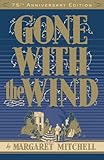
Gone with the Wind by Margaret Mitchell - Athena

Gone with the Wind by Margaret Mitchell This book was epic. Once again, I was conflicted about giving it a 4 or a 5 on Good Reads. As with before, the deciding factor was if I would reread it again. I wouldn't be against reading it, but then again, I'm not planning on it. It was frustrating and very long at times, but there is no doubt that this is a well written book in many ways and a classic. I started reading this book September 20th, but I really didn't read much of it until the last weekend of September wherein I read 70% of the book from Saturday to Tuesday October 2nd. The Beginning: Not that bad, easy going, lots of exposition, lots of idyllic life of the antebellum South. The Middle: Gripping, dark, and compelling. This was when I started to really hit my next page button. The End: Scarlett gets more and more cruel, ridiculous and unbearable. Book just ends a bit abruptly. Click for my full review.

Wednesday, July 11, 2012

Kata's Progress -- Newly Read 1930's

(Alas, I had to break my post into two posts because my tags were too long.) Slowly I am making my way through the Pulitzer Prize winners. Two themes keep popping up. The first is that the characters are living in a time of change. The second is that what is near and dear to one generation is often less important or even rejected by the next generation. Below is what I have read from the 1930'a since I posted here in November. My reactions to the books are on my blog.

Kata's Progress -- Newly Read 1920's

Slowly I am making my way through the Pulitzer Prize winners. Two themes keep on popping up. The first is that the characters are living in a time of change. The second is that what is near and dear to one generation is often less important or even rejected by the next generation. Below is what I have read from the 1920'a since I posted here in November. My reactions to the books are on my blog.

Sunday, March 18, 2012

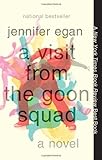
A visit from the goon squad by Jennifer Egan

A visit from the goon squad

It's been awhile since I've posted on this blog, but I am back to book blogging and this entry was originally written on my blog Aquatique.

I learned about A visit from the goon squad from the UK book show "The TV Book Club". I have generally mixed feelings about this book. I completely forgot the premise and the structure from the segment on the show I watched back in July. In short, the book is written like a series of short stories and while the characters are all connected in some way to two of the “main” characters, you don’t really see it until the latter half of the book. Also, the narrative structure differs from chapter to chapter: first person, second, third, editorial style, etc. There is one wonderful chapter done in a graphical slide show format which was the highlight of the book.

The characters are hard to grasp since some of them only show up for one chapter. It also felt experimental at times which can be good actually. I think it worked out for the most part. I don’t know if I would recommend this book to everyone because the uneven structure can be confusing at times especially if you read books in small sittings (which I didn’t so it was ok for me to keep track of mostly).

I was a bit surprised to hear that this book won the Pulitzer Prize. I have read a lot of Pulitzer prize winners over the years, but this may not be the most memorable. To the book’s merit, I think Egan does showcase the theme of how transient life is in these stories. By jumping around time, the reader sees how people change, but you won’t necessarily see how those changes happen. I guess this makes the book more realistic, but I can see how some people who like more linear and regular narration wouldn’t enjoy that. I will say, I liked a couple chapters more than others.

Thursday, December 22, 2011

Intrepreter of Maladies - 2000

Title: Interpreter of Maladies
Author:  Jhumpa Lahiri
Published:  1999, Mariner Books
Genre: Literary Fiction
Accolades:  2000 Pulitzer Prize for Fiction, 2000 Hemingway Foundation /PEN Award

I know, I know I have absolutely no excuse on why I haven't read this amazing book before - especially since it's been sitting on my shelf for at least two years.  I am so happy that I finally did decide to read it and now I have a girl crush on a new to me author.

Interpreter of Maladies is a collection of nine short stories that focus on Indians and first generation Indian Americans as they face subtle and not so subtle cultural differences that leaves each character feeling isolated and wanting in a new country. Many of the stories also center on arranged marriages and have a lingering sadness as the characters try to maneuver and assimilate to life in their new worlds with people that they barely know.

Lahiri writes each story with a refined elegance that literally took my breath away.  Her writing is reflective and touching as she helps the reader find the soul in each flawed character. My favorite story was The Third and Final Continent (it's also the only story with a positive ending). All the characters in The Third and Final Continent, whether it's the newly arrived Indian immigrant or the ninety-nine-year-old American woman, feel alienated. Lahiri gently shows the reader that we all suffer from the human condition and need to hold on to each other to navigate in our worlds.

If you haven't read this book - you should.  Lahiri is a master of the short story.  After reading Interpreter of Maladies I wanted to read more books by Lahiri - always a good sign.

Sunday, December 4, 2011

Richard Russo Empire Falls

Marrying into the 1%

In our land of American opportunity, Empire Falls by Richard Russo reminded me that the fastest- and in some cases only- way into the top 1 percent is to marry in. The book’s looming character is the wealthiest woman in this small town, Francine Whiting. She married in. The town’s previous money stream was work at the Whiting shirt factory. Since it closed, the citizens wait for a limo with Massachusetts plates to buy and re-open the factory. And they depend on the generosity of Mrs. Whiting. Or, they consider marrying in. It won in 2002, it sounds like 2011.

Empire Falls by Richard Russo, Pulitzer Prize 2002

putzingthroughpulitzers.blogspot.com/

Sunday, November 27, 2011

Arrowsmith (1926)

This is the story of Martin Arrowsmith, who seems ordinary enough but is, in fact, that rare breed of man who thinks for himself and pursues his goals without regard for the people who want him to give up.

You could say the same about Sinclair Lewis, the author of Arrowsmith.  Nothing is holy: he tears apart countless traditions and habits that we take for granted.  With just a sentence or two he shows us the hypocrisy, inanity or even the evil in our many institutions and ways of life.

In Arrowsmith, Lewis is focused on the medical profession and science as a profession during the early 1900’s.  But much of the book feels applicable even now.  We see the flaws in a medical school that churns out doctors trained to treat illnesses without thinking about underlying causes and keyed to avoid prevention because it will take away business.  We see, as in his other books, the backwardness and suffocation of a small town for a free thinker.  We see how a scientist is compromised by working for a company that's only out to make money.  And we see that science can’t be run by committee and isn’t at the whim of “the good of society.”  Lewis shows us that science may be the most individualistic pursuit there is, and men who are willing to give it everything they have are the true heroes.

Tuesday, November 15, 2011

Kata’s Progress

Despite having a BA in English, I am more of a Science Fiction and Mystery reader. The Pulitzer Prize winners are a nice counterpoint to my usual reading. I am just starting out on this journey. Here is what I have read so far. My reactions are on my blog.

Sunday, November 6, 2011

Breathing Lessons Anne Taylor 1989 -- Athena's review

Breathing Lessons Anne Taylor 1989

Anne Taylor's Breathing Lessons won the Pulitzer for fiction in 1989 and it can be summed up with this Ann Landers quote -- Wake up and smell the coffee!!

I only barely remember ever reading any Ann Landers (or her twin sister Dear Abby or Dear Abby's daughter, Dear Abby) so, inspired by the Ann Landers theme in Breathing Lessons I wanted to have been in the archive. Here's a few of the letters I liked. She's a charmer.


Dear Ann Landers: I lost my hand (from the wrist down) in an industrial accident. A wonderful artificial-limb expert made a hand for me that is almost indistinguishable from the one God gave me. I have a manicure every two weeks, and my manicurist charges me full price. Is this fair? — No City Please

Dear No City: Yes, it is fair — unless the manicurist is willing to book you for a polish change, which takes half the time of a manicure.


Dear Ann Landers: Can you please tell me whether my husband is cheating on me? The reason I am suspicious is that lately, "Clyde" has been going to the store and doing other errands but refusing to take any of our four children along. He is also gone longer than I believe is necessary. He also has started to complain about how much gray hair he is getting, and last week, he made some uncomplimentary comments about my housekeeping.

Clyde is almost 40, and I think he may be going through that well-known midlife crisis. I have been trying to take better care of the house and cook his favorite dishes. We have sex as often as he likes. I will say, he never forgets my birthday or our anniversary. Am I just insecure, or is it time to start worrying? — Concerned Wife in Nashville

Dear Nashville: I'd say it's time you stopped worrying. How much trouble can Clyde get into on his way to the grocery? He probably enjoys that short break away from the kids. Wouldn't you? Keep preparing his favorite dishes, and continue to keep him well-fed, literally and figuratively, and enough with the paranoia already.

Dear Ann Landers: My husband and I are very friendly with another couple. They are kind and generous people and would give you the shirts off their backs. We love to be with them. The problem is they are the dirtiest people I ever have known. We hate going to their home because it is so filthy. Our church group avoided their offer to host a dinner for this very reason.

Both of these people have college degrees and make very good money. We enjoy their company and want to remain friends, but how can we continue to turn down their dinner invitations? (She LOVES to cook.) So far, we have managed to meet at restaurants, but this ploy won't work much longer. Do you have any suggestions? We need help. — Baltimore Dilemma

Dear Dilemma: Your friends never will be decent housekeepers. They need help. Scout around to find a good cleaning person. Tell your friends that you understand how busy they are and that you know of a wonderful cleaning person. Then give them the name and number.

Dear Ann Landers: A woman in our office ("Miss Z") has a TV on her desk that she turns on the minute she comes in. It stays on until she goes home.

The other employees and I feel this reflects poorly on our entire office, especially when someone from the outside comes in. Miss Z is very intimidating, and no one in our office dares approach her about this, plus she has the most seniority. Our boss has made it clear that he doesn't want to be bothered with such petty issues. What is your opinion on this matter? — No Name, No State

Dear N.N.N.S.: Sounds as if the boss also is intimidated. Too bad. The old battle-ax wins again.

Rose City Reader's Review: All the King's Men (1947 winner)


Robert Penn Warren won the Pulitzer Prize in 1947 for All the King's Men, his fictionalized account of Louisiana's legendary governor Huey Long. In the novel, Long is Willie Stark, an idealistic country lawyer who takes on the political machine in his state and achieves meteoric success, only to be compromised by the same system he railed against.

This book has been on my list of Top 10 favorites since I read it in the mid-1990s, shortly after law school. Robert Penn Warren's combination of beautiful writing, compelling story, and political shenanigans wholly beguiled me.

Now, getting close to 20 years later, I wanted to re-read it to see if it still packed the same punch. It did, but in a quieter way. Either because I am older now or because I was familiar with the story, the political side didn't grab me, but the personal stories of Stark's family and the narrator, Stark's operative Jack Burden, struck me even harder with their heartbreak.

Warren was a poet first and a novelist second. His writing is full of metaphor, long descriptions, philosophical musings, and some long digressions away from the central plot. All these things, if not done right, can ruin a novel for me, fan of a good yarn that I am. But Warren does it right. It is definitely a book you have to settle in to and let it lead, but it is worth the dance if you do.

Also posted on Rose City Reader.

Tuesday, October 25, 2011

3m's Progress (1morechapter.com)

I hadn't updated my progress for a loooong time. Here it is, with links to reviews where available.


26/85 for 31% so far


2010 - Tinkers
2009 - Olive Kitteridge
2008 - The Brief Wondrous Life of Oscar Wao
2007 - The Road
2006 - March
2005 - Gilead 
2004 - The Known World
2003 - Middlesex
2002 - Empire Falls
2000 - Interpreter of Maladies
1999 - The Hours
1995 - The Stone Diaries

1994 - The Shipping News
1988 - Beloved
1987 - Summons to Memphis
1983 - The Color Purple
1973 - The Optimist's Daughter 
1972 - Angle of Repose
1961 - To Kill a Mockingbird
1958 - A Death in the Family
1953 - The Old Man and the Sea
1940 - The Grapes of Wrath 
1932 - The Good Earth
1928 - The Bridge of San Luis Rey
1921 - The Age of Innocence

Wednesday, October 12, 2011

A Visit from the Goon Squad by Jennifer Egan (Marg's Review)


Jennifer Egan's spellbinding interlocking narratives circle the lives of Bennie Salazar, an aging former rocker and record executive, and Sasha, the passionate, troubled young woman he employs. Although Bennie and Sasha never discover each other's pasts, the reader does, in intimate detail, along with the secret lives of a host of other characters whose paths intersect theirs, over many years, in locales as varied as New York, San Francisco, Naples, and Africa.

We first meet Sasha in her mid-thirties, on her therapist's couch in New York City, confronting her long-standing compulsion to steal. Later, we learn the genesis of her turmoil when we see her as the child of a violent marriage, then as a runaway living in Naples, then as a college student trying to aver the suicidal impulses of her best friend. We plunge into the hidden yearnings and disappointments of her uncle, an art historian stuck in a dead marriage, who travels to Naples to extract Sasha from the city's demimonde and experiences an epiphany of his own whilst starting at a sculpture of Orpheus and Eurydice in the Museo Nationale. We meed Bennie Salazar at the melancholy nadir of his adult life - divorced, struggling to connect with his nine-year-old son, listening to a washed-up band in the basement of a suburban house - and then revisit him in 1979, at the height of his youth, shy and tender, reveling in San Francisco's punk scene as he discovers his ardor for rock and roll and his gift for spotting talent. We learn what became of his high school gang - who thrived and faltered - and we encounter Lou Kline, Bennie's catastrophically careless mentor, along with the lovers and children left behind in the wake of Lou's far-flung sexual conquests and meteoric rise and fall.

A Visit from the Goon Squad is a book about the interplay of time and music, about survival, about the stirrings and transformations set inexorably in motion by even the most passing conjunction of our fates. In a breathtaking array of styles and tones ranging from tragedy to satire to PowerPoint, Egan captures the undertone of self-destruction that we all must either master or succumb to; the basic human hunger for redemption, and the universal tendency to reach for both - and escape the merciless progress of time - in the transporting realms of art and music. Sly, startling, exhilarating  work from one of our boldest writers.


With inside cover copy like that, and the fact that this is the book that won the Pulitzer prize and others, and was longlisted for the Orange Prize as well, who needs a review!

When I look back on this book in a couple of years time I think the thing that will still be strong in my memory is the structure of the book - if you could call it structure as such. It isn't a novel as much as it is an interlocking collection of short stories. This isn't a book that goes from point A to point B. It probably starts at point G and eventually gets to point Z with side trips past point A and B.

In my own mind I was trying to think of a comparison to show how this book works and the closest I could come up with was one of those puzzles we used to have as kids where there was a mixed up picture in a square and there was one piece missing so you had to move all the pieces around until the picture was formed. At first you would get occasional glimpses of what the jumbled image was going to look like, but then you would have to break the picture up to make another piece of the puzzle fit. Eventually though, the last piece slides into place and you see the whole image.

Another analogy might be a really long conversation with a very good friend, where you jump topics with ease, reminiscing about the past, talking about the future, and sharing a joke. Never a linear conversation but rather one that starts at one point, and then ends up somewhere completely different and you find yourself wondering how you got there!

Another aspect of structure that was very different in this book is that Egan experiments with all different forms of storytelling. There are chapters written in the form of a magazine column, another in Powerpoint as well as different tenses and points of view.  I think the Powerpoint chapter was amazing! The language was sparse, the story barely there on the page, but the concepts and the narrative were still strong enough to be clear for the reader, and I loved that we got to see Sasha's future life.

After looking at the structure, how about the characters. I can't say that I particularly related to the characters that we met in the pages of the book, but such is Egan's skill that you actually didn't need to. Our two main characters are Sasha and Bennie. Sasha is on a date with Alex when her habit of stealing things, anything, causes her to steal a wallet whilst in the bathroom. As she analyses why she steals with her shrink, Alex crosses one of her boundaries without even knowing it. We meet Sasha again as a young woman struggling to make ends meet living as a runaway in Naples, and then through the eyes of her best friend Rob who has plenty of demons of his own.

In the next chapter we meet Bennie, who is Alex's boss. He is a divorced man who is struggling to relate to his 9 year old son. One way that he can occasionally connect is through music, but even that is problematical. Through the book we see Benny with his ex wife in happier times, then we meet him as a youth revelling in the punk rock scene with his friends. We meet his mentor Lou and his very young girlfriend and her friend.

The links as we move from chapter to chapter are at times tenuous, but they are all there for a reason. Along the way, Egan makes comment about some important issues. Not only the power of music to transcend time, but also for example the power of media when a washed up PR person is employed to try and rehabilitate the image of an African dictator.

Another chapter that I really liked, not because it was enjoyable but because of the food for thought it provided, was the final chapter. It is set in New York in the not too distant future and Egan has taken our current obsession with social media and expanded it to the nth degree to come up with a quite scary world where even the youngest child has exposure to the media in a way that is similar to our own world but amplified many times over. A washed up musician is being bought back for a live concert and one of our characters is being asked to find some parrots - people who can spread the word, hype up the event to make it a success, to make it the kind of event that everyone who is anyone will claim to have been at even if they really aren't. In a way it kind of reminded me of a discussion of the difference between buzz and hype and how one, or the other, is generated, whether it is organic or whether there is someone in the background pulling the strings to manipulate the public.

This is the second Egan book I have read and liked. A few years ago now I read The Keep which was a kind of modern, gothicky ghost story. I am not sure why I haven't bothered to go and track down her other books. I will definitely be watching to see what the author comes up with next as she doesn't seem to be afraid to take risks in her writing and to take her readers on the journey with her!

Rating 4/5