Showing posts with label 2007 The Road. Show all posts

Wednesday, July 14, 2010

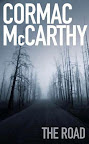
Review: The Road


Title: The Road
Author: Cormac McCarthy
Published: 2006, Vintage International
Genre: Science Fiction
Accolades: 2007 Pulitzer Award for Fiction, 2006 National Book Critics Circle Award for Fiction Shortlist, 2006 James Tait Black Memorial Prize for Fiction, and on and on and on...

I picked up a copy of The Road in the Detroit airport after my plane had been delayed (again) and I needed something to read. Once I started reading it I couldn't put it down (I almost didn't mind the delay - almost). The Road is a frightening postapocalyptic novel about a nameless father and son who are traveling south to escape another brutal winter in the mountains. It is a story of grief and lose and struggles with the question- what keeps one going when all hope is gone and death is not the enemy?

I really enjoyed this riveting book. The writing style was unique, almost sparse, capturing the the feel of the countryside and a world without hope.

"It took two days to cross that ashen scabland. The road beyond ran along the crest of a ridge where the barren woodland fell away on every side. It's snowing, the boy said. He looked at the sky. A single grey flake sifting down. He caught it in his hand and watched it expire there like the last hope of christendom." (page 16, The Road)

The most moving part of the story is the relationship between the father and son. The father does everything he can to provide hope to his son by telling him that they have to continue on "to carry the fire" in a hopeless world even though the father has long ago stopped believing.

This is science fiction at it's best. A story that kept me engrossed while I read it and thinking about it hours after I had finished reading it.
My Rating: 5 out of 5

Monday, December 22, 2008

The Road....................a Short Review

The Road by Cormac McCarthy is my first read from the list of Pulitzer Prize winners. This book, I thought, was quite interesting. Why? I was able to conjure up possibilities of all human kind being eliminated due to wars, rampant diseases, or catastrophic climatic changes. The end result being one or a few individuals left to survive on their own without all of the amenities that we have become accustomed to. The book relates the experiences of a boy and his father traveling along a road to somewhere (perhaps nowhere). As they make this journey, they are faced with various encounters all along the road. This consists of finding adequate food supplies, staying away from strangers, and locating resources for shelter. All throughout the story, I felt, the father was trying to impart knowledge to his son that would insure his son's survival after his death. All said, I thought the book was a good read. Although, sometimes, I found it difficult to establish who was speaking at times. This was because of a lack of affirmation to indicate such. (This may be the writer's technique. I would have to read more of the writer's works to know for sure.) It took me 4 solid days from cover to finish to complete the novel.

Thursday, February 7, 2008

The Road - Cormac McCarthy


Title: The Road
Author: Cormac McCarthy
Country: USA
Year: 2006
Rating: 4 out of 5
Pages: 287

First sentence: When he woke in the woods in the dark and the cold of the night he'd reach out to touch the child sleeping beside him.

I meant to read this book for the NYT Notable Challenge last year. I was even fortunate enough to win a copy in the October giveaway at Estella's Revenge. Yet I never got around to it, partially because of the bleak subject matter, and in part because of its selection as an Oprah book. I picked it up on a whim last week, and plunged right in.

The Road is a bleak, dismal novel. A father and son are travelling south on a road in a world utterly destroyed by a cataclysmic event that occurred years prior to the novel's setting, possibly caused by nuclear warfare. The plot consists of a few basic activities: walk, forage, starve, rain, sleep, starve, and walk some more. The whole world has been reduced to ash and gray snow; the only sustenance that remains are canned goods hidden away in long-abandoned homes. The narrative is simple; it is as if the father and son do not have enough energy to utter more words than the practical and essential.

They looked at each other.
One more.
I dont want you to get sick.
I wont get sick.
You havent eaten in a long time.
I know.
Okay. (p.141)

In this world, negative contractions are laid bare without their apostrophe's, and quotation marks are extinct. I wonder if the apocalypse burned all of the punctuation, or if this style is consistent in McCarthy's novels? 

One theme that particularly stood out was the reference to the father and son "carrying the fire".

We wouldnt ever eat anybody, would we?
No. Of course not.
Even if we were starving?
We're starving now.
You said we werent.
I said we werent dying. I didnt say we werent starving.
But we wouldnt.
No. We wouldnt.
No matter what.
No. No matter what.
Because we're the good guys.
Yes.
And we're carrying the fire.
And we're carrying the fire, yes.
Okay.
(p.128)

-and-

You cant. You have to carry the fire.
I dont know how to.
Yes you do.
Is it real? The fire?
Yes it is.
Where is it? I dont know where it is.
Yes you do. It's inside you. It was always there. I can see it.
(p.278)

What is McCarthy's meaning? At first, I thought it meant that the young boy was a symbol of the continuation of the human race. After finishing the whole novel, I'm more inclined to think that "carrying the fire" refers to never losing hope. If you always carry hope, you will survive. I like this interpretation, it creates a positive note in one very depressing book.
 
The Road also introduced some vocabulary unfamiliar to me. McCarthy must be a walking dictionary. Here are a few examples:
Gryke (p.11) - a deep cleft in a bare limestone rock surface.
Gambreled (p.17) - A grambrel is a two-sided roof, usually symmetric, with two slopes on each side.
Laved (p.38) - to wash or flow against.
Soffits (p.106) - the exposed undersides of any overhead component of a building.
Gelid (p.136) - Very cold; icy.
Bivouack[ed] (p. 168) - temporary encampment under little or no shelter

Saturday, January 26, 2008

2007--Cormac McCarthy----The Road--Gautami's reads

Crossposted from my blog..

Title: The Road
Author: Cormac McCarthy
ISBN: 9780330448628
Publisher: Picador
Pages: 307
Rating: 5/5


It is a story, if we can call it that, about a father and a son who remain nameless throughout the narration. Both are walking through America, which has been ravaged by fire. They are walking towards south to the coasts. On their way to it, there is nothing but ashes, burnt trees, and soulless houses. They have each other and a pistol for a company. They pass through dead towns, looted houses, finding corpses on their way. They are afraid to meet other fellow human beings. Men who kill for food, for any kind of food.

The Man all the while tries to save the boy. Love and despair go hand in hand. Without the boy, he would have been dead long ago. Survival is the key. He does all he can to save himself and his son. However, he also prepares the boy to survive in case he is no longer there. The interactions between the father and the son is very interesting. We do not see dialogues, only narration. The Man instils moral values in the boy even in great adversity. At certain places, we see that he is not disappointed. His son has risen above the father.

The sparseness of languages enhances the harshness of the situation. This is what makes it chilling, scary and very gripping. If we do not take care of our Earth, this might become a reality. A forest burning is not a new phenomenon. The same reaching out cities and destroying can become a fact. What is shocking is that it can become a reality. The nameless people could be us…

Language used can be called poetry in prose. One pauses at certain places to enjoy the sheer beauty of words. One feels sad. However, there is hope too at the end, a salvation of some kind. This book should be read by all. Those who do not care for the Earth and those who truly love it.


Tuesday, January 15, 2008

2007: The Road by Cormac McCarthy - Marg's review

A searing, post apocalyptic novel destined to become Cormac McCarthy’s masterpiece.

A father and his son walk alone through burned America. Nothing moves in the ravaged landscape save the ash on the wind. It is cold enough to crack stones, and when the snow falls it is gray. The sky is dark. Their destination is the coast, although they don’t know what, if anything, awaits them there. They have nothing; just a pistol to defend themselves against the lawless bands that stalk the road, the clothes they are wearing, a cart of scavenged food—and each other.

The Road is the profoundly moving story of a journey. It boldly imagines a future in which no hope remains, but in which the father and his son, “each the other’s world entire,” are sustained by love. Awesome in the totality of its vision, it is an unflinching meditation on the worst and the best that we are capable of: ultimate destructiveness, desperate tenacity, and the tenderness that keeps two people alive in the face of total devastation.


I'm pretty sure that I have mentioned here before that I used to be a regular over in the Oprah book clubs, and I know several people who are now bloggers from those groups. Reading with those groups gave me a much greater understanding of books like One Hundred Years of Solitude. Now when a new Oprah book is announced I add it to my TBR list, with the intention of joining in on the discussions on the boards. With the announcement of The Road by Cormac McCarthy, I did get around to reading it, but I never did really get around to discussing on the boards.

Reading this book wasn't easy. Given the whole post apocalyptic setting, the environment is bleak, the story itself is bleak, the language is sparse. Despite the fact that it is never clear what happened to the world, it is clear that it was an event that affected both men and the natural world.

A man and his young son are travelling the road, trying to walk to the coast where they hope to find something different. There is very little interaction between the pair and other humans, mainly because it is difficult to trust anyone. There are gangs of armed people who will pretty much kill anyone they find...in some cases as a way to provide food. The man is always very wary whenever there are signs of humans, even if the person is travelling by themselves, always teaching his young son that you have to be careful who you trust.

The man tells the boy that he is carrying the light and that they are the good guys, and the young boy struggles to understand how they can be carrying the light when they are guilty of many of the things that the father says the bad people do.

As they travel along the road, close to suffering starvation, the father despairs of how to provide for his son, especially as they both suffer illness. Each time they come to a town or isolated home, a search is done through the houses and shops to see what others who have been there before them may have left behind, luckily stumbling on a couple of caches of food that help sustain them.

Upon reaching the coast though...they basically find nothing, and they will have to keep travelling.

It is a bleak story, full of griminess and at times hopelessness, but it is definitely well written, and I can definitely see why the book won the Pulitzer. The relationship between the father and the son is complex, but also compelling in its depth and closeness.

I am not sure that reading this book has inspired me to go and read more by McCarthy, although I am sure I will get to him again eventually!


This review was originally posted on my blog in May 2007.

Sunday, November 25, 2007

The Road, reviewed by raidergirl3

I finished this a month ago, but forgot to post anything here. Originally posted at my blog here


The Road by Cormac McCarthy
Pulitzer Winner 2007

I finished. I still have the little pit or knot in my stomach that I had during the whole reading. I can see why this book won the Pulitzer Prize for literature this year, and why it was an Oprah pick, with her usual depressing and dreary themes. But that makes it sound like I didn't like it, and I did, I liked it a lot.

I've been reading reviews of this book all year, and I know a lot of people have already read this book. So I knew about the strange punctuation and didn't notice it because I had been warned. In fact, in dewey's review at the nyt notable book review blog, she made an excellent analysis about how the level of discussion and punctuation varied directly with the hunger of the main characters.

Plot outline: A man and his son, never named, are travelling and surviving in a post apocalyptic America, summarized wonderfully by someone somewhere (I can't find who) as ash,ash,ash, forage,forage,forage, and then more ash, forage, sleep. This was very bleak, colorless, and depressing, and I just kept thinking: What would I do? How could people survive? Would you want to? And yet, I kept picking this back up, and I read it fairly quickly, in a few days. And every time, I was immediately transported to this terrible world, with 'bad guys' and cannibals, and fear, and survival. The father is doing everything he can, to survive and protect his son.

A few thoughts and questions:

- Plastic is not all bad, since it was one of the only things to survive. If there hadn't been plastic items for them to scavenge, they would not have found much
- What have the father and son been doing for all the years since the son was born? Have they been walking all this time? Have they met nobody safe in all this time?
- What happened to all the bullets in the gun? Because there was more than one, I believe, at some point.
- But there has to be more religious overtones to the story, because of the apocalypse ending of the world. How does God, and religion, continue in a world like that? Is there a place/need for it? And I think the book shows there is a need, we need to trust people, and good will triumph.

Sunday, September 2, 2007

The Road - Laura's Review


The Road
Cormac MacCarthy
241 pages

First sentence: When he woke in the woods in the dark and the cold of the night he'd reach out to touch the child sleeping beside him.

Reflections: A man and his son set out on a journey across a country which has been destroyed in some kind of apocalyptic event. This event apparently took place several years ago, but everything is still covered in ash. No life remains in the towns, and there are usually signs of a hasty departure, of townspeople fleeing to safety. Very few were spared; bodies appear in buidings, and even in the middle of the road. It is not clear how or why the man and boy survived up to this point. Now they are on their way south, hopeful of finding a better place.

Survival skills are paramount. Bands of robbers roam the land, looting and killing. Survivors often resort to cannibalism. The contents of homes and stores have usually been ransacked by travellers and bandits. Yet the man and boy explore every building they come across. Occasionally they find something: blankets, clothes, or food. At the same time, MacCarthy's describes in great detail these once-fashionable houses, in a way that made me question why we place so much importance on our homes and other material possessions.

The man's deep love for the boy permeates every sentence in this book. The emotional intensity is evident both in their will to live and in the ways they care for one another. MacCarthy manages to convey this deep feeling through the most basic dialogue, as in this example when they have just come across a bountiful store of food:

Go ahead, he said. Don't let it get cold.
What do I eat first?
Whatever you like.
Is this coffee?
Yes. Here. You put the butter on your biscuits. Like this.
Okay.
...
Do you think we should thank the people?
The people?
The people who gave us all this.
Well. Yes, I guess we could do that.


The most haunting aspect of this book was the boy's mother's death. She apparently committed suicide when it became evident the world as she knew it would be destroyed. She preferred to end her life; the man chose to remain with his son and try to survive. When considering what path I would choose, I realized how difficult this decision could be. There really is no correct answer.

This is a beautifully-written book that will remain with me for a very long time. ( )
Original review can be found here.

Saturday, August 18, 2007

2007: The Road by Cormac McCarthy -- Dewey's review

Cross-posted at my blog.

I have to warn everyone: this review drew the only rude comment I've ever received on my blog. The commenter perceived the review as totally negative, which surprised me, because in spite of the fact that I had some criticism, I did enjoy this book. I even plan to read it again.
If I were Cormac McCarthy's editor, here is what I would have said: I realize that your stylistic choices in this book are meant to reflect a world so barren that it doesn't have the luxury of such frills as apostrophes, commas and complete sentences. But your post-apocalyptic setting is stark enough, your characters are traumatized enough, your spare prose is Hemingwayesque enough that you don't need to resort to twee gimmicks to get your point across. Stop that.

Well. I feel better now! On to the review.

It took me a long time to warm up to The Road. I could not become immersed in the story because I was too busy working out why some contractions deserve the dignity of apostrophes and some don't. I mean dont. Because it's only the negatives who are forced to walk around naked without their punctuation. Even my favorite sentence of the book, a thought the man has while watching his sleeping son, was ruined for me by McCarthy's aversion to commas: If he is not the word of God God never spoke. God God sounds like something God's mom called him when he was a toddler. When I'm being moved by a father's love for his son and a pretty metaphor, I don't want to be distracted by the idea of God as a toddler with a mom, you know?

If you stripped this novel of all the tedious ash ash ash, walk walk walk, forage forage forage, rain rain rain details, it would be a good short story.

But I did say I eventually warmed up to the book. At about the middle of the novel, the man and the boy find a hatch in the ground, fully equipped and left behind by someone with forethought, but without the luck to have survived long enough to use it. After the man had rested and eaten well, suddenly he thought in paragraphs! He had complex ideas! Now this was some damn good writing, but I stopped and had a WTF? moment while I tried to figure out why the style had changed so drastically.

And then I got it. The man and the boy, on the road, are far too exhausted and hungry to say more than "Okay" and "I don't know." Their thoughts are simple despite their obvious intelligence because their more basic needs are unmet. Their world is nothing but ash ash ash, walk walk walk, forage forage forage, rain rain rain. When their basic needs for cleanliness and sleep and food are met, they become more than just nomadic animals with minimal communication skills. Brilliant! I decided I loved this particular technique.

Compare:

Is it cold?
Yes, it's freezing.
Do you want to go in?
I don't know.
Sure you do.
Is it okay?
Come on.


He turned and looked at the boy. Maybe he understood for the first time that to the boy he was himself an alien. A being from a planet that no longer existed. The tales of which were suspect. He could not construct for the child's pleasure the world he'd lost without constructing the loss as well and he thought perhaps the child had known this better than he. He tried to remember the dream but he could not. All that was left was the feeling of it. He thought perhaps they'd come to warm him. Of what? That he could not enkindle in the heart of the child what was ashes in his own. Even now some part of him wished they'd never found this refuge. Some part of him always wished it to be over.


Still spare, still treating commas like McCarthy is a black coffee fan and commas are the whipped cream on some frou-frou Starbucks beverage -- and what more can you expect from a writer who calls semi-colons "idiocy?" But the man is desperate, even suicidal, so I can accept spareness. At least it no longer reads like first grade primer.

Through the entire first half of the novel, the starkness was distracting and irritating, and I found myself reading just to finish the book. After the respite in the underground shelter, when the point of the style clicked for me, I was more ready to accept devices like the tediously simplistic dialogue, though I still felt irritated by the crazy punctuation.

In spite of all this distraction from the actual story, I found myself frequently thinking about the characters when I was away from the book. I absolutely love the relationship between the father and the son. I love the son's intrinsic ethics, which the father doesn't want to squelch, and in another time wouldn't have to, but which he fears are dangerous on the road. And I love that McCarthy got so many of the emotions of parenting just right.

There were three big questions hanging over my head throughout the book.

1. How old is this boy?
2. What the hell happened to the world to make it this way?
3. How did these two survive when most people are dead?

These questions went without any definitive answers, but I found myself absorbed in watching for clues of the boy's age. I settled on seven. He can read in spite of a life without books, but he's still very vulnerably young. I have no idea why I fixated on figuring out the boy's age. He was my favorite character (not that there was much competition) and I think I was given so little information about him that I needed to ferret out more to make him feel more real.

There were more clues to the answer to my second question. The setting seemed to be the southeastern U.S. suffering from the effects of nuclear winter. They couldn't see the sun, it was cold, and there was ash everywhere. So I'm assuming there was a nuclear war, though it could have been some enormous natural disaster, maybe caused by global warming.

Not answering the third question seemed to me a flaw in the narrative. I really want to know what allowed them to survive. Had they found safe shelter? Were they just lucky? It seems essential, because if they survived due to their own cunning, that allows the reader to accept that they could keep surviving on the road.

Before even starting the book, I ran into a spoiler that revealed to me just how it ends. Knowing that ahead of time, combined with the unwavering hopelessness throughout the novel, prepared me for the unbearably sad ending. In fact, the book was so depressing in general that I found myself despairing over the pointlessness of life. Fortunately, I prescribed myself some chocolate chocolate chip Haagen-Dasz and an episode of Family Guy, and I was cured and ready to face life again.

I want to avoid spoilers, but I have to say that in I was even more disappointed by the deus ex machina ending after the sad part than I was by the stylistic oddness. I haven't seen anyone else mention this, either in blog reviews or print reviews, and I'm not sure if that's in an attempt to avoid spoilers or if people just didn't mind it.


Here
is an amusing account of Oprah's interview with McCarthy.

2007 The Road - Bonnie's review

When I read and reviewed this book in April, I had had my Science Fiction Favorites in the sidebar for some time, and this is what it said:
Everyone should read Robert Heinlein's classic Stranger in a Strange Land. I also highly recommend The Dispossessed by Ursula K. Le Guin. My vote for best post-apocalyptic fiction has long been A Canticle for Leibowitz by Walter M. Miller Jr.; however, I am reading The Road by Cormac McCarthy and may have to revise my choice.
But no, it turns out I don't need to revise my vote after all because I still think A Canticle for Leibowitz is the best. As far as I know Miller's book never won any awards, much less the Pulitzer Prize for Fiction.

The Road
by Cormac McCarthy, 2006

Now, my review of The Road. It starts off with a sentence, followed by a sentence fragment and another sentence fragment. Do you know what I mean by a fragment? I could call it a "stump" of a sentence. A sentence fragment leaves out some major part of a sentence, like a subject or a verb. Some of McCarthy's "sentences" are prepositional phrases. Two readers shared their opinions with the Book Buddies book club, one saying, "Good writing style," and the other, "I am also enjoying the writing style." Not me! Occasional sentence fragments (like "Not me!") are okay, but an entire book written that way drove me to distraction. Okay, I admit my aversion to constant sentence fragments may relate to my (former) life as an editor, but still...

One good thing I can say about this style of writing is that it did convey the fragmented life experienced by all of the characters. This book seems to validate T. S. Eliot's 1925 poem "The Hollow Men" which ends like this:
This is the way the world ends
Not with a bang but a whimper.
(*** SPOILER *** stop reading here, if you haven't finished the book.) I got that point early in the book, which went on and on with few full thoughts. I should say that THAT appears to be the whole point. Everything in the book is designed to show that the main characters (well, all of the characters, actually) are living from one minute to the next. Not each day, not each hour, but minute to minute not knowing whether they will find food or survive until tomorrow. No sun ever penetrates the hazy sky; the survivors -- of what? a nuclear holocaust? -- wheeze trying to breathe the leaden air; night is as dark as a cave when your torch goes out. (End of SPOILER.)

This is a bleak, gray novel. And that is the point. This quote says it all for me:
"At night when he woke coughing he'd sit up with his hand pushed over his head against the blackness. Like a man waking in a grave" (p. 180).
Everyone in the story seems set against everyone else ... until the end, which seems to me to validate the point the boy has been trying to make all along. Rated 8/10, very good.

A Canticle for Leibowitz
by Walter M. Miller Jr., 1959

This is a very different kind of post-apocalyptic story. It is many, many years after nuclear war has destroyed our world, and people are resuming life ... but not as we know it. Ashing has become a god, and the people are in awe of the sacred shopping list of Leibowitz, one of the few pieces of paper from "before." Ashing, have you heard of him? A chipped and broken statue calls w-ASHING-ton "the father." Aha! It's a "statue fragment" which leaves us with a "stump" of a name! Anyway, more centuries pass, and there's another civilization, a different one. And again, many more years pass and we see a third post-war civilization. One man appears to be in the stories of all these civilizations. Is he really the same person? Or is it a coincidence these men (plural) seem to be one and the same?

The Road makes a point, but in my opinion A Canticle for Leibowitz is more enjoyable and intriguing to read. Rated 9/10, excellent!

My original review was posted here.

Monday, August 13, 2007

The Road - Wendy's Review


He woke before dawn and watched the gray day break. Slow and half opaque. He rose while the boy slept and pulled on his shoes and wrapped in his blanket he walked out through the trees. He descended into a gryke in the stone and there he crouched coughing and he coughed for a long time. Then he just knelt in the ashes. he raisedhis face to the paling day. Are you there? he whispered. Will I see you at the last? Have you a neck by which to throttle you? Have you a heart? Damn you eternally have you a soul? Oh God, he whispered. Oh God. -From The Road, page 10-

Cormac McCarthy just won The Pulitzer Prize for The Road, a novel of profound bleakness and beauty which almost defies definition. I was worried about reading this book, which has garnered praise but has also been described as dark and depressing. It is dystopian literature which I usually avoid because the genre always struck me as so pessimistic. That being said, The Road blew me away and will make my list for one of the best books I've read in 2007.

The story appears to be a simple one: a father and his young son are traveling along a road somewhere in America after a devastating event which has killed almost every living thing and left the world in a gray haze of floating ash and weird weather. There are "bad guys" and there are horrors; there are moments of sheer terror which seem to be nightmares instead of actual life. Layered beneath this story is a larger story - one about a boy and his father and the love they share, one about faith and hope and the will to survive. It is heartbreaking and beautiful and written in an unembellished language which somehow makes it that much more powerful.

I found myself compulsively turning the pages, unable to stop reading the story. I would lay the book down, and then pick it up only moment later. Just a few more pages. McCarthy carries the reader along on this journey, looking for the hope around every curve in the road, holding their breath, wondering if God has survived the devastation after all.

McCarthy uses metaphor and symbolism throughout the novel - the fire which the boy carries inside him (is this spiritualism? hope? humanity?), and the road itself - to just name two. This is a deep book, one that deserves to be discussed and thought about. It is certainly worthy of the Pulitzer.

Highly recommended. Rated 5/5

To read my original review go here.