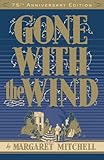
 This book was epic. Once again, I was conflicted about giving it a 4 or a 5 on Good Reads. As with before, the deciding factor was if I would reread it again. I wouldn't be against reading it, but then again, I'm not planning on it. It was frustrating and very long at times, but there is no doubt that this is a well written book in many ways and a classic.
I started reading this book September 20th, but I really didn't read much of it until the last weekend of September wherein I read 70% of the book from Saturday to Tuesday October 2nd.
The Beginning: Not that bad, easy going, lots of exposition, lots of idyllic life of the antebellum South.
The Middle: Gripping, dark, and compelling. This was when I started to really hit my next page button.
The End: Scarlett gets more and more cruel, ridiculous and unbearable. Book just ends a bit abruptly.
Click for my full review.
This book was epic. Once again, I was conflicted about giving it a 4 or a 5 on Good Reads. As with before, the deciding factor was if I would reread it again. I wouldn't be against reading it, but then again, I'm not planning on it. It was frustrating and very long at times, but there is no doubt that this is a well written book in many ways and a classic.
I started reading this book September 20th, but I really didn't read much of it until the last weekend of September wherein I read 70% of the book from Saturday to Tuesday October 2nd.
The Beginning: Not that bad, easy going, lots of exposition, lots of idyllic life of the antebellum South.
The Middle: Gripping, dark, and compelling. This was when I started to really hit my next page button.
The End: Scarlett gets more and more cruel, ridiculous and unbearable. Book just ends a bit abruptly.
Click for my full review.
Showing posts with label Athena. Show all posts
Showing posts with label Athena. Show all posts
Thursday, November 8, 2012
Gone with the Wind by Margaret Mitchell - Athena
This book was epic. Once again, I was conflicted about giving it a 4 or a 5 on Good Reads. As with before, the deciding factor was if I would reread it again. I wouldn't be against reading it, but then again, I'm not planning on it. It was frustrating and very long at times, but there is no doubt that this is a well written book in many ways and a classic.
I started reading this book September 20th, but I really didn't read much of it until the last weekend of September wherein I read 70% of the book from Saturday to Tuesday October 2nd.
The Beginning: Not that bad, easy going, lots of exposition, lots of idyllic life of the antebellum South.
The Middle: Gripping, dark, and compelling. This was when I started to really hit my next page button.
The End: Scarlett gets more and more cruel, ridiculous and unbearable. Book just ends a bit abruptly.
Click for my full review.


Sunday, March 18, 2012
A visit from the goon squad by Jennifer Egan
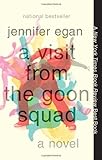
It's been awhile since I've posted on this blog, but I am back to book blogging and this entry was originally written on my blog Aquatique.
I learned about A visit from the goon squad from the UK book show "The TV Book Club". I have generally mixed feelings about this book. I completely forgot the premise and the structure from the segment on the show I watched back in July. In short, the book is written like a series of short stories and while the characters are all connected in some way to two of the “main” characters, you don’t really see it until the latter half of the book. Also, the narrative structure differs from chapter to chapter: first person, second, third, editorial style, etc. There is one wonderful chapter done in a graphical slide show format which was the highlight of the book.
The characters are hard to grasp since some of them only show up for one chapter. It also felt experimental at times which can be good actually. I think it worked out for the most part. I don’t know if I would recommend this book to everyone because the uneven structure can be confusing at times especially if you read books in small sittings (which I didn’t so it was ok for me to keep track of mostly).
I was a bit surprised to hear that this book won the Pulitzer Prize. I have read a lot of Pulitzer prize winners over the years, but this may not be the most memorable. To the book’s merit, I think Egan does showcase the theme of how transient life is in these stories. By jumping around time, the reader sees how people change, but you won’t necessarily see how those changes happen. I guess this makes the book more realistic, but I can see how some people who like more linear and regular narration wouldn’t enjoy that. I will say, I liked a couple chapters more than others.
Wednesday, September 10, 2008
The Good Earth by Pearl S. Buck
 Pearl S. Buck's classic story of family and life in pre-revolutionary China. This did not take as long as I thought, and while sad at times, I liked the book. I think the prose is distinct, the story compelling and honest, and the characters very real. I liked the themes of the novel which explored man's relation to the earth, changing fortunes, China at the turn of the century, and women's role in society and family. She writes everything so deftly and without judgment; a very true story teller. I am very familiar with Chinese culture, family, and livelihood. Buck said she wrote about China because it was all she knew. She might have been a foreigner, but there is such an candid and wonderful perspective in her writing. Dare I say it, but this book is very Chinese. It is difficult to describe how she captured the Chinese characters and cultural identity so well. Once again, I found so much honesty in her writing. I liked how she painted the picture of O-Lan and the other women in Chinese society. While I appreciated the writing and the book, I do not think I will continue with the trilogy because I am not particularly attached to the characters beyond this book, and the stories can be rather sad. I would be interested in reading more of Buck's other stories.
Crossposted from aquatique.net.
Saturday, June 28, 2008
Beloved review - Athena
 This Pulitzer Prize winning and critically acclaimed novel is very sad and includes many stories of horror and trauma. The persistence of memory and the past is part of the novel from a mother's obsessive overprotection to the reconciliation of people's past personal and with slavery as a whole: "To Sethe, the future was a matter of keeping the past at bay. The 'better life' she believed she and Denver were living was simply not that other one."
The narrative shifts with a stream of consciousness writing towards the end of the book. It also reminded me of an even more twisted version of Oscar Wilde's The Portrait of Dorian Gray by that time.
It's a complex novel, but very beautifully written. I love the prose. It is difficult to read due to the story and plot, but the literary prose is wonderful. Morrison is also very adept at characterization. I get a total sense of these characters whether or not I agree or actually sympathise with them. She presents them so clearly and honestly. It is not a pleasurable read, and like many books literary books, it is not for everyone. It's difficult, but honest and well written.
Wednesday, June 18, 2008
Gilead review by Athena
 This Pulitizer prize winning book by Marilynne Robinson is the definition of modern literary novels. The novel does not have much in the way of plot. It is an epistolary novel of an old man writing for his very young son about his life. It is extremely introspective and beautifully written. I do not think it is for everyone, but I could relate to it because I am like the character and the style. It is not to say that I think as the character does all the time, but I certainly do understand why they mean with lines such as this:
I don't know why solitude would be a balm for loneliness, but that is how it always was for me in those days, (p 18-9 hardcover)
It is the kind of book I can see myself rereading because it reminds me of so many things of myself and my inner world. It is introspective and reflective, spiritual and pensive:
Our dream of life will end as dreams do end, abruptly and completely, when the sun rises, when the light comes. And we will think, All that fear and all that grief were about nothing. But that cannot be true. I can't believe we will forget our sorrows altogether. That would mean forgetting that we had lived, humanly speaking. Sorrow seems to me to be a great substance of human life. (104)
Such passages like this are why I would not recommend it to everyone. It took me awhile to read this book because I knew how reflective of myself it was, and how moody I was to avoid such deep thoughts. Many people, even bibliophiles would not necessarily enjoy this book. It is not everyone's cup of tea especially since it does talk of faith and God, but not necessarily in an obtrusive way. I think it would vary for each individual's faith. Here a particularly spiritual passage:
Calvin says somewhere that each of us is an actor on stage and God is the audience. That metaphor has always interested me, because it makes us artists of our behavior, and the reaction of God to us might be thought of as aesthetic rather than morally judgmental in the ordinary sense. How well do we understand our role? With how much assurance do we perform it? I suppose Calvin's God was a Frenchman, just as mine is a Middle Westerner of New England extraction. Well we all bring such light to bear these great matters as we can. I do like Calvin's image, though, because it suggests how God might actually enjoy us. I believe we think about that far too little. It would be a way into understanding essential things, since presumably the world exists for God's enjoyment, no in any simple sense, of course, but as you enjoy the being of a child even when he is in every way a thorn in your heart. (124-5)
I have quoted from the book so much in this review because I really love and can relate to the words, prose, and style so much. The tone is like my own when I write in my journal, but obviously not as well written. I think there a few people who can appreciate such a work, but they truly will if they read it. It's not for everyone, and I am one of those reviewers who ultimately review for myself so I would not recommend it at all if you do not think you can enjoy an introvert's novel. I do want to reread this again which says enough about how much I like this book.
Here are some more exerpts:
When I'm up here in my study with the radio on and some old book in my hands and it's nighttime and the wind blows and the house creaks, I forget where I am, and it's as thought I'm back in the hard times for a minute or two, and there's a sweetness in the experience I don't understand. But that only enhances the value of it. My point here is that you never do know the actual nature even of your own experience. Or perhaps it has no fixed and certain nature. (95)
Remembering when they said what they did about looking in windows and wondering about other people's lives made me feel companionable with them. I could have said that's three of us, because as the Lord knows, for many years I did exactly the same thing. (202)
Oh!, I will miss the world! (115)
Crossposted from Aquatique,net
Subscribe to:
Posts (Atom)