Showing posts with label Dewey. Show all posts

Wednesday, April 2, 2008

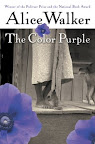
The Color Purple by Alice Walker

This is one of those books that I love so much that I am hesitant about trying to write about it for fear of trivializing it in some way. I reread this book in February, but was unable to even approach writing about it until I decided to just do one of these questionnaires so that I can be walked through the process.

Title and author of book? The Color Purple by Alice Walker

What led you to pick up this book? I've read it before, probably twice, maybe three times. This year, I saw the movie for the first time, which made me want to reread the novel.

Give a brief summary of the plot: The main character, Celie, grows up poor in an abusive household. In fact, it seems like everyone she knows is abusive or abused, so it seems normal to her -- this is probably a result of the crushing despair of poverty. She's married off young to a man who continues the pattern of abuse. He's also in love with another woman, a woman who becomes Celie's friend.

What did you like most about the book? For me, the most moving part of the story is Celie's separation from her sister; my favorite part of the book has something to do with this separation, but to talk about that would be a huge spoiler. I also really like the letter structure of the novel, and I like the use of dialect in this book, even though dialect is usually distracting for me. And I really love the way Celie grows into a level of strength that allows her to start standing up for herself somewhat.

What did you like least?There isn't anything I could really say I dislike about this book, but some scenes are disturbing. For me, the most difficult scene is the one in which a friend of Celie's is beaten and imprisoned for trying to stand up for herself.

What did you think of the writing style? The writing is amazing. As I said above, it's epistolary and uses dialect. Some parts are written in standard English, and those beautiful passages only serve to highlight the simplicity of Celie's uneducated writing and speech. But don't get me wrong; Celie's words are also beautiful. It's amazing to me how Walker manages to write in these two different styles, and make both of them so full of insight.

What did you think of the main character?: I can remember that upon my first reading of this book, I felt frustrated with Celie. She tolerated such terrible treatment, and I was angry with her. I think I have a better understanding of human nature now, so I realize that Celie is a person who has spent her entire life so beaten down -- and not just by individuals, but by society as a whole -- that it's impossible that she could have lived her early years of adulthood in any other way. During this reading of the novel, I was able to notice Celie's gradual strengthening, and rather than resenting Shug's presence in Celie's life at all, I was able to see how she helped Celie grow. I was also able, this time, to appreciate the way women in the book support each other and give each other a sense of community in a world that completely marginalized women of their era, race, and socioeconomic class. Not that the men of their era, race and socioeconomic class fared much better.

Any other particularly interesting characters?Most of the words of wisdom are given to Shug and to Nettie. I think that Walker gave her own voice to those characters at times. They are both amazingly strong and they both overcome terrible circumstances through a combination of luck, talent and introspection.

If this book has been made into a movie, and if you’ve seen the movie, compare the book to the movie. If you've only seen the movie, if you liked it, you should really treat yourself to the book. The movie leaves out so much.

Share a quote from the book: I'll share two, so that you can see the contrasts mentioned above.
The years have come and gone without a single word from you. Only the sky above us do we hold in common. I look at it often, as if, somehow, reflected from its immensities, I will one day find myself gazing into your eyes. Your dear, large, clean and beautiful eyes.


And this is Celie, speaking of her stepson (Harpo) and her husband (Harpo's daddy).

Harpo no better at fighting his daddy back than me. Every day his daddy get up, sit on the porch, look out at nothing. Sometime look at the trees out front the house. Look at a butterfly if it light on the rail. Drink a little water in the day. A little wine in the evening. But mostly never move.

Harpo complain bout all the plowing we have to do.

His daddy say, You gonna do it.

Harpo nearly as big as his daddy. He strong in body but weak in will. He scared.

Me and him out in the field all day. Us sweat, chopping and plowing. I'm roasted coffee bean color now. He black as the inside of a chimney. His eyes be sad and thoughtful. His face begin to look like a woman's face.


Cross-posted in my blog.

Saturday, August 18, 2007

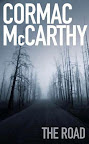
2007: The Road by Cormac McCarthy -- Dewey's review

Cross-posted at my blog.

I have to warn everyone: this review drew the only rude comment I've ever received on my blog. The commenter perceived the review as totally negative, which surprised me, because in spite of the fact that I had some criticism, I did enjoy this book. I even plan to read it again.

If I were Cormac McCarthy's editor, here is what I would have said: I realize that your stylistic choices in this book are meant to reflect a world so barren that it doesn't have the luxury of such frills as apostrophes, commas and complete sentences. But your post-apocalyptic setting is stark enough, your characters are traumatized enough, your spare prose is Hemingwayesque enough that you don't need to resort to twee gimmicks to get your point across. Stop that.

Well. I feel better now! On to the review.

It took me a long time to warm up to The Road. I could not become immersed in the story because I was too busy working out why some contractions deserve the dignity of apostrophes and some don't. I mean dont. Because it's only the negatives who are forced to walk around naked without their punctuation. Even my favorite sentence of the book, a thought the man has while watching his sleeping son, was ruined for me by McCarthy's aversion to commas: If he is not the word of God God never spoke. God God sounds like something God's mom called him when he was a toddler. When I'm being moved by a father's love for his son and a pretty metaphor, I don't want to be distracted by the idea of God as a toddler with a mom, you know?

If you stripped this novel of all the tedious ash ash ash, walk walk walk, forage forage forage, rain rain rain details, it would be a good short story.

But I did say I eventually warmed up to the book. At about the middle of the novel, the man and the boy find a hatch in the ground, fully equipped and left behind by someone with forethought, but without the luck to have survived long enough to use it. After the man had rested and eaten well, suddenly he thought in paragraphs! He had complex ideas! Now this was some damn good writing, but I stopped and had a WTF? moment while I tried to figure out why the style had changed so drastically.

And then I got it. The man and the boy, on the road, are far too exhausted and hungry to say more than "Okay" and "I don't know." Their thoughts are simple despite their obvious intelligence because their more basic needs are unmet. Their world is nothing but ash ash ash, walk walk walk, forage forage forage, rain rain rain. When their basic needs for cleanliness and sleep and food are met, they become more than just nomadic animals with minimal communication skills. Brilliant! I decided I loved this particular technique.

Compare:

Is it cold?
Yes, it's freezing.
Do you want to go in?
I don't know.
Sure you do.
Is it okay?
Come on.


He turned and looked at the boy. Maybe he understood for the first time that to the boy he was himself an alien. A being from a planet that no longer existed. The tales of which were suspect. He could not construct for the child's pleasure the world he'd lost without constructing the loss as well and he thought perhaps the child had known this better than he. He tried to remember the dream but he could not. All that was left was the feeling of it. He thought perhaps they'd come to warm him. Of what? That he could not enkindle in the heart of the child what was ashes in his own. Even now some part of him wished they'd never found this refuge. Some part of him always wished it to be over.


Still spare, still treating commas like McCarthy is a black coffee fan and commas are the whipped cream on some frou-frou Starbucks beverage -- and what more can you expect from a writer who calls semi-colons "idiocy?" But the man is desperate, even suicidal, so I can accept spareness. At least it no longer reads like first grade primer.

Through the entire first half of the novel, the starkness was distracting and irritating, and I found myself reading just to finish the book. After the respite in the underground shelter, when the point of the style clicked for me, I was more ready to accept devices like the tediously simplistic dialogue, though I still felt irritated by the crazy punctuation.

In spite of all this distraction from the actual story, I found myself frequently thinking about the characters when I was away from the book. I absolutely love the relationship between the father and the son. I love the son's intrinsic ethics, which the father doesn't want to squelch, and in another time wouldn't have to, but which he fears are dangerous on the road. And I love that McCarthy got so many of the emotions of parenting just right.

There were three big questions hanging over my head throughout the book.

1. How old is this boy?
2. What the hell happened to the world to make it this way?
3. How did these two survive when most people are dead?

These questions went without any definitive answers, but I found myself absorbed in watching for clues of the boy's age. I settled on seven. He can read in spite of a life without books, but he's still very vulnerably young. I have no idea why I fixated on figuring out the boy's age. He was my favorite character (not that there was much competition) and I think I was given so little information about him that I needed to ferret out more to make him feel more real.

There were more clues to the answer to my second question. The setting seemed to be the southeastern U.S. suffering from the effects of nuclear winter. They couldn't see the sun, it was cold, and there was ash everywhere. So I'm assuming there was a nuclear war, though it could have been some enormous natural disaster, maybe caused by global warming.

Not answering the third question seemed to me a flaw in the narrative. I really want to know what allowed them to survive. Had they found safe shelter? Were they just lucky? It seems essential, because if they survived due to their own cunning, that allows the reader to accept that they could keep surviving on the road.

Before even starting the book, I ran into a spoiler that revealed to me just how it ends. Knowing that ahead of time, combined with the unwavering hopelessness throughout the novel, prepared me for the unbearably sad ending. In fact, the book was so depressing in general that I found myself despairing over the pointlessness of life. Fortunately, I prescribed myself some chocolate chocolate chip Haagen-Dasz and an episode of Family Guy, and I was cured and ready to face life again.

I want to avoid spoilers, but I have to say that in I was even more disappointed by the deus ex machina ending after the sad part than I was by the stylistic oddness. I haven't seen anyone else mention this, either in blog reviews or print reviews, and I'm not sure if that's in an attempt to avoid spoilers or if people just didn't mind it.


Here
is an amusing account of Oprah's interview with McCarthy.

2006: March by Geraldine Brooks -- Dewey's review

This is cross-posted at my blog.

Written Sunday, May 28th, 2006 9:50am

Title and author of book? March by Geraldine Brooks

Fiction or non-fiction? Genre?
Historical fiction, imitative fiction, parallel fiction.

What led you to pick up this book? I read Year of Wonders and loved it, so I was keeping an eye out for this writer to publish a new book.

Summarize the plot, but don't give away the ending! In Louisa May Alcott's Little Women, Mr March is absent; he's serving in Civil War as an army chaplain. Little Women is narrated by his daughter, Jo. This is Mr March's story, taking place in the same time that Little Women unfolds up north.

He starts off as an army chaplain, but then he's sent to teach freed slaves to read. About 2/3 of the way through the book, at the point in Little Women when Marmee is summoned because Mr March is in the hospital, the point of view changes from first person (Mr March) to first person (Marmee). Once he's better, the point of view reverts back to Mr March.

The story of Mr. March's earlier life is told in flashbacks, while he's at war.

What did you like most about the book? This is probably my favorite book of the past five years, so I loved nearly everything. I loved the writing style, the characters, and the way it tied in so well with Bronson Alcott's life and Louisa May Alcott's novel. I loved how absolutely nothing was black-and-white, cut-and-dried. Everything was filled with ambiguity.

Have you read any other books by this author? What did you think of those books? Year of Wonders was incredibly good. I haven't read anything else by Brooks, but I've put all her other books in my wishlist.

What did you think of the main character? The main character was done really well. Brooks clearly researched Bronson Alcott's life thoroughly. In the middle of reading, I started to suspect she'd based Mr March on Alcott, since Jo was based on Louisa May Alcott, so I read up on him, and it was obvious that he's the inspiration for Mr March. Then I read an interview with her which verified my assumptions. She'd even used his exact words in some of his letters, and used Thoreau's and Emerson's exact words, but taking them out of context. For example, she takes the passage about Flint's pond from Walden and has Thoreau say that to Mr March.

Any other particularly interesting characters? Marmee! She's fleshed out into a real person in this book, whereas she played a rather peripheral role in Little Women. First you learn about her from Mr March's point of view, and then, later, when she has her say, it's hilarious the way her perceptions of events are completely different from her husband's.

Share a quote from the book: "If there is one class of person I have never quite trusted, it is a man who knows no doubt."

Share a favorite scene from the book. In Little Women it's hinted that the Marches used to be wealthy, but now they're poor. And the only indication of how they lost their money was that they lent money to an untrustworthy friend and never got it back.

In this book, that story is fleshed out, using what the author knew of the Alcott family. We learn that the Marches financially backed John Brown and lost everything.

One of the best parts of that subplot is that March offers financial assistance to Brown because he thinks Marmee admires Brown, and he wants Marmee to admire him that much. But in reality, Marmee thinks he's an idiot for backing Brown (at least to the extent of losing all their money).

What about the ending? I loved the ending. March is back home (in Little Women he comes home at Christmas) but he's wracked with guilt over his experiences in the Civil War, and he's not sure how he's going to live with himself. He decides he'll just have to live with himself day by day, trying to come to terms with his guilt while at the same time trying to be a role model for his girls. I love that there wasn't some pat "The love of family will fix everything" ending, but at the same time, there was hope.