Tuesday, August 5, 2008

To Kill a Mockingbird by Harper Lee 1961

Harper Lee wrote one novel, To Kill a Mockingbird, and it won the Pulitzer prize in 1961. Its themes still resonate with readers and her novel has become a part of our culture. That, I believe, is success.

To Kill a Mockingbird by Harper Lee almost perfectly captures the main challenge of growing up: realizing human nature, both good and bad.

(I say "almost" perfect because I am sure there are faults in the novel, but I love this novel so much that I don't want to search for them.)

Sunday, July 20, 2008

2008 - The Brief and Wondrous Life of Oscar Wao

The Brief and Wondrous Life of Oscar Wao is the story of Oscar Cabral, an overweight, nerdy, and utterly atypical Dominican aspiring sci-fi and fantasy author who lives in New Jersey. It’s also the story of his sister, Lola, of his mother, Beli, of La Hija, who brought her up, and of the lives Oscar’s grandparents lead in the Dominican Republic under the dominance of dictator Rafael Trujillo.

The story moves back and forth in time, with different sections focusing on different characters and offering different points of view. Lola’s section is narrated in the first person, and it took me a while to realize who the other first person narrator was. And if this sounds confusing, don’t worry, it isn’t. The structure works perfectly the way it is. And the more you learn about the characters’ backgrounds and about the past, the more significant things become, the more power the story gains.

Reading this book taught me so much about the Dominican Republic. I knew there had been a dictatorship there for a great part of the twentieth century, but I had no idea about the specifics. I didn’t know any of the horrifying details – the genocide of the Haitians, the rape of young girls, the senseless brutality. The Brief and Wondrous Life of Oscar Wao is full of horror, tragedy, loss, death, unspeakable violence. But it’s also full of humour, life, energy, love, even hope. It’s a book that made me laugh and made me cry, both alternately and simultaneously.

Plus, it has just a touch of magic realism, which is something that always gives a book cool points in my book. Oscar’s family believes they are the victims of fukú, a very powerful Dominican curse. And plus there are the inexplicable apparitions of the Golden Mongoose.

And if all of this wasn’t enough, there are all the nerdy references: to the Twilight Zone, to comics, to Lloyd Alexander, to Ursula Le Guin, to the Sandman, to Dune, to The Lord of the Rings. How could I not love a book with sentences like “…and a guardedness so Minas Tirith in la pequeña that you’d need the whole of Mordor to overcome it” or “Closed his eyes (or maybe he didn’t) and when he opened them there was something straight out of Ursula Le Guin standing by his side. Later, when he would describe it, he would call it the Golden Mongoose, but even he knew that wasn’t what it was.”

There was just one tiny thing I had a bit of a problem with. At one point the narrator tells us:
At the end of The Return of the King, Sauron’s evil was taken by “a great wind” and neatly “blown away”, with no lasting consequences to our heroes; but Trujillo was too powerful, too toxic a radiation to be dispelled so easily. Even after death his evil lingered.
This made me wonder if perhaps we’d read different versions of The Return of the King. You can perhaps say that The Lord of the Rings doesn't leave too much room for ambiguity, and that Sauron is the ultimate one-dimensional villain. I don’t care, though, because the books are so completely awesome in so many other ways. You cannot say, however, that at the end the bad guys vanish and that all the terrible things that happened leave no enduring consequences. You really can’t. Taken out of contest, this passage could give you the impression that all the nerdy references are given in a mocking, superior, dismissive “look at how silly and unlike real life all this stuff is” tone. But that isn’t the case at all. I’d have been very annoyed and disappointed if it were. And it's exactly because that isn’t the case that I was surprised with that passage.

But anyway. This is a great book. One thing: there’s a lot of Spanish in the text. And I mean a lot. It made me wonder if readers who don’t understand it would feel lost and/or annoyed after a while, but raych said it didn’t happen. Most of the time the context does seem enough to make the meaning of what’s being said clear enough.

I feel like I’m doing a lousy job explaining what this book actually is about. But that’s because it’s about so many things. About immigration, about love and loneliness and longing, about living under a horrifying dictatorial regime, about parents and children, about loss, about death. I loved loved loved the very ending. The thing about the little unexpected intimacies. I can’t say more without giving too much away, but you know when you think you couldn’t enjoy a book more, and then the very ending makes you like it all that much more? I love it when that happens.

Saturday, June 28, 2008

Beloved review - Athena

This Pulitzer Prize winning and critically acclaimed novel is very sad and includes many stories of horror and trauma. The persistence of memory and the past is part of the novel from a mother's obsessive overprotection to the reconciliation of people's past personal and with slavery as a whole: "To Sethe, the future was a matter of keeping the past at bay. The 'better life' she believed she and Denver were living was simply not that other one."

The narrative shifts with a stream of consciousness writing towards the end of the book. It also reminded me of an even more twisted version of Oscar Wilde's The Portrait of Dorian Gray by that time.

It's a complex novel, but very beautifully written. I love the prose. It is difficult to read due to the story and plot, but the literary prose is wonderful. Morrison is also very adept at characterization. I get a total sense of these characters whether or not I agree or actually sympathise with them. She presents them so clearly and honestly. It is not a pleasurable read, and like many books literary books, it is not for everyone. It's difficult, but honest and well written.

Thursday, June 26, 2008

Just A (Reading) Fool's Progress

Books already read:

1992 - A Thousand Acres by Jane Smiley
1981 - A Confederacy of Dunces by John Kennedy Toole
1975 - The Killer Angels by Michael Shaara
1961 - To Kill a Mockingbird by Harper Lee
1953 - The Old Man and the Sea by Ernest Hemingway
1947 - All the King’s Men by Robert Penn Warren
1945 - Bell for Adano by John Hersey
1940 - The Grapes of Wrath by John Steinbeck

Ones I'd like to read by year's end:

2007 - The Road by Cormac McCarthy
2004 - The Known World by Edward P. Jones
2001 - The Amazing Adventures of Kavalier & Clay by Michael Chabon
2000 - Interpreter of Maladies by Jhumpa Lahiri
1991 - Rabbit at Rest by John Updike
1982 - Rabbit is Rich by John Updike
1972 - Angle of Repose by Wallace Stegner
1958 - A Death in the Family by James Agee
1955 - A Fable by William Faulkner
1937 - Gone with the Wind by Margaret Mitchell
1932 - The Good Earth by Pearl S. Buck
1926 - Arrowsmith by Sinclair Lewis

These are books of which either I have a copy or I easily can get a copy.

Saturday, June 21, 2008

2004 - The Known World by Edward P. Jones

Set in the 1840’s in the fictional Manchester County, Virginia, The Known World is the story of Henry Towsend, a former slave who became a farmer and a slave-owner himself. The story is told in a non-linear way, with several flashbacks and flash-forwards. The main focus of the book are the events leading up to and following Henry’s death, but there are also episodes that take place several years before (concerning Henry’s life as a slave, for example, and how his parents saved money for years to buy his freedom) or after, and episodes that deal with many other characters – the other inhabitants of Manchester County, slaves and freemen alike. After Henry’s death, his widow Caldonia, an educated free woman of colour, is left in charge of the plantation, but very soon things begin to fall apart.

The Known World is a stunning book. It’s beautifully written, it’s subtle, it’s very moving, and it’s complex. It’s a book in which several tragic things happen, but it moves beyond being a parade of tragedies. It deals with race and gender, but it also goes beyond that. I’d say it’s the best book about slavery I’ve read so far, except it’s not so much a book about slavery as it is a book about several people caught up in a system whose full consequences are not easy to grasp.

It’s not easy to capture all the emotional complexities that slavery must have involved, but Edward P. Jones seems to have done just that. And I say “seems” because I’m still not sure that any of us can really grasp all that must have been involved. Looking back now, from the safety of historical distance, it’s easy to forget that these were people doing such things to one another, and so of course that all kinds of feelings would have been involved. Feelings that weren’t easy to label, feelings that weren’t always what they were supposed to be. From the part of masters and slaves alike.

Then there’s of course the question, how could an ex-slave ever become a slave owner? This book doesn’t really answer it (is there an answer?) but it deals with it in a manner that never becomes simplistic:
"Henry had always said that he wanted to be a better master than any white man he had ever known. He did not understand that the kind of world he wanted to create was doomed before he had even spoken the first syllable of the word master."
The week before I started The Known World I had to read a few chapters from James Walvin’s Black Ivory: A History of British Slavery for a project, and then I ended up reading the whole thing because the book was too good, too well-written and too informative, for me to put it down. I found that reading The Known World and Black Ivory side by side increased my understanding and appreciation of both books. While one gave me the facts, the other gave me the human realities behind them. The actual human lives. I want to share with you a passage from Black Ivory that perfectly describes what we see in The Known World:
"Overseers and drivers in the Southern cotton fields were presumable no more or less inhuman, kind, sadistic or tolerant than their counterparts in the previous century in the Caribbean. It was the system which debased and corrupted. Doubtless it attracted its fair share of low life; of men, like men on the slave ships, not noted by their humanity or feelings. But even the most considerate of men generally found themselves debased by slavery. In so tainted a system, it was difficult for anyone in a position of authority not to be dragged down into slavery's corrosive mire. Whatever the management's ideal (and there were plenty of whites who sought to pursue it), the reality was much coarser, much cruder, less human."
The Known World is an honest, haunting and thought-provoking look at slavery and all that it involves. Edward P. Jones created a world in which everything has multiple shades of grey. This is a book that will stay with me for a long time, the kind of book that the more I think about, the more I like. Highly recommended.

Friday, June 20, 2008

Tammy's progress

Hi everyone! I'm Tammy from Tammy's Book Nook. I'm excited to jump into this challenge, and hope that I can make some real progress -- I've been wanting to read a number of these books for a long time.


Books I've read so far:

1919 - The Magnificent Ambersons by Booth Tarkington
1921 - The Age of Innocence by Edith Wharton
1932 - The Good Earth by Pearl Buck
1937 - Gone With the Wind by Margaret Mitchell
1961 - To Kill a Mockingbird by Harper Lee
1981 - A Confederacy of Dunces by Robert Kennedy Toole
1988 - Beloved by Toni Morrison
1995 - The Stone Diaries by Carol Shields
2002 - Empire Falls by Richard Russo

On the shelf to be read in 2008:

1940 - The Grapes of Wrath by John Steinbeck
1948 - Tales of the South Pacific by James Michener
1955 - A Fable by William Faulkner
1990 - The Mambo Kings Play Songs of Love by Oscar Hijuelos

I'm afraid I'm not much of a reviewer, but I'm going to try to get better. I'm looking forward to reading everyone else's reviews.

The Known World (Jill)

The Known World
By Edward P. Jones
DID NOT FINISH

Those of you who visit my blog regularly know it's rare when I don't finish a book. What's even more unusual is when I don't love a book set in the antebellum South. Unfortunately, with The Known World, this is the case. I gave up on this book when I reached page 60.

The storyline was difficult for me to follow. It meandered aimlessly, and I felt no attachment to the characters. After hearing several other reviewers (with similar tastes as me) express their frustration with this Pulitzer Prize winner, I decided it was a sign that this was not a book for me.

It's unfortunate because I usually love books set in this time period. I am very disappointed that I could not finish The Known World. Perhaps I will pick up again another day. (no rating)

Wednesday, June 18, 2008

Gilead review by Athena

This Pulitizer prize winning book by Marilynne Robinson is the definition of modern literary novels. The novel does not have much in the way of plot. It is an epistolary novel of an old man writing for his very young son about his life. It is extremely introspective and beautifully written. I do not think it is for everyone, but I could relate to it because I am like the character and the style. It is not to say that I think as the character does all the time, but I certainly do understand why they mean with lines such as this:
I don't know why solitude would be a balm for loneliness, but that is how it always was for me in those days, (p 18-9 hardcover)

It is the kind of book I can see myself rereading because it reminds me of so many things of myself and my inner world. It is introspective and reflective, spiritual and pensive:
Our dream of life will end as dreams do end, abruptly and completely, when the sun rises, when the light comes. And we will think, All that fear and all that grief were about nothing. But that cannot be true. I can't believe we will forget our sorrows altogether. That would mean forgetting that we had lived, humanly speaking. Sorrow seems to me to be a great substance of human life. (104)

Such passages like this are why I would not recommend it to everyone. It took me awhile to read this book because I knew how reflective of myself it was, and how moody I was to avoid such deep thoughts. Many people, even bibliophiles would not necessarily enjoy this book. It is not everyone's cup of tea especially since it does talk of faith and God, but not necessarily in an obtrusive way. I think it would vary for each individual's faith. Here a particularly spiritual passage:
Calvin says somewhere that each of us is an actor on stage and God is the audience. That metaphor has always interested me, because it makes us artists of our behavior, and the reaction of God to us might be thought of as aesthetic rather than morally judgmental in the ordinary sense. How well do we understand our role? With how much assurance do we perform it? I suppose Calvin's God was a Frenchman, just as mine is a Middle Westerner of New England extraction. Well we all bring such light to bear these great matters as we can. I do like Calvin's image, though, because it suggests how God might actually enjoy us. I believe we think about that far too little. It would be a way into understanding essential things, since presumably the world exists for God's enjoyment, no in any simple sense, of course, but as you enjoy the being of a child even when he is in every way a thorn in your heart. (124-5)

I have quoted from the book so much in this review because I really love and can relate to the words, prose, and style so much. The tone is like my own when I write in my journal, but obviously not as well written. I think there a few people who can appreciate such a work, but they truly will if they read it. It's not for everyone, and I am one of those reviewers who ultimately review for myself so I would not recommend it at all if you do not think you can enjoy an introvert's novel. I do want to reread this again which says enough about how much I like this book.

Here are some more exerpts:
When I'm up here in my study with the radio on and some old book in my hands and it's nighttime and the wind blows and the house creaks, I forget where I am, and it's as thought I'm back in the hard times for a minute or two, and there's a sweetness in the experience I don't understand. But that only enhances the value of it. My point here is that you never do know the actual nature even of your own experience. Or perhaps it has no fixed and certain nature. (95)

Remembering when they said what they did about looking in windows and wondering about other people's lives made me feel companionable with them. I could have said that's three of us, because as the Lord knows, for many years I did exactly the same thing. (202)

Oh!, I will miss the world! (115)


Crossposted from Aquatique,net

Tuesday, June 17, 2008

The Stories of John Cheever -- 1979

The Stories of John Cheever, which won the National Book Critics Circle award in 1978 and the Pulitzer in 1979, is a chronological collection that spans Cheever’s short story career, from pre-WWII up to 1973. To read this collection – just shy of 700 pages – is to live in Cheever’s head, tracking his artistic and personal development in a way that a single novel or volume of stories doesn’t allow.

These are not happy stories. The earlier pieces are particularly bleak and raw. While the later stories are deeper and more nuanced, they are still pretty dark. Precious few have cheerful resolutions. The best Cheever’s characters seem to achieve is contentment despite imperfect circumstances.

Cheever’s is a world of commuter trains and cocktail parties, where everyone wears hats, has a cook, drinks martinis at lunch, summers, sails, and commits adultery. Not everyone is rich; in fact, money problems are a continuing theme. But the trappings, however tarnished, of a mid-century, Northeast corridor, upper crust way of life hang on all the stories. And that is Cheever at his best. He can bring us so deep into that world that it feels like living it.

First posted on Rose City Reader.

Wednesday, June 11, 2008

The Age of Innocence by Edith Warton 1921


Edith Wharton’s 1921 Pulitzer prize-winning novel, The Age of Innocence, carefully illustrates the social stigmas prevalent in 1870s New York. I loved Wharton’s ability to draw me in to the internal battles the main characters faced, and I empathized with their desires to find belonging. While today’s social stigmas differ, the emotions remain the same.

In the beginning of the novel, Newland Archer ponders his upcoming engagement to May Welland, idealistic about his ability to influence her life and help her become a “free” woman, simply by being an engaging and caring husband.

Newland Archer’s idealistic world is shaken, however, first when May’s cousin and his old beau (Ellen Mingott Olenska) returns to New York, shamed and disgraced after leaving her cruel and abusive husband. Newland must reconsider his notions of women’s social position. When Madame Olenska begins to seek a divorce, the New York society is shocked. Such a situation would bring shame to all of Ellen’s family, including Newland’s wife-to-be. Newland must determine if his own exclamation “women should be free—as free as we are”(Vol. 1, Chap. 6) is realistic for “poor Ellen Olenska.”

In the process, Newland Archer realizes that he is not as free in his relationships as he had imagined. His developing relationship with Madame Olenska complicates the matter, and he realizes that his marriage will not be as he had envisioned.
Archer had reverted to all his old inherited ideas about marriage. … There was no use in trying to emancipate a wife who had not the dimmest notion that she was not free…. (Vol. 2, Chap. 2)
Ultimately, The Age of Innocence is the story of a man coming to terms with the 1870s social constraints on the most intimate of relationships, love and marriage. Newland Archer finds that the social stigmas prevalent in society distance people: “There they were, close together and safe and shut in; yet so chained to their separate destinies that they might as well have been half the world apart” (Vol. 2, Chap. 6). In the end, he must decide whether or not he will live within the socially unacceptable dreams he has or if he will look “not at visions, but at realities” (Volume 2, Chapter 11).

I highly recommend this novel.

Originally posted here.

Monday, June 9, 2008

The Shipping News by Annie Proulx 1994 - BooksPlease Review

I struggled with The Shipping News for a while, and then found I just had to read it, despite disliking the writing style. So disjointed in parts it irritated me and yet I enjoyed the visual images it invoked. There are no spoilers in this post as the back cover gives as much detail of the plot of the book as I’ve written here.

Quoyle, the main character is no oil painting:


A great damp loaf of a body. At six he weighed eighty pounds. At sixteen he was buried under a casement of flesh. Head shaped like a Crenshaw, no neck, reddish hair ruched back. Features as bunched as kissed finger tips. Eyes the color of plastic. The monstrous chin, a freakish shelf jutting from the lower face.

He’s a loner, socially awkward and self-conscious, easily manipulated by others, his work as a journalist resulted in him seeing the everyday events in his life as newspaper headlines. His marriage to Petal brought him a month of happiness, two daughters and then six years of suffering. Suffering seems to be his lot in life; both parents commit suicide and then his wife is killed in a car accident. These events propel him into a life change as he, his aunt and daughters move to Newfoundland, the home of his forbears.

To some extent I think this is a book of set pieces, loosely linked together. Really not much happens, although there are tantalising hints that dramas lie around the corner just enough to keep me turning the pages to find out what happens next. The writing style, although annoying has left vivid pictures in my mind and I can still see the landscape of Newfoundland in its frozen, storm-ridden isolation, surrounded by icebergs “like white prisons” and the old, dilapidated Quoyle family house on Quoyle’s Point that had stood empty for forty-four years, a “gaunt building … lashed with cable to iron rings set in the rock”. I also know a lot more now than I did before about knots, boats and boat building.

Quoyle’s job on the local Newfoundland weekly paper the Gammy Bird is to report on the shipping news, the boats coming in and out of the port and to cover the local car wrecks. The names of the characters are so distinctive that there’s no danger of forgetting who they are, from Quoyle (a flat coil of rope that you walk over) to his daughters, Bunny and Sunshine, the newspapermen, Jack Buggit, Billy Pretty, Tert Card and the eccentric Englishman B Beaufield Nutbeem, Quoyle’s aunt Agnis Hamm (reminiscent of Hamm in Samuel Beckett’s Endgame who won’t accept the end?), the harbormaster Diddy Shovel and the tall and quiet woman Wavey Prowse.

The main themes of the book that stood out for me are the relationship between the individual and the family, the importance of being part of a community, death, and love.

The title, “the shipping news” brought to my mind memories of hearing the shipping forecast as a child. Even though we lived nowhere near the coast we always listened to it and I can still hear it like a poem:


Viking North Utsire, South Utsire, Forties Cromarty Forth, Tyne Dogger, Fisher German Bight,
Humber Thames Dover Wight, Portland Plymouth Biscay, South Fitzroy, North Fitzroy Sole, Lundy Fastnet Irish Sea, Shannon, Rockall, Malin, Hebrides Bailey Fair Isle, Faeroes Southeast Iceland, with all the variables, moderates or good thrown in, in between.

Nothing like the shipping news in this book, of course. It’s still there running through my mind.

On the front cover of my copy of the book shows the actors from the film of the book. I haven’t seen the film. I had to keep averting my eyes from the cover, but inevitably I couldn’t help but see the faces of Judi Dench and Kevin Spacey. I’ve written endlessly it seems before about my views on books versus movies, but I can’t resist adding this. Kevin Spacey could never be anything like my vision of Quoyle, unless he’s the best actor that has ever lived. So, I will not watch the film. Despite not liking how much of it is written this book has captivated me. I think if I can find a copy that doesn’t show scenes from the film I may buy it and read it again.

Cross posted from my blog.

Tuesday, May 27, 2008

Beloved - 3M's Review


I will call them my people, which were not my people; and her beloved, which was not beloved.

Very uncomfortable reading for me. Disturbing and (literally) haunting. Winner of the Pulitzer Prize and written by Nobel laureate Toni Morrison, Beloved tells the story of a family’s life before and after their escape from slavery. Sethe and her daughter Denver live in isolation at 124 in the countryside near Cincinnati. Also ‘present’ in the house is the ghost of Sethe’s other daughter, nicknamed Beloved, who died when she was two. Sethe fled to Ohio from Kentucky many years before after escaping from her owners at ‘Sweet Home.’ Also at Sweet Home was Paul D., who has now come to Ohio to look for Sethe. Soon after Paul D.’s arrival at 124, he drives the baby ghost out; however it’s not long before a strange young woman is found near the house and who calls herself Beloved.

I had a very difficult time following the story at first, and I’d probably understand it much better if I re-read it at some point. The storyline unravels as it goes along, and we see bit by bit the horrors that Sethe escaped from. Her actions are also called into question. Her mental state is dubious. But whose wouldn’t be after undergoing the ordeals she has gone through?

Other people went crazy, why couldn’t she?

I didn’t enjoy this book, but I don’t think readers are supposed to. The subject matter is difficult, and I don’t like hearing the horror stories of Beloved or Maus. At the same time, I realize they are necessary and I’ll continue to force myself to read them.

1987, 275 pp.
Rating: 4/5

3M's list of books read

2007 - The Road
2006 - March
2005 - Gilead (read in 2006)
2004 - The Known World
2003 - Middlesex
1999 - The Hours
1998 - Beloved
1995 - The Stone Diaries
1994 - The Shipping News
1983 - The Color Purple
1972 - Angle of Repose
1961 - To Kill a Mockingbird
1958 -
A Death in the Family
1953 -
The Old Man and the Sea (read in 2002)
1940 -
The Grapes of Wrath (read in 1985)
1928 - The Bridge of San Luis Rey

Only 66 to go! :-)


Thursday, May 15, 2008

Laura's Review - The Brief Wondrous Life of Oscar Wao


The Brief Wondrous Life of Oscar Wao
Junot Diaz


This isn't really a review, it's just a brief post to say I started this book, but it flat out didn't appeal to me at all. I set it aside about a week ago, thinking I might come back to it. But I've decided against it; there's just too much other great literature begging for my attention.

This was my final read for the Book Awards Challenge. I don't feel guilty about not finishing it, because I've read loads of other book award winners above and beyond my challenge list. This one also counts towards the Pulitzer Project: again, I didn't read the whole thing but I can check it off my list: been there, done that.

Monday, May 12, 2008

Rabbit is Rich


I'm officially giving up and putting Rabbit is Rich down and do not expect to be picking it up again anytime soon. Please note: I tried really, really hard to finish this. I just couldn't do it. So I'll consider this half a review and the only reason I'm posting is because that half of a book took a painful two weeks of my life.

Was the book bad? Actually, no. John Updike is a brilliant author and has won many deserved awards throughout his career. In a weird sort of way I feel like I should congratulate Mr. Updike for disturbing me to the point where I had to put his book down. Rabbit is Rich won the Pulitzer prize in 1982 and Rabbit at Rest won in 1991. His stories pop and he paints a vivid picture of the culture of that day. I was there again at the gas lines in the 1970's oil crisis and experienced that sudden and highly controversial shift in popularity to Japanese cars which got superior gas mileage. That is the reason Harry (Rabbit) Angstrom, owner of Springer Motors and now middle aged, is rich. He sells Toyota's.

Updike's characterizations are phenomenal. Every one of them including minor characters are multi-faceted real human beings. I felt I knew them all. That is what turned out to be my problem.

I hate Rabbit. I mean I really loathe that guy. Yes, I know characters don't have to be good people and sometimes villainous ones are more fun, but I could not get past the person he was. Every time I picked up this book I would read a few pages and negative emotions would overtake me like no other book has done in a long time.

Rabbit is a hollow person who pretends to be full. He is not happy, nor knows how to be. His smug satisfaction on being rich rings false because he married into the Toyota business and then profits from a bad economic turn.

He doesn't use the money to improve his life however and though he wants a house doesn't buy one. He wants to meet his illegitimate daughter but lacks the courage. He thinks he owns the world but has zero leadership skills. It would never occur to him to reach out and help others or his community.

Rabbit ogles every woman he sees, including his son's pregnant fiancee. The first chapter describes him having sex with his passed out drunk wife. Lovely.

Rabbit hates his son and squashes every dream the boy has. Ironically Nelson wants to work with his father in the car business but Rabbit does not want him there for anything. He interjects petty, mean comments into every conversation with Nelson and says terrible things about him behind his back. Though he himself did not attend college, Rabbit is outraged that Nelson doesn't want to finish and has no interest in him as a separate human being with desires and goals of his own. Rabbit is also quite a nag.

At first I thought the character of Rabbit Angstrom was going to be similar to George Babbitt but no way. Though Babbitt is also slightly corrupt and at times contemptible he is also loyal, optimistic, dare I say joyous, and audaciously goofy. Babbitt stands by his son and is secretly proud when he does something unconventional.

There is much more nastiness in Rabbit but even so, does that make it a bad book? No way! Updike nailed that character but it came too close to home for me. You see, I know a Rabbit, actually two. What can I say, I have my own issues. Maybe some of the situations or Rabbit's attitudes change in the course of the story but I just don't care to stick around and find out.
If this book is supposed to describe the men of that era then thank God it is over. I am happy to report that my own, now middle aged husband is nothing like Rabbit. Nothing.

One thing is for sure. If true art is supposed to challenge a person, then this is the one for me. When I pick up this book up maybe years from now, it will be interesting to see how I feel about it then.
Until then.

Wednesday, May 7, 2008

1956: Andersonville by MacKinlay Kantor

Last year, before I joined this challenge, I finished Andersonville, the 1956 Pulitzer winner about the horrendous Civil War prison camp of the same name.

My review can be found here.

Monday, May 5, 2008

2000 - Interpreter of Maladies by Jhumpa Lahiri

I read a review of Interpreter of Maladies by Jhumpa Lahiri on this website. The next day, I saw it on display at the library. I hope reading a review of it prompts you to pick it up, too. It is an incredible collection of short stories.

This collection is the author’s first published book. It’s amazing to me because each story is completely captivating, with well-developed, believable characters—so well-written and creative that it won the Pulitzer Prize for fiction in 2000. I want to write—reading this makes it seem like a near-impossibility. How does Lahiri do it so well?

The book contains nine short stories. In each story, one or more characters feel isolated as they search for their place. In “A Temporary Matter,” a man and a woman search for their place in their relationship after the still-birth of their child. In “Interpreter of Maladies,” a tour guide operator in India searches for his relationship to the world when he leads an Indian-American family on a tour. In “Mrs. Sens’”, Mrs. Sen feels isolated from her large extended family, who are in India, and she searches for a place in suburban America; the American boy she watches each afternoon is more at peace with his isolation.

Sadly, most of these stories end on a sad note as the characters reflect on their situations; most end with a sense of loss. The emotions are strong. I felt I needed a break after each story to reflect on the emotions I felt. And yet, I couldn’t wait to be drawn in to the next intricately developed story of isolation.

These stories help me reflect on my own situation: I live 16,000 miles from everyone in my family, just as Mrs. Sens does. But I don’t face differences in culture (suburban Melbourne isn’t all that different from suburban Chicago). How am I coping, and how can I nurture my relationships to avoid isolation? (So far, I'm doing fine.) I hope my ending is a bit happier, and I suspect it will be. But who around me might be feeling isolated? These characters were so real, I felt like they were living next door.

I love a book that makes me think and feel.

First posted here. Come visit me on my blog!

Friday, May 2, 2008

2006 - March

Author Geraldine Brooks read Little Women the first time when she was ten. When her mother recommended it, she said to take it with a grain of salt: “Nobody in real life is such a goody-goody as that Marmee” (Afterword, page 354). With that concept was born Brooks’ Pulitzer Prize-winning novel, March.

While March focuses a little bit on Marmee, the majority of this book is about Mr. March (called March), the father of the girls, who, in part one of Alcott’s novel, is away fighting in the Civil War. In this novel, we read his letters to Marmee—and then we read the truth of what is happening to him in the South. March writes “I promised her that I would write something every day…I never promised I would write the truth” (page 4).

In a fascinating contrast to the girls’ failures in Little Women, March’s failings are huge to him; he cannot solve them in a chapter or even by the end of the book. As Little Women delves into the little problems of teenage girls, March delves into the larger problems of an adult before and during the civil war: slavery, death, violence and war, betrayal, marital and extramarital relationships, and confusion about one’s role in the world and in a family. To me, it is an intriguing contrast to the goody-goody world of Little Women.

Geraldine Brooks has thoroughly researched both the civil war and the life of Louisa May Alcott’s father, Bronson Alcott, for many of the philosophies and characteristics of Mr. March. Since Alcott herself based Little Women on her own experience, basing Mr. March on Alcott’s father seemed very appropriate. I love a well-researched novel, especially historical fiction, and this certainly was well-researched.

I also loved the concept of fleshing out a character that otherwise wasn’t noticed. I know I never gave a thought to Mr. March when I first read Little Women. Only on rereading Little Women now, knowing that I’d read March next, did I realize how little attention is given to him.

Note: I’d recommend reading Little Women (at least part one) before approaching March. They complement each other nicely.

Originally posted here. Visit me on Rebecca Reads.

Rebecca's Progress

I’m excited to join this challenge. I don’t like deadlines, and this doesn’t have one.

Here are the books I’ve read in the past:
1999 - The Hours (Cunningham)
1995 - The Stone Diaries (Shields)
1994 - The Shipping News (Proulx)
1989 - Breathing Lessons (Tyler)
1988 - Beloved (Morrison)
1961 - To Kill a Mockingbird (Lee)
1951 - The Town (Richter)

Books I just finished (reviews to come)
2006 - March (Brooks)
2000 - Interpreter of Maladies (Lahiri)

Books I want to read next (in no particular time frame)
1921 - The Age of Innocence (Wharton)
1972 - Angle of Repose (Stegner)
1947 - All the King’s Men (Warren)
1953 - The Old Man and the Sea (Hemingway)
1940 - The Grapes of Wrath (Steinbeck)
1932 - The Good Earth (Buck)
1918 - His Family (Poole)
1919 - The Magnificent Ambersons (Tarkington)

I should add that if I don’t like a book in the first 100 pages or so, I won’t finish it—there are too many books out there to spend time reading ones I don’t like. I hope that doesn’t apply to any of the Pulitzers of fiction!

Visit me on Rebecca Reads.

Thursday, April 24, 2008

1987: A Summons To Memphis - Peter Taylor

This quiet tale of a southern family is largely a psychological novel. The actual and infrequent interactions between characters seem curiously muted and curtailed. Half of this short novel involves Philip's endless ruminating about two alarmed phone calls received in short succession by his two older spinster sisters concerning their elderly father's possible impending marriage.

Taylor's writing is beautiful -- clear and lucid, but he's repeating phrases and ideas, and the ending seems to strike a slightly false note, as if he became unsure of how to finish, or just grew weary. A Summons To Memphis seems so constricted with its own ponderous dignity that it makes Gilead, a Pulitzer winner that many complained was slow-moving, look like an action-thriller by comparison. As a novel, A Summons To Memphis seems to be straining to fit its form. It would've been better as a longish short story.

Tuesday, April 22, 2008

The Town


The final novel in The Awakening Land Trilogy concludes the life story of Sayward (pronounced Saerd) Luckett Wheeler and the bustling town she helped create out of the wilderness at the close of the eighteenth century. Now a middle aged and older woman, she finishes raising her family and enjoys the fruits of her years of hard, unrelenting labor. But there is regret too as the town becomes bigger than she ever imagined it and her children make bad choices. The illegitimate daughter of her husband Portius brings addition heartache and the fate of her younger sister Sulie is finally disclosed. But as always, Sayward adapts to her surroundings and finishes off her life as an influential member of the community.
I strongly recommend reading the first two books in the trilogy before tackling this one. Otherwise the extent of that area's transformation amid the struggles to survive will have little meaning.

The Trees begins the saga of the Luckett family and fifteen-year-old Sayward, a calm, stoic, and the oldest of five children as they settle in the great forests of the Alleghenies. The trees are so thick, a person could walk for weeks and not see the sun. When her mother dies and father abandons the family, it is Sayward's job to raise her family and somehow build a life for them.


The Fields shows the beginnings of a community as Sayward and her neighbors tackle the trees to make clearings for crops. As she deals with babies, starvation, and tragedy a church is built and neighbors leave their isolation to help each other and make decisions as a group.
Most stories contained in these books are based on actual tales and personal accounts Conrad Richter heard as a boy from pioneer family and friends. The introduction tells how he feels an obligation to those resourceful people who's names never appeared in history books, but had a direct influence in building our country.

Anyone looking for good female role models or literary figures need go no further. Sayward's strength, dignity, and grace make her one of the most powerful women in American literature and enhances the honesty of this stunning work.

I am mystified why this is not required reading in school and cannot recommend this series highly enough. Retire your Little House on the Prairie and experience these instead. This is as real as it gets. Five Stars

Sunday, April 20, 2008

Laura's Review - The Known World


The Known World
Edward P. Jones
388 pages


"I had almost forgotten where I was," Winifred said, meaning the South, meaning the world of human property. (p. 34)

Set in a fictitious Virginia county around 1840, Edward Jones' Pulitzer Prize-winning novel is a story of slavery; specifically, the rare occurrence of slaves owned by free black people. The plot revolves around landowner Henry Townsend, his wife Caldonia, and the events following Henry's untimely death. The novel explores themes of prejudice, the ignorance and brutality of white men, and the potential for every slave to make their own way once free.

Jones' narrative style is non-linear, branching off from events of 1840 to those in the distant past or future. Foreshadowing is frequently used to predict a character's success or failure, or the state of relationships: "Neither Robbins nor Colfax would know it for a very long time but that day was the high point of their friendship." (p. 39) This is used effectively, for example, to show how a child slave becomes a free and independent adult, while keeping the novel firmly set in a period of just a few years' time. And, while many of the characters lack depth, the women in this novel are amazingly strong, singlehandedly holding the community together.

I found Jones' literary techniques interesting, and he successfully held my interest. However, I found myself unable to get inside the characters and this detracted from my enjoyment of this book. Not a bad read, but not the great read I'd expect from a Pulitzer winner. ( )

My original review can be found here.

Thursday, April 17, 2008

Angle of Repose - Wendy's Book Review

What interests me in all these papers is not Susan Burling Ward the novelist and illustrator, and not Oliver Ward the engineer, and not the West they spend their lives in. What really interests me is how two such unlike particles clung together, and under what strains, rolling downhill into their future until they reached the angle of repose where I knew them. That’s where the interest is. That’s where the meaning will be if I find any. -From Angle of Repose, page 199-

Lyman Ward, a retired history professor and writer, returns to his grandparent’s home in Grass Valley, California - wheelchair bound and facing a progressive, crippling bone disease. His intent is to research his grandmother’s life through the news clippings and letters of her past. To write her story, Ward must fill in gaps, imagine conversations, and uncover the truths which lie hidden in Susan Burling Ward’s history. During this one hot, dry summer in a quest to know his grandmother, he will discover the meaning beneath the shadows of his own life.

Wallace Stegner penned Angle of Repose in 1971 for which he won the prestigious Pulitzer Prize. The novel - said to be his masterpiece - connects two points in American history…that of the late nineteenth century West with that of the turbulent, sometimes self-indulgent Vietnam era. Stegner creates complex and intriguing characters. Susan Burling (based on the historical figure of Mary Hallock Foote - a nineteenth century writer and illustrator) becomes an unlikely pioneer when she marries the quiet and ambitious dreamer Oliver Ward. Their adventures in mining camps and the vast wilderness of Mexico, Colorado, Idaho, and California create a backdrop of unbelievable beauty and isolation from which their lives unfold.

She guided her horse through willows and alders and runted birches, leaned and weaved until the brush ended and she broke into the open. She was at the edge of a meadow miles long, not a tree in it except for the wriggling line that marked the course of the Lake Fork. Stirrup-high grass flowed and flawed in the wind, and its motion revealed and hid and revealed again streaks and splashes of flowers-rust of paintbrush, blue of pentstemon, yellow of buttercups, scarlet of gilia, blue-tinged white of columbines. All around, rimming the valley, bare peaks patched with snow looked down from above the scalloped curve of timberline. -From Angle of Repose, page 237-

Angle of Repose is not simply an historical novel. It explores the idea of identity and how the past often intersects the present. When Lyman Ward explores his grandmother’s story, he is really seeking to find understanding in his own life.

Fooling around in the papers my grandparents, especially my grandmother, left behind, I get glimpses of lives close to mine, related to mine in ways I recognize but don’t completely comprehend. - From Angle of Repose, page 5-

Stegner’s prose is alluring, filled with gorgeous descriptions which engage the reader’s senses. His characters are bigger than life, but carry real flaws which allow the reader to identify with them; to nod in understanding; to empathize with their torments and cheer for their successes. I can understand why Angle of Repose is lauded, why it captured the Pulitzer and why readers are quick to recommend it. I found myself completely immersed in the lives of Susan, Oliver and Lyman Ward and I was sad to turn the last page of this sprawling and satisfying novel.

Highly recommended; a must read; rated 5/5.

Monday, April 14, 2008

1924: The Able Mclaughlins by Margaret Wilson

The story of a Scottish community in Ohio, it is mainly the story of Wullie and Chirstie, two young people who fall in love and get married—but not before Chirstie suffers a scarring experience that affects her marriage.

It’s a simple story and it’s told in simple prose. I’ve read reviews that compare Wilson to Cather, but as far as I am concerned, Cather’s prose is far more sophisticated and flows more easily. Still, Wilson tells her story of the Scottish community with great effect. Her dialogue feels authentic and the characters, while uncomplicated, are warmly drawn.

While the story is ostensibly about Wullie and Chirstie, Wullie’s mother Isobel is a powerful figure—a tower of strength with a vast capacity for compassion.

The resolution of the story is the weakest part, but it still leaves the reader more or less satisfied with its resonance to Wullie’s experiences during the Civil War.

A good book that illuminates the lives of hard-working Scots immigrant farmers in the 19th century.

Friday, April 11, 2008

2006: March by Geraldine Brooks

March
By Geraldine Brooks
Completed April 11, 2008


What happens to a family when a husband and father goes to war? Many books explore this question, and one of the most famous is Little Women by Louisa May Alcott. But what about the husband and father - how is he impacted by the war during and after the battles are fought? For these questions, we can rely on the fantastic storytelling of Geraldine Brooks and her Pulitzer-winning March.

In this novel, we learn about Mr. March who was away during Little Women, which offered a creative canvas for Brooks’ story. March, an active abolitionist, enlisted as an army chaplain at the beginning of the Civil War. His service took many twists and turns before he ended up on a Yankee-controlled plantation, where he taught former slaves how to read, write and do math. While there, he fell victim to “the fever” and later a bullet, which forced him to a hospital in Washington, D.C.

Readers of the original Little Women may envision Jo’s father to be a docile, patient, kind-hearted man who made more good decisions than bad. Furthermore, one might expect Marmee March to be the typical antebellum wife and mother – silent, obedient and sinless. Brooks took a different path with these characterizations, however, in March. March was, in fact, very fallible whose idealism cost him (and his family) their fortune and almost March’s life. Marmee March was an impulsive hot head, constrained by the societal and marital norms of her time. Together, their marriage had secrets and miscommunications, which sounded very “normal” to me. Other readers may prefer Alcott’s original depictions, and if you’re one, I recommend skipping March because you will feel frustrated by the Marches.

While this story explored slave conditions and the horrors of the Civil War, the war’s toll on March left the biggest impression. He emerged hopeless and depressed. I think of war veterans now and realize that nothing has changed. We need to do a better job in helping our service men and women when they return to civilian life – whether we agree with the war or not. To me, that’s the biggest lesson I learned from March. The affects of war are timeless, and if you are interested in the social and psychological impacts of war on men, women and children, I would recommend March to you. ( )

(cross-posted from my blog)

1979: The Stories of John Cheever

"These stories seem at times to be stories of a long-lost world when the city of New York was still filled with a river light, when you heard Benny Goodman quartets from a radio in the corner of the stationery store, and when almost everybody wore a hat. Here is the last of that generation of chain smokers who woke the world coughing, who used to get stoned at cocktail parties and perform obsolete dance steps like "the Cleveland Chicken," sail for Europe on ships, who were truly nostalgic for love and happiness, and whose gods were as ancient as yours and mine, whoever you are."
From the Preface
This almost 900 pages long tome contains over sixty stories, originally published between 1947 and 1978. Most of the stories are about upper middle-class suburban families, and are told from a male perspective. Don’t be fooled, though. There is much more here than stories about rich people drinking martinis. These are subtle stories, stories that show us the hidden corners of our lives. When the narrator of “The Worm in the Apple” asks, What was at the bottom of this appearance of happiness? he is asking the question with which a great deal of these stories deal.

Cheever’s stories are stories that make us ask ourselves how happy we are. They are stories that make us confront our demons, our hushed fears, our secret shames. They are stories (like "The Cure” and “Seaside Houses”) full of quiet despair. They are stories that catch us unaware, stories that change us.

When reading Cheever, sometimes a word might strike you as odd, and it is only later that you realize that it hints at something whose whole significance is later revealed. The pace, the cadence, the phrasing – in his stories, all is deliberate and precise. His command of language is masterful. His irony is wonderful, and he is exquisite at making humour and tragedy go hand in hand. Often he will deliberately misdirect your attention at the beginning, so that the story’s real aim may sneak at you and catch you fully disarmed. Reading this collection made me gain a new appreciation for short stories. Cheever is one of the masters of the form.

John Cheever is supposedly a realistic writer, and yet often in his stories bizarre things take place – bizarre things that remain unexplained. “The Lowboy” begins as a story about sibling rivalry and turns into a ghost story; in “The Enormous Radio”, a woman gets a radio that can be used to eavesdrop on hers neighbour’s conversations; “The Music Teacher” gives you a glimpse of the mysterious, the horrific, through what may or may not be the use of black magic by a husband who wishes to subdue his wife. And even when nothing that could be called supernatural is happening, Cheever’s stories are often unusual because they show people at their most bizarre.

In some stories, like “The Country Husband” and “The Season of Divorce”, there is no big transformation at the end. Things resume normality, and yet you get a glimpse of the turmoil hiding just below the surface. The interesting thing is that rather than being unsatisfying, this only makes the stories more powerful, more unsettling.

As in all collections – especially ones this long – some stories are better than others. I wasn’t as fond of the last third of the book as I was of the first two. At some point Cheever developed a slight obsession with Italy, and his Italian stories didn’t do much for me (not because of the setting, of course, but simply because I didn’t find them as good). Then again, some of the best stories, like “The Swimmer” or “The Geometry of Love”, are to be found in the last third of the book.

I know that the sheer size of this book is intimidating. But if you find yourself at a library with some time in your hands, pick it up, sit down, and read a story. It probably won’t take you too long – the stories average ten pages. Then put it back on the shelf and do the same another day. Perhaps you will, like me, find yourself irresistibly drawn to Cheever’s world – a world in which there’s more to things and people than meets the eye.

Click here to read a short essay by Michael Chabon about the story “The Swimmer”.

Wednesday, April 9, 2008

Intro: My Life & The Pulitzer Fiction Winners & What I Wore

Just kidding about that last one.

It just recently occurred to me that the Pulitzer Fiction winners have been a big part of my reading landscape. The first "grownup" novel I ever bought was Gone With The Wind back in 1973 when I was almost 12. I got $2.00 a week for allowance. This novel cost $1.75, chiefly due to its size. It took me nearly all of 7th grade to finish it. I carried it everywhere, even to the dinner table. My brother finally got so irritated always seeing it in my hands that he grabbed it away and pitched it out of the dining room window one day. We lived on the third floor. I howled like he'd killed it. Trying to keep a straight face, my mother sent him downstairs to fetch it.

I'm on my 32nd fiction winner now, The Known World. I carried it around all afternoon in my purse in case I was stuck somewhere that I'd have some wait time. Some things don't change. On the other hand, my brother is in Virginia and I'm in Korea, and he's grown up to be such a goody-goody that if his son dared to snatch anyone's book, he'd be lectured soundly until his ears went numb.

I've always been interested in this list of winners. Anything with Gone With The Wind on it couldn't be half-bad, I reasoned back in those early years.

Here's what I've read so far:

1925: So Big - Ferber.

1926: Arrowsmith - Sinclair Lewis.

1930: Laughing Boy - LaFarge.

1932: The Good Earth - Pearl Buck.

1934: Lamb In His Bosom - Miller.

1937: Gone With The Wind - Mitchell.

1939: The Yearling - Rawlings.

1940: The Grapes Of Wrath - Steinbeck.

1951: The Town - Richter. [This is the last book in Richter's excellent "Awakening Land" trilogy of books about Sayward Luckett Wheeler, a pioneer woman. All three --The Trees and The Fields are the other two -- should be read to get the full effect.]

1953: The Old Man And The Sea - Hemingway.

1956: Andersonville - Kantor.

1958: A Death In The Family - Agee. [Sad novel about a family that loses their husband and father in an automobile crash. I'm eager to read the revised version of this novel.]

1961: To Kill A Mockingbird - Harper Lee. [Would it be a stretch to say that if there is a "perfect" book on this list, TKAM is that book?]

1966: Collected Stories By Katherine Anne Porter - Porter.

1975: The Killer Angels - Shaara. [A novel about the days leading up and the actual Battle Of Gettysburg, as viewed by both the northern and southern commanders. Probably the best novel about the American Civil War.]

1982: Rabbit Is Rich - John Updike. [Updike was being recognized for his trilogy of "Rabbit" books that not only tell the story of Harry "Rabbit" Angstrom, who never quite got over the fact that his high school basketball career was the high point in his life, but also provide a time capsule-like look at how society changed during these years.]

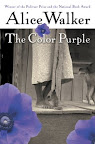
1983: The Color Purple - Alice Walker.

1984: Ironweed - William Kennedy.

1985: Foreign Affairs - Alison Lurie.

1986: Lonesome Dove - Larry McMurtry.

1989: Breathing Lessons - Anne Tyler. [Although this novel is terrific, I think she was really being recognized for her excellent novels Dinner At The Homesick Restaurant and The Accidental Tourist.]

1991: Rabbit At Rest - [Even after all these years, I still can't believe Updike brought an end to Rabbit's story.]

1992: A Thousand Acres - Jane Smiley.

1994: The Shipping News - E. Annie Proulx. [For years after reading this novel, I wanted to move to Newfoundland.]

1995: The Stone Diaries - Carol Shields.

1996: Independence Day - Richard Ford. [I remember being so happy to read the news that Ford's book had won the Pulitzer. I really enjoyed his short story collection Rock Springs.]

1999: The Hours - Michael Cunningham.

2001: The Amazing Adventures Of Kavalier And Clay - Michael Chabon. [I wouldn't be surprised if Chabon was a repeat winner one of these years.]

2002: Empire Falls - Richard Russo. [I really like Russo. He reminds me of Anne Tyler, except male.]

2005: Gilead - Marilynne Robinson. [There's a part in this book where the aged minister says of his young wife that she "just melted" into a book. That describes how I experienced this luminous novel.]

2006: March - Brooks. [I'm a huge fan of Little Women, and except for a few nit picky things, I think Brooks did an excellent job of telling Mr. March's story.]

1992: A Thousand Acres by Jane Smiley


A Thousand Acres by Jane Smiley (1991)
Fiction, 384 pages
First Anchor Books Edition (2003)
A division of Random House, Inc.
1992 Pulitzer Prize Winner

Cross posted here


A successful Iowa farmer decides to divide his farm between his three daughters. When the youngest objects, she is cut out of his will. This sets off a chain of events that brings dark truths to light and explodes long-suppressed emotions. An ambitious reimagining of Shakespeare' s King Lear cast upon a typical American community in the late twentieth century, A Thousand Acres takes on themes of truth, justice, love, and pride, and reveals the beautiful yet treacherous topography of humanity. - Copy from back flap

Jane Smiley writes a contemporary novel with many similarities to Shakespeare’s The Tragedy of King Lear. Not only will the plot details be familiar, but also the major themes as well as the main characters. What makes this story contemporary, is that it is told through the eyes of Ginny (Goneril). Considering the strong patriarchal theme of the play, this retelling from a female point of view offers to challenge those familiar with Shakespeare’s tragedy. It is almost as if you are getting to hear the other side of the story; one that would seemingly change the dynamics completely.

However, when reading this book, I became aware that when it comes to power, manipulation, generational conflict, obsession, and madness, gender really is not the determining factor nor are the ramifications significantly different than if this were as male dominated as the play.

Conflict in any style, by any means, has its own ‘life’. It feeds upon hate, and thrives by the inability of those involved to forgive. As noted by Ginny:
We’ve always known families…that live together for years without speaking, for whom a historic dispute over land or money burns so hot that it engulfs every other subject, every other point of relationship or affection.
An aging father’s decision sets into motion a series of events that ultimately cost lives and destroys relationships. This is the similarity the novel has with the play. What differs is how it is told, and who dies, although I would mention that there are different types of death; spiritual and physical. Thus the correlation between the two becomes even more apparent.

I must admit I did not read every page of this book. However, I have never really gotten through all of King Lear either. The subject matter is dark, depressing, and at times frustrating. Smiley does well in updating and expounding upon Shakespeare’s tragedy. This was not an easy book to read, and I could not do it in one sitting as I have with others. In addition, I am guilty of ‘flipping’ through and speed-reading many passages.

Although deserving of a Pulitzer, I am only going to give it a 3 Star rating (out of 5) as I did put it down and often. But I always returned and did my best to muddle through. Any difficulty I had in dealing with the subject matter was my own, and in no way reflects upon Smiley's skill as an author.

Wednesday, April 2, 2008

The Color Purple by Alice Walker

This is one of those books that I love so much that I am hesitant about trying to write about it for fear of trivializing it in some way. I reread this book in February, but was unable to even approach writing about it until I decided to just do one of these questionnaires so that I can be walked through the process.

Title and author of book? The Color Purple by Alice Walker

What led you to pick up this book? I've read it before, probably twice, maybe three times. This year, I saw the movie for the first time, which made me want to reread the novel.

Give a brief summary of the plot: The main character, Celie, grows up poor in an abusive household. In fact, it seems like everyone she knows is abusive or abused, so it seems normal to her -- this is probably a result of the crushing despair of poverty. She's married off young to a man who continues the pattern of abuse. He's also in love with another woman, a woman who becomes Celie's friend.

What did you like most about the book? For me, the most moving part of the story is Celie's separation from her sister; my favorite part of the book has something to do with this separation, but to talk about that would be a huge spoiler. I also really like the letter structure of the novel, and I like the use of dialect in this book, even though dialect is usually distracting for me. And I really love the way Celie grows into a level of strength that allows her to start standing up for herself somewhat.

What did you like least?There isn't anything I could really say I dislike about this book, but some scenes are disturbing. For me, the most difficult scene is the one in which a friend of Celie's is beaten and imprisoned for trying to stand up for herself.

What did you think of the writing style? The writing is amazing. As I said above, it's epistolary and uses dialect. Some parts are written in standard English, and those beautiful passages only serve to highlight the simplicity of Celie's uneducated writing and speech. But don't get me wrong; Celie's words are also beautiful. It's amazing to me how Walker manages to write in these two different styles, and make both of them so full of insight.

What did you think of the main character?: I can remember that upon my first reading of this book, I felt frustrated with Celie. She tolerated such terrible treatment, and I was angry with her. I think I have a better understanding of human nature now, so I realize that Celie is a person who has spent her entire life so beaten down -- and not just by individuals, but by society as a whole -- that it's impossible that she could have lived her early years of adulthood in any other way. During this reading of the novel, I was able to notice Celie's gradual strengthening, and rather than resenting Shug's presence in Celie's life at all, I was able to see how she helped Celie grow. I was also able, this time, to appreciate the way women in the book support each other and give each other a sense of community in a world that completely marginalized women of their era, race, and socioeconomic class. Not that the men of their era, race and socioeconomic class fared much better.

Any other particularly interesting characters?Most of the words of wisdom are given to Shug and to Nettie. I think that Walker gave her own voice to those characters at times. They are both amazingly strong and they both overcome terrible circumstances through a combination of luck, talent and introspection.

If this book has been made into a movie, and if you’ve seen the movie, compare the book to the movie. If you've only seen the movie, if you liked it, you should really treat yourself to the book. The movie leaves out so much.

Share a quote from the book: I'll share two, so that you can see the contrasts mentioned above.
The years have come and gone without a single word from you. Only the sky above us do we hold in common. I look at it often, as if, somehow, reflected from its immensities, I will one day find myself gazing into your eyes. Your dear, large, clean and beautiful eyes.


And this is Celie, speaking of her stepson (Harpo) and her husband (Harpo's daddy).

Harpo no better at fighting his daddy back than me. Every day his daddy get up, sit on the porch, look out at nothing. Sometime look at the trees out front the house. Look at a butterfly if it light on the rail. Drink a little water in the day. A little wine in the evening. But mostly never move.

Harpo complain bout all the plowing we have to do.

His daddy say, You gonna do it.

Harpo nearly as big as his daddy. He strong in body but weak in will. He scared.

Me and him out in the field all day. Us sweat, chopping and plowing. I'm roasted coffee bean color now. He black as the inside of a chimney. His eyes be sad and thoughtful. His face begin to look like a woman's face.


Cross-posted in my blog.

Saturday, March 29, 2008

2000: Interpreter of Maladies by Jhumpa Lahiri

Interpreter of Maladies is a collection of nine short stories that all involve Indians – some immigrants in America, some in their homeland. A lot of these stories deal with displacement and isolation, but, needless to say, you don’t need to be Indian, or to be an immigrant, to be able to relate to the emotions they convey. All you need is to have experienced loneliness, loss, longing, intimacy, sorrow or joy in the many ways in which they come – in short, all you need is to be human.

Using a language that is subtle, precise, and disarming in its simplicity, Jhumpa Lahiri writes about unhappy couples, happy ones, affairs, a child’s perception of war, youth and old age, emptiness, satisfaction, frustration, dreams both lost and come true.

Most of these stories really touched me. The first, “A Temporary Matter”, is about a couple whose baby was born dead, and who now have to deal with their grief and with the increasing distance that separates them. When they get a letter warning them that the power will be cut between 8 and 9pm for a week due to some repair work, they begin to use that hour of darkness to tell each other things they had been holding back, and thus to regain some of their lost intimacy. The story ends with revelations that change things forever, and it made me feel such loss on behalf of the characters. It did what the best fiction does – it put me temporarily in the skin of another.

In “Sexy”, a young American woman named Miranda is having an affair with a married Indian man named Dev. We experience all the longing, bittersweetness and ambiguity of her situation along with her, until, when babysitting a young Indian boy, she is told what the word “sexy” means to a child, and consequentially begins to see her relationship in a different light.

“Mrs. Sen's” is a story about homesickness and displacement. Through the perspective of an eleven-year-old boy named Eliot, we witness Mrs Sen’s struggle to adjust to a way of life that is different from everything she has ever known.

The last story, “The Third and Final Continent”, is about growing intimacy and finding a place to call home. The protagonist leaves India for England and then for America. Before going to America, he gets married. The marriage is arranged by his and his bride’s families, and his wife is to join him in American when her papers are ready. In the meantime, he rents a room at Mrs. Croft’s house, and is very surprised to learn that his landlady is 103 years old. It is in the presence of his elderly lady that he and his wife begin to overcome the awkwardness of being two strangers married to each other, and to truly become a couple.

Jhumpa Lahiri is clearly a writer of great perception, and of equally great precision. Nothing in her stories is overstated, and her wording is always exactly right. What really won me over, though, was how superb her characterization is. All her characters are painfully human. Interpreter of Maladies is well worth reading.

Friday, March 28, 2008

Intro: Pulitzer Winners I've Read So Far...


So far, Angle of Repose, by Wallace Stegner, is my favorite read of all time.


It's great to find fellow Pulitzer Prize groupies - these are the Fiction winners I have read so far:

  1. 1925 - So Big (Ferber)
  2. 1939 - The Yearling (Rawlings)
  3. 1940 - The Grapes of Wrath (Steinbeck)
  4. 1947 - All the King’s Men (Warren)
  5. 1958 - A Death in the Family (Agee)
  6. 1961 - To Kill a Mockingbird (Lee)
  7. 1972 - Angle of Repose (Stegner)
  8. 1980 - The Executioner’s Song (Mailer)
  9. 1981 - A Confederacy of Dunces (Toole)
  10. 1982 - Rabbit is Rich (Updike)
  11. 1983 - The Color Purple (Walker)
  12. 1984 - Ironweed (Kennedy)
  13. 1988 - Beloved (Morrison)
  14. 1989 - Breathing Lessons (Tyler)
  15. 1991 - Rabbit at Rest (Updike)
  16. 1994 - The Shipping News (Proulx)
  17. 1995 - The Stone Diaries (Shields)
  18. 1999 - The Hours (Cunningham)
  19. 2002 - Empire Falls (Russo)
  20. 2003 - Middlesex (Eugenides)
  21. 2005 - Gilead (Robinson)
I'll post my reviews gradually - I'm looking forward to reading the reviews from other readers...

Tuesday, March 11, 2008

Margaret's Introduction & 1972 Angle of Repose by Wallace Stegner

I’m Margaret from BooksPlease blog. I’ve only read a few of the Pulitzer Prize winners, so this is a good opportunity to read some more, without any pressure or deadlines. The prize-winning books I’ve read so far are:

1940 - The Grapes of Wrath, John Steinbeck
1972 - Angle of Repose, Wallace Stegner
1988 – Beloved, Toni Morrison
1995 - The Stone Diaries, Carol Shields
1999 - The Hours, Michael Cunningham
2006 – March, Geraldine Brooks

Apart from Angle of Repose I read these books before I started writing my blog. This is what I wrote about Angle of Repose, which Stegner based on the letters of Mary Hallock Foote.


"This book won the Pullitzer Prize for fiction in 1972. It is the story of Lyman Ward, a wheelchair bound retired historian who is writing his grandparents' life history and also gradually reveals his own story. I now know much more about the early days of the opening up of America's western frontier than I learnt from TV cowbow series and films such as Butch Cassidy and the Sundance Kid etc. The story is of Oliver Ward's struggles with various mining and engineering construction jobs, contrasted with Susan Ward's efforts to support him against great difficulties. This is made more difficult when she compares her life with that of her New York society friend, Augusta.

It's a long book, but completely enthralling. There are long letters from Susan to her friends which I think are taken directly from Mary Foote's own letters and these are such descriptive letters that I could imagine what life was really like at that time and place. My only criticism is that I felt the ending came too quickly and was too compacted. I wanted to know more about Susan and Oliver. It was as though Lyman became too disappointed with how their life turned out, or maybe it was because he was too engrossed in his own problems, his illness and difficulties in his personal life.”

The only other book by Stegner that I’ve read is Crossing To Safety, which is a great book. I wrote about it here.

I read the Grapes of Wrath whilst at school, so I may have to re-read this sometime. The rest I’ve read over the last two years apart from Beloved (which I loved), which I read about 10 years ago. I have a copy of The Color Purple by Alice Walker, so I think I’ll read that first. Depending on which books I can find (borrow) I’d also like to read at least:

1953 The Old Man and the Sea by Ernest Hemingway
1961 - To Kill a Mockingbird by Harper Lee
1994 - The Shipping News by E Annie Proulx

Saturday, March 8, 2008

Bethany's Intro and Progress

I am bethany from B&b ex libris, and am very excited to be joining you all in this project. I am not sure that I will be very fast at this, but that is not the point, is it now? So, I will post below my progress and my goals!

Pulitzer's that I have read already:
2006 - March (Brooks) (finished OCT 2007)
2000 - Interpreter of Maladies (Lahiri) (finished Sept. 2004)
1961 - To Kill a Mockingbird (Lee) (Finished Dec, 1996)
1939 - The Yearling (Rawlings) (?)

Pulitzer's that I own and will be on my reading list:
2005 - Gilead (Robinson)
2001 - The Amazing Adventures of Kavalier & Clay (Chabon)
1999 - The Hours (Cunningham)
1988 - Beloved (Morrison)
1975 - The Killer Angels (Shaara)

1923: One of Ours by Willa Cather

I’ve lived in Nebraska and know well the rolling landscape, the hard-working but easy-going people who farm and ranch the land there. Willa Cather’s prose, as far as I’m concerned, reflects perfectly their characters. That is the first impression that a reader takes away from One of Ours. And its protagonist, Claude Wheeler, reminds me of young people I’ve met there, who love their state and their families, but somehow don’t quite fit in. While Cather was writing about the turn of the 20th century, the story could indeed have taken place over 50 years later.

Claude’s pragmatic father doesn’t see the necessity, for a farmer, of too much education. Thus, Claude has to forego completing his college degree, and forsaking he friends, much different from those at home, he’s made in Lincoln. His mother, a more or less fundamentalist Christian (although the movement itself within Christianity hadn’t yet begun), is quite sensitive to Claude’s moods and aspirations; her emotional pain on behalf of her son is almost physical. Claude, as would be expected of a young man his age, marries—only to have his wife go to China to help her sister. His emotional desolation is nearly complete; he wonders if that’s all there is to life—getting up in the morning, working, going to bed at night. It may satisfy friends his age who ask nothing better than to farm their own land, but Claude longs for something more—what, he’s not sure but something.

Then World War I erupts in Europe. Claude and his mother follow the war through the newspapers and maps they pore over together. When the United States enters the war, Claude enlists—and finds his place in the world.

Cather describes the effect of the war on France and its people. She also writes about little-known facts, such as the toll sickness took of the soldiers on the way over, many dying from pneumonia. She has interesting details about what it was like for the soldiers to live under wartime conditions—bathing in polluted water in shell holes was a nice touch. There is some description—not much—of the fighting but it fits in with her story. Clearly she was more interested in what happened to the people, both French and the Allied soldiers, than she was in the details of the fighting itself.

The last pages break your heart. I think you have to be a stone to be unmoved.

For a relatively short book—371 pages in my edition, One of Ours is beautifully evocative of a time, a place, and a young man’s successful search for himself. One of the best of the early Pulitzer winners.

Friday, March 7, 2008

1922: Alice Adams by Booth Tarkington

Alice Adams is a morality tale about a socially ambitious young woman and her family in a Midwestern city. The family is middle-class, and sliding down in the economic scale. The father has worked in the same job for 20 years and is content. The mother, ambitious for her children, bitterly blames the father for not having made more of himself, for not thinking of his children’s social futures and therefore not having any gumption to do better. Her entire life is focused on her children, especially Alice, being part of upper-class society. The mother is convinced that money and money alone will make the difference and constantly badgers the father to do better.

Alice pours nearly all her energy into making a good “catch”. Quite popular a few years ago, the gentleman callers have vanished. Still, she practices gestures and facial expressions in front of the mirror, works hard at making over clothes (actually, dictating directions to her mother) to keep fashionable, spending all she can on accessories and clothes. She visits a well-to-do friend and basically worms her way into receiving invitations to society events.

Her brother Walter is a bitter young man who hates the situation in which he finds himself, loathes the ‘swells’ that Alice courts so assiduously, and hangs around with a crowd that his mother in particular finds appalling.

A new young man comes to town and is attracted to Alice, who goes all out to land him. But as we see increasingly in her dialogue with him, she misrepresents herself and her family and is terrified of what he will find out from his well-connected society relations.

Meanwhile, her father, goaded beyond endurance by the nagging mother, decides to leave the firm for which he has worked and start a glue factory, using a formula that can be rightly said to belong to his former employer.

The book has a double climax: a dinner party given by the mother for Alice’s young man and the outcome of the father’s business enterprise.

There are no surprises here—in a morality tale, the outcomes are guaranteed. That wouldn’t be a problem if the book were as well written as The Magnificent Ambersons, but in my opinion, it isn’t. The Magnificent Ambersons was a complex story, enriched by Tarkington’s observations on the transformation of a small Midwestern town into and industrialized city and the social changes that accompanied the growth. Alice Adams has a much narrower focus, and while the writing at times is excellent—the description of the dinner party is superb—there is no tension to the story because the reader knows perfectly well how it has to end. Winner of the Pulitzer Prize for 1922, it really suffers by comparison, both in plot, style, and excellence in writing by the previous winner, The Age of Innocence by Edith Wharton. It’s a good read if your goal is to read the Pulitzer winners. Otherwise, I feel it’s not worth the effort.