Tuesday, June 9, 2009

The Age of Innocence (1921) - Reviewed By Monique

Rating: 4 out of 5 Books
Pages: 270
Genre: Adult (Classic)
Series: No
Publication Date: 1920

Synopsis (From Back of Cover):
Newland Archer saw little to envy in the marriages of his friends. yet he prided himself that in the tender and impressionable May Welland he had found the companion of his needs. The engagement was announced discreetly, but all of New York society was soon privy to this most prefect match, a union of families and circumstance cemented by affection.

Enter Countess Olenska, a woman not afraid to flount convention and determined to find freedom in divorce. Newland, though drawn to the socially ostracized Ellen Olenska, knows that in sweet-tempered May he can expect stability and the steadying comfort of duty. But what new worlds could he discover with Ellen? Written with elegance and wry precision, Edith Wharton's Pulitzer Prize-winning masterpiece is a tragic love story and a powerful homily about the perils of a prefect marriage.
Review:
After reading The Age of Innocence I can understand why it is considered a classic. The writing is excellent. It is elegant. But since this book was written of 80 years ago, it makes it harder to read. In fact it was slow going. It wasn't that Wharton used words unfamiliar to me but the style made me slow down and absorb what was being written and going on.

I am going to say that this is a character based novel. While not as in depth John Steinbeck's East of Eden, the characters (mainly Archer and Olenska) take center stage. I would love to say that I really felt in touch with the characters and that I loved them but I was rather indifferent to them. Maybe because this is a story about old New York society and it's inhabitants and I just couldn't wait. But Wharton does put a lot of emphasis of making sure the reader knows and understands the characters and there actions.

The plot of the books was familiar but excellently done. Basically it is a story about "forbidden love" and the chooses people make in their lives and how those chooses affect them later. I am not going to give the story way but I did enjoy getting to take a glimpse into the varies rules of old New York and how they dictates ones actions and decisions.

Pros: Writing, Characters, Plot, History
Cons: Slow read

Overall Recommendation:

I want to give this novel a great write up but I don't know how to express who much I enjoyed the book. I enjoyed it more for the writing than anything else. For you want to read a well written story than this is it. But if you are looking for action or drama, than skip it.

Rose City Reader's Review of Advise and Consent -- 1959 Winner

Advise and Consent, Allen Drury’s 1959 Pulitzer winner, thoroughly covers the machinations of the Senate confirmation process as that august body deliberates the nomination of a controversial figure for the post of Secretary of State. Although long and sometimes exhausting, Drury’s landmark novel is a rewarding book for the patient reader.

At over 600 dense pages, this is not a quick read. The first 100 pages seem especially slow as the characters are introduced and the stage set. This behind-the-scenes look at the Senate may have been more interesting before 50 years of televised politics in general and C-SPAN in particular leached any tantalizing mystery out of Senate subcommittee hearings.

Once the story builds up steam, however, it powers right along. The candidate under consideration, peacenik Bob Leffingwell, has his avid supporters, including the somewhat Machiavellian President who nominated him. But he faces stiff opposition from those who think he will be unable to protect America on the brink of a nuclearized Cold War with an increasingly belligerent Soviet Union determined to send men to the moon to claim it as Soviet territory.


Whew! Full review posted on Rose City Reader.

Tuesday, June 2, 2009

Ag_in_TX's review of "All The King's Men" (Warren - 1947)

Since I have started this project, I have yet to read a book that was the type you stay up until 2 in the morning reading because you can't put it down - up until this one. As with my previous reviews, no plot summary as they are legion on-line - just my thoughts.

This was a classic tale of the individual who wants the best for people. He starts off trying to be the only honest politician and ends up a tragic figure consumed by his own lust for power. But even then, he is thinking of his people as he tries to get his hospital built.

His initial campaign is filled with details and plans of specifics of what he wants to do. But no one seems to care about details that will make government work. So, after an epiphany, he simply appeals to people's emotions. This reminded me greatly of politics today - to heck with substance - we all just want to be entertained and have 10 seconds sound bites. We have not matured much as a society since this the 30's.

I also enjoyed the journeys into the past and how they seemed to parallel the actions of characters in the present.

The tragic nature of how it all ends for each character is fitting - no one, no matter how clean they appear to be - has their skeletons in the closet.

Tuesday, May 19, 2009

Interpreter of Maladies by Jhumpa Lahiri (Jill)

Interpreter of Maladies
By Jhumpa Lahiri
Completed May 18, 2009

What can I say that hasn’t already been said about Interpreter of Maladies by Jhumpa Lahiri? I feel like the last person in the book world who hasn’t read it – and I am not sure what I was waiting for. Interpreter of Maladies was beautiful, poignant and thought-provoking, full of stories and characters that I will remember for a long time.

This Pulitzer winner was a collection of short stories – all centered around “maladies” that affect humans, such as loneliness, homesickness and regret. Each story touches on one malady, brilliantly represented by characters of Indian origin (either living in India or the U.S.). The stories brought the reader through a full range of emotions – sometimes happiness, other times grief. This was no small feat, considering you get to know the characters in only a few pages. That’s a testament to the power of Lahiri’s writing. Each short story evoked an emotional and very human response.

Another reviewer commented that she wished each short story was a full novel. I couldn’t agree more. Interpreter of Maladies packed richness in every punch. I am not an avid reader of short stories – mostly because I want more after finishing the story – but I learned with this book that wanting more is a good thing. Without a doubt, Interpreter of Maladies left me wanting to read more by this talented young writer. ( )

Tuesday, May 5, 2009

Laura's Review - Laughing Boy

Laughing Boy
Oliver LaFarge
302 pages

Laughing Boy was published in 1929, and is billed on the cover as "the first authentic novel of the Navajo Indians." Oliver LaFarge was something of an authority on Native Americans, working as an activist most of his life. So I expected an account of day-to-day Native American life, describing customs and rituals that are more widely understood today. LaFarge does this in a surprisingly eloquent, lyrical way, such as this passage describing the start of a horse race:
Arrows from the bow -- no other simile. At the tearing gallop, flat-stretched, backs are level, the animals race in a straight line; all life is motion; there is no body, only an ecstasy; one current between man and horse, and still embodied, a whip hand to pour in leather and a mouth to shout. Speed, speed, but the near goal is miles away, and other speed spirits on either side will not fall back. (p. 56)
But this book is much more than cultural education. It is also a beautiful love story. Laughing Boy, a Navajo brave, meets Slim Girl at a dance and is instantly taken with her. She was raised by whites, so their relationship is controversial within Laughing Boy's family & tribe. She also has a bit of a reputation that he is blissfully unaware of. He helps her reconnect to her roots and learn traditional crafts; she helps him discover the wider world beyond his tribe. Their relationship evolves as they come of age themselves. LaFarge is far less lyrical when writing about relationships, and yet he manages to convey each person's deepest feelings of love, and of fear of failing the other. This book gets a 3-star rating because while it was good, it lacked a certain depth. It almost earned another half or full star because of its very moving ending. Recommended. ( )

My original review can be found here.

Friday, May 1, 2009

His Family (1918)


I read the first Pulitzer Prize winner, His Family by Ernest Poole, for my first entry into this Pulitzer Project. I see that there have been a couple of very thorough reviews already. The novel is about a widower and his three adult daughters, who each seem to exemplify a "type" of woman of that time. The oldest daughter, Edith, is caught up in her own family. She'll do anything to protect her children and would never consider working outside her family.
Deborah, the middle daughter, probably represents the "new" woman of the time--she works at a school and has thousands of tenement children she is interested in. She is a quintessential do-gooder and probably was a socialist and a suffragist. The youngest daughter represents the pleasure principle. She loves fashion and travel; she marries, has an affair (as does her husband), divorces, and remarries.

The characters never really transcend the stereotypes. I can understand, however, that the Pulitzer Committee perceived this as a novel of ideas and of society.

Monday, April 27, 2009

Ag_in_TX's review of "House Made of Dawn" (Momaday - 1969)

House Made of Dawn is a novel by N. Scott Momaday, widely credited as leading the way for the breakthrough of Native American literature into the mainstream. It was awarded the Pulitzer Prize for Fiction in 1969.

In this story, a troubled young Native American named Abel is struggling with the modern world and the loss of his heritage. We follow him through his return to New Mexico after World War II, his time in Los Angles after a stint in prison, and his return home again. As before, I will not give a synopsis of the book as those are plentiful on the Web. I will instead focus on the themes that moved me.

At only 198 pages, I picked this book next because it was shorter. But much like a small piece of very rich cheesecake, the density of the writing made this book a joy to work through. In particular, the descriptions of the landscape are just exquisite. Having hiked the mountains of west Texas and southern New Mexico, I can tell you Momaday brings these places to life through the word pictures he draws.

The great depth and effort he goes into describing the landscape and the character’s love and bond to it reinforces how important these aspects of life are to the Native Americans – it drives home to the reader that this is the source of happiness and fulfillment to Abel. And hence – the loss of this lifestyle and attachment are what drive him to unhappiness and excessive drink to escape the pain.

The second theme is the tempo of life Abel is dealing with. On the reservation, life shares a tempo with nature – there is no sense in hurrying, no sense in rushing – the sun comes up when it comes and sets when it sets. But in the Army, and again in Los Angeles, Abel has to be at work at a certain time, deal with traffic and the bustle of the city – and he cannot stand it. The stress is unnatural and he escapes through drink. He also struggles with his fellow Native Americans who have adapted all too well to the white man’s world.

The are a multitude of themes and imagery in this book – too many to go into here. But the overriding theme of the book was – pain. The emotional and physical pain Abel feels due to the loss of all he loves over the course of the book, finally ending with the death of his grandfather (his last attachment to the past) at the end. That sounds depressing, but it is reality – the reality that existed whenever native cultures came into clash with the modern world. And understanding this pain is central to understanding the issues the Native Americans have had in adapting to the modern world.

Sunday, April 26, 2009

Olive Kitteridge by Elizabeth Stroud (Jackie's Review)


Olive Kitteridge is described as a ”novel in stories”. I’m not a big fan of short stories, and so wasn’t convinced that I’d enjoy this book, but as it won the Pulitzer prize I thought I’d give it a try.

I think the emphasis on this being a collection of short stories is misleading, as it is essentially just a novel about one woman, Olive Kitteridge. The story is told through the eyes of various people who knew her, capturing the important moments in her life, in what at first, are seemingly random snippets. The use of small-town gossip, to tell much of the story was a clever medium, which I haven’t seen used before.

The book begins quite slowly, and I have to admit that for the first few chapters I didn’t know what to make of it. The writing was very vivid and powerful, but the large number of characters meant that I wasn’t sure who, or what, was important. About a third of the way through things began to fall into place. Olive’s character became prominent, and I felt that I understood what was happening. I don’t want to give anything away, but I think it is important that you know that the overwhelming emotion I felt on completing the book was that of heartbreak. This book is incredibly touching, and packed with feelings of sadness, and loss. It questions which things are important in life, and examines the relationships between family members who have forgotten how to love each other. Olive’s emotions are powerful and realistic. All mother’s will sympathise with her feelings of isolation, as her only son distances himself from her.

Overall, I found this to be an insightful, touching novel on the reflections of an old woman nearing death. It is a great book, and I think it is worthy of the Pulitzer prize, but I’m not sure it will stand the test of time. I think it will probably end up on that list of ‘the most forgotten Pulitzers’ in 50 years time.

Recommended to anyone who has the patience to piece together a great story.

4/5


Originally posted here.

Wednesday, April 22, 2009

Rose City Reader's Pulitzer-Related Challenge


My participation with this Pulitzer Project has been woefully feeble. In part to jump start my enthusiasm for reading the Pulitzer winners, I just launched a reading challenge on Rose City Reader.

I call it the Battle of the Prizes because it asks participants to compare Pulitzer winners with National Book Award winners by choosing three books -- one that one the Pulitzer, one that one the National, and one that one both.

Anyone interested in participating can sign up here. If you post the challenge on your own blog, I am happy to link your post under the Participant list. Just leave a comment with the link on the challenge post.

Happy reading!

Monday, April 13, 2009

Ag_in_TX's review of "A Confederacy of Dunces" (Toole - 1981)

I will start by admitting I had a hard time wading through this book. I think every parent of a college age student would have trouble with this book as it touches on illogical and unfounded fears that, after your child finishes college, they will want to move home and make nothing of themselves!

Putting aside that fear, the protagonist in this story, Ignatius Reilly, is, in my humble opinion, the most unlikeable leading character in just about any book I’ve ever read. Utterly self-centered and slothful, he blames everyone and everything for all misfortune in his life. His mother is a poor creature who schizophrenically swings between doting mother and drill instructor parent.

In fact, all the characters are fraught with shortcomings and flaws that leave you feeling various states of pity, hate and confusion – but often leave you laughing at them.

Instead of giving a synopsis of the book, I will touch on some points that came to me while I read the book.

- Ignatius’ diatribes in his journals were, for me, the hardest parts to read as he waxed melodramatically about a wide range of subjects. I thought, as the book progressed, he was descending into mental illness and his mother’s final actions were warranted.

- How interesting that, in the end, his savior is the one person, the one fixation, that he could focus his energies on throughout the book – his old college “girlfriend”, Myrna Minkoff – but almost always as hatred and anger. As he escaped a trip to the mental hospital (and, frankly, escaped his entire existence, a mental prison he had built himself into), I was left with a sense of relief – relief for him and everybody in New Orleans his life had touched.

- It was interesting that every character in the book was tied up some sort of stasis (Trixie never being able to retire, Levy hating his own company, Mrs. Reilly’s alcoholism) that had gone on for years, and that the entry of Ignatius Reilly (who lived in a most perpetual stasis of his own) was the catalyst that kick started their lives.

- Ignatius’ “valve” – what was that? What is that supposed to be an image of? He thought it a real, physical thing – but was it really his own mental block against the whole world? A true mental illness? There must be some symbolism to the “valve” that I am missing – it was so central to the way he reacted to everything he encountered.

In short, this is a book I almost hated to keep reading but could not put down. Odd? Well, yes. Perhaps I was overcome by a bad case of literary “rubbernecking” – I just had to know what happened next. But in the end, no matter how much I loathed Ignatius J. Reilly, I wanted him to escape – for the sake of everyone involved.

Sunday, April 5, 2009

Laura's 2009 Goals & Progress

I started this perpetual challenge in 2007, and in 2008, my goal was to read 8-10 Pulitzer winners. I read 8 and have now read 20 of the more than 80 winners. I'm less committed to completing this challenge than to just enjoying good literature. My 2009 goal is to read at least 6, including the 2009 winner.
Pulitzer Prize Winners Read in 2009
1925 - So Big (Ferber)
1930 - Laughing Boy (LaFarge)
2009 - Olive Kitteridge (Strout)
1923 - One of Ours (Cather)
2002 - Empire Falls (Russo)
1972 - Angle of Repose (Stegner)

My complete list of Pulitzer Winners read can be found here.

Laura's Review - So Big

So Big
Edna Ferber
259 pages

Selina DeJong spent her childhood traveling the US with her father, who made his living as a gambler in the late 1800s. He instilled in her a sense of independence so strong that after his death Selina decided to make her way as an independent woman, finding work as a teacher in a Dutch farming community on the Illinois prairie. She boarded with a family, and despite being a fish out of water she gradually drew closer to the family and especially their oldest son, Roelf. Eventually Selina married a local man, Purvis DeJong and had a son, Dirk (known by his nickname, "Sobig," taken from a game Selina often played with him as a baby). Over the years Selina transformed from city girl to farm wife, and exerted strong influence over the development of both the farm and her son.

The pursuit of beauty is a prominent theme in this book:
"It's beauty!" Selina said then, almost passionately ... "Yes. All the worth-while things in life. All mixed up. Rooms in candle-light. Leisure. Colour. Travel. Books. Music. Pictures. People -- all kinds of people. Work that you love. And growth -- growth and watching people grow. Feeling very strongly about things and then developing that feeling to - to make something fine come of it." ... She threw out her hands in a futile gesture. "That's what I mean by beauty. I want Dirk to have it." (p. 146).

On arrival in High Prairie, Selina is struck by the beauty of cabbages and other produce, much to the amusement of the hard-working local farmers. She finds beauty in most aspects of her life, and works hard to instill in Dirk that same appreciation of, and wonder for, beauty. Most of the time Dirk respectfully tolerates her chatter, seeing it as old-fashioned but endearing. But it's clear to the reader that Dirk is on his own journey to discover beauty through education, work, and relationships.

So Big won the Pulitzer Prize in 1925 and it's easy to see why. On one level, Selina's story is a compelling portrait of farm life at the turn of the 20th century, and Selina is an unusually strong woman for that era. Then Ferber weaves in additional characters and subplots to create a beautiful tapestry. Add to that the search for beauty in its many forms, and So Big becomes infused with meaning not found in many books. Highly recommended. ( )

My original review can be found here.

Thursday, February 5, 2009

Beloved by Toni Morrison (1988) - Review by Monique

Before I get to a review I have a story to tell. When I was growing up, I lived in a mostly white town. In fact, I think there was only one other black family in the whole town. So, my grandmother felt the need to constantly give me books written by black authors, and try to force me to read them. I would not have had a problem with it if it had not been for the fact that the books that she picked always seemed to deal with slavery. And for 8 or 9 year old me, that topic was too distressful. So, one day she gave me "Beloved" to read. Yes, my grandmother gave me, a 8/9 year old little girl, "Beloved". Needless to say, that I was so confused by the first chapter. This book is hard for some adults to read, I cannot begin to understand why she thought it was appropriate for a child. I have a feeling that she did not read the book herself but did like the concept. But anyways, I did not pick up that book until two decades later and was quick to tell anyone who asked that it was difficult and I would never try to read it again. In walks the Pulitzer Project and 1,001 Books You Must Read Before You Die and "Beloved" is on my TBR list.

What a difference twenty years make. I still believe that "Beloved" is a difficult read. The language and imagery is challenge. But I have to say that I enjoyed every last page. Morrison is a master with the English language. I could see the characters, the town, their past, and their present. For me Morrison made it all come alive. Now that I have really read the book, I can't remember what I found so difficult about it. Maybe my vocabulary and reading ability have evolved (I seriously hope so or the public school system has a lot to answer too).

The characters were very well thought out and portrayed. Each of the main characters (Sethe, Paul D, and Denver) grow throughout the novel. Morrison took the reader inside their thoughts and let you see their feelings and the reasons for their actions. Nothing was left to guess about. Each character had their own personality and past that shaped their decisions. It was intriguing to see how the events in the past lead them to the point where the story takes place. How these events shape how they each react to Beloved's presence.

Now for some people this will be a difficult read. While I enjoyed how Morrison was able to pact so much into the story, I can also see where it would make it hard for some. There are a lot of different things going on. A good portion of the story is dealt with through flash backs. Sethe, has flashbacks to her time as a slave and her escape. Paul D, has flashbacks to his own enslavement, incarceration, and all the hardship he had to go through. Denver has flashbacks to her lonely painful child. Sometimes it can be hard to figure out since Morrison gives you bits and pieces at a time. But I did enjoy her method, it just made me continue to turn the page.

Another thing that can be hard is the imagery. While Morrison does not go into great detail, the subject matter is harsh. And the things that characters go through are sad and difficult (it is a post slave tale). The decisions that they made at times can be unthinkable to someone not in their position.

Pros: Language, Imagery, Characters, Plot
Cons: Language, Imagery

Overall Recommendation:

I personally loved it and would recommend it. But I would also warn that this book is not for everybody.

Sunday, January 25, 2009

To Kill A Mockingbird by Harper Lee (1961) - Review by Monique

There probably are very few Americans that have not a least heard about Harper Lee's "To Kill A Mockingbird". I don't recall when I first heard about this book but I remember hearing about it some point in my life. It wasn't required reading for me in high school and since I was not one to voluntarily read classics in high school this book got overlooked.

I feel robbed. My high school English teachers felt that it was more important to assign such boring books as "Ethan Frome" but left "To Kill A Mockingbird" out, shame on them. I am not going to classify this book as a page turner, but it was almost there. The last 100 or so pages I couldn't stop reading.

The story is told in first person and the narrator is a young child by the name of Scout. Now, there are so many directions that Lee could have taken with her creation of Scout. But she decided that she would be highly advanced for a child (in the book she is between the ages of 6 and 8), and this is good. Because the reader get not only to see how Scout develops but also gets a look into her thought process and how she tackles some of the complicated adult issues she has to face. Sometimes I forgot that this story was being told through the eyes of a child.

The language in the story was both simple and complex. Every now and than Lee would through in a SAT word (at least that was what I called them in high school) but they were perfectly in context with the story and did not distract from the flow. In fact they helped illustrated and remind the reader that Scout is a child.

Now to the storyline. Even though this book was published in the 1960's and takes place in the 1930's the subject matter is still relevant to today. The struggle for equality in legal system, prejudice, and class. All these issues come up in the book and Lee handles them well, maybe because she does it from the unbias eyes of a child.

This book as been criticized for the use of the "N" word but I think that it is appropriate because first it is a historical fiction novel and second that was reality back in the time frame of the story. The only time that my eyebrow raised was when I reached the following passage on page 118:

"The warm bittersweet smell of clean Negro welcomed us as we entered the churchyard..."
I have no idea what that means. Bittersweet smell and clean.... I am lost. But otherwise a solid well written book.


Pros:
Characters, Subject Matter, Language
Cons:
Language.

Overall Recommendation:
You haven't read it, yet? What's taking you so long? Check it out at the library or buy it.

Monday, January 12, 2009

Natalie's Progress through the Pulitizers

I've just ordered His Family by Ernest Poole (the first winner--1918) from the library. I've read in relatively recent years quite a few Pulitzer winners;

The Age of Innocence, So Big, The Good Earth and Gone with the Wind and that just gets me up to 1940.

I think my goal for reading in 2009 will be to try to read all of the Pulitzers that ended in the year 9:

Hence:
The Magnificent Ambersons will be next (1919) followed by
Scarlet Sister Mary, 1929. I realize that some of these books may be impossible to find.

This looks like a great challenge!

Saturday, January 3, 2009

Wendy's Books Read

UPDATE: January 3, 2009 - MY GOALS for 2009

My goal for 2009: 5 books from this list

  • The Brief Wondrous Life of Oscar Wao, by Junot Diaz (winner 2008)
  • The Known World, by Edward P. Jones (winner 2004)
  • Empire Falls, by Richard Russo (winner 2002)
  • Interpreter of Maladies, by Jhumpa Lahiri (winner 2000)
  • American Pastoral, by Philip Roth (winner 1998)
  • The Stone Diaries, by Carol Shield (winner 1995)
  • A Thousand Acres, by Jane Smiley (winner 1992)
  • Breathing Lessons, by Anned Tyler (winner 1989)
  • Beloved, by Toni Morrison (winner 1988)
  • The Optimist’s Daughter, by Eudora Welty (winner 1973)
  • All The King’s Men, by Robert Penn Warren (winner 1947)
  • The Magnificent Ambersons, by Booth Tarkington (winner 1919)
**********************

Read in 2005:


1999-The Hours, by Michael Cunningham (unrated; not reviewed)
1994-The Shipping News, by Annie Proulx (rated 4/5; not reviewed)
1986-Lonesome Dove, by Larry McMurtry (rated 5/5; not reviewed)

Read in 2006:

2005-Gilead, by Marilyn Robinson (rated 2.5/5; not reviewed)
1921-The Age of Innocence, by Edith Wharton (rated 4.75/5; not reviewed)

Read in 2007:

2007-The Road, by Cormac McCarthy (completed May 17, 2007; rated 5/5; reviewed here)
2006-March, by Geraldine Brooks (completed April 3, 2007; rated 4/5; reviewed here)
2003-Middlesex, by Jeffrey Eugenides (completed November 1, 2007; rated 4.5/5; reviewed here)
1983-The Color Purple, by Alice Walker (completed January 12, 2007; rated 4.75/5; reviewed here)
1961-To Kill a Mockingbird, by Harper Lee (completed March 21, 2007; rated 5/5; reviewed here)
1940-The Grapes of Wrath, by John Steinbeck (completed January 18, 2007; rated 5/5; reviewed here)
1932-The Good Earth, by Pearl Buck (completed November 28, 2007; rated 4.5/5; reviewed here)
1928-The Bridge of San Luis Rey, by Thornton Wilder (completed December 23, 2007); rated 3/5; reviewed here)

Read in 2008:

1925-So Big, by Edna Ferber (completed January 17, 2008; rated 5/5; reviewed here)
1972-Angle of Repose, by Wallace Stegner (completed April 17, 2008; rated 5/5; reviewed here)

Friday, January 2, 2009

3M's Progress and Goals for 2009

After reading 12 Pulitzers in 2007, I only read one (Beloved) in 2008! [edit: I actually read two because I read the 2009 winner, Olive Kitteridge] I'm not happy with that result at all, so I'd like to commit to reading at least 6 titles in 2009. These are the leading contenders (bolded were read in 2009):
  • 2008 - The Brief Wondrous Life of Oscar Wao by Junot Diaz
  • 2002 - Empire Falls (Russo)
  • 2001 - The Amazing Adventures of Kavalier & Clay (Chabon)
  • 2000 - Interpreter of Maladies (Lahiri)
  • 1992 - A Thousand Acres (Smiley)
  • 1989 - Breathing Lessons (Tyler)
  • 1987 - A Summons to Memphis (Taylor)
  • 1981 - A Confederacy of Dunces (Toole)
  • 1973 - The Optimist’s Daughter (Welty)
  • 1937 - Gone with the Wind (Mitchell)
  • 1936 - Honey in the Horn (Davis)
  • 1935 - Now in November (Johnson)
  • 1932 - The Good Earth (Buck)
  • 1926 - Arrowsmith (Lewis)
  • 1925 - So Big (Ferber)
  • 1921 - The Age of Innocence (Wharton)

Progress so far:
2008 - Olive Kitteridge
2008 - The Brief Wondrous Life of Oscar Wao
2007 - The Road
2006 - March
2005 - Gilead (read in 2006)
2004 - The Known World
2003 - Middlesex
1999 - The Hours
1998 - Beloved
1995 - The Stone Diaries
1994 - The Shipping News
1983 - The Color Purple
1972 - Angle of Repose
1961 - To Kill a Mockingbird
1958 -
A Death in the Family
1953 -
The Old Man and the Sea (read in 2002)
1940 -
The Grapes of Wrath (read in 1985)
1928 - The Bridge of San Luis Rey

Monday, December 22, 2008

The Road....................a Short Review

The Road by Cormac McCarthy is my first read from the list of Pulitzer Prize winners. This book, I thought, was quite interesting. Why? I was able to conjure up possibilities of all human kind being eliminated due to wars, rampant diseases, or catastrophic climatic changes. The end result being one or a few individuals left to survive on their own without all of the amenities that we have become accustomed to. The book relates the experiences of a boy and his father traveling along a road to somewhere (perhaps nowhere). As they make this journey, they are faced with various encounters all along the road. This consists of finding adequate food supplies, staying away from strangers, and locating resources for shelter. All throughout the story, I felt, the father was trying to impart knowledge to his son that would insure his son's survival after his death. All said, I thought the book was a good read. Although, sometimes, I found it difficult to establish who was speaking at times. This was because of a lack of affirmation to indicate such. (This may be the writer's technique. I would have to read more of the writer's works to know for sure.) It took me 4 solid days from cover to finish to complete the novel.

Saturday, December 20, 2008

Laura's Review - A Death in the Family


A Death in the Family
James Agee
318 pages


James Agee's Pulitzer Prize-winning novel is a stark, realistic portrayal of the searing emotional pain in human response to tragedy. The novel takes place over just a few days, as a close-knit family copes with the sudden loss of a loved one. FIrst, there is the waiting -- knowing an accident has occurred, but not yet knowing the outcome:
This heaviness had steadily increased while he sat and waited and by now the air felt like iron and it was almost as if he could taste in his mouth the sour and cold, taciturn taste of iron. Well what else are we to expect, he said to himself. What life is. He braced against it quietly to accept, endure it, relishing not only his exertion but the sullen, obdurate cruelty of the iron, for it was the cruelty which proved and measured his courage. Funny I feel so little about it, he thought. (p. 136)

When the death is discovered, Agee delves deep into the souls of his characters and their varied responses. The adults try to explain the loss to two young children. One of the children, a 6-year-old boy, meets up with children on their way to school and uncomfortably revels in his celebrity status. Some of the adults become stronger in their grief, and take care of those who have fallen apart:
"That's when you're going to need every ounce of common sense you've got," he said. "Just spunk won't be enough; you've got to have gumption. You've got to bear it in mind that nobody that ever lived is specially privileged; the axe can fall at any moment, on any neck, without any warning or any regard for justice. You've got to keep your mind off pitying your own rotten luck and setting up any kind of a howl about it. You've got to remember that things as bad as this and a hell of a lot worse have happened to millions of people before and that they've come thorugh it and that you will too. You'll bear it because there isn't any choice -- except to go to pieces." (p. 149)

This book is well written, and immensely powerful. Agee takes the reader deep inside the hearts and minds of his characters; I could identify with everyone in some way. He plumbs the depths of emotion, such that the book must be set aside every so often to work through feelings evoked by the text. I was most touched by the children in this story: the boy and his younger sister. Their emotional needs were largely ignored. The adults underestimated their ability to grasp the situation. Some wanted to exclude the children from the rituals of mourning; others took them under their wing and allowed them to grieve in their own ways. Agee writes from his own experience, having experienced a similar tragedy at a young age himself.

While it was a very sad book, I am glad to have read it -- it will occupy a place in my heart for a long, long time. ( )
My original review can be found here.

Friday, December 12, 2008

The Amazing Adventures of Kavalier and Clay - Jackie's Review


The Amazing Adventures of Kavalier and Clay won the Pulitzer Prize in 2001.

The book started off really well, and by page 35 I was so fond of the characters that I had tears in my eyes when they had to say goodbye to each other. This is a very rare event for me, as I don’t often cry when reading. There are perhaps five books that have managed to move me to tears in my entire lifetime, so this just goes to show the power of the writing in this book.

It continued well, and I loved the detail of the magic tricks, and Joe’s escape from Prague in 1939 to his cousin’s flat in America. Then everything went wrong. There were about 200 pages of boring details about life in a comic book office. I completely lost interest in the book, and at one point I nearly gave up on it. I’m really glad that I didn’t though, as the last third of the book was as good as the beginning. The plot was clever, the vivid characters were back and the ending was very satisfying.

An amazing book, with a long, dull bit in the middle. It could easily have had 9 or 10 stars if the boring bit had been condensed to about 10 pages.

Recommended, as long as you are able to get through a long slow section – it is worth it in the end!


Originally reviewed here.

Monday, December 8, 2008

1999 Prize Winner - The Hours (Cunningham) - Review by LegalMist

This review was originally posted on my other blog, LegalMist. Please see my spoiler alert before proceeding, and also feel welcome to join me for more discussion at the review posted on my LegalMist blog.

The Hours (Michael Cunningham, 1998) tells separate stories about a day in the life of each of three different women: Clarissa Vaughan, a modern New Yorker planning a party for a close friend who is dying; Laura Brown, a 1950's homemaker in a Los Angeles suburb; and Virginia Woolf, struggling to recover from (apparently) her mental illness and migraine-type headaches in a London suburb while beginning to write the novel Mrs. Dalloway in the early 1900's. Interspersed within the chapters about these three women, the book also provides some details of a day in the life of a fourth woman – Clarissa Dalloway, the title character of the book Virginia Woolf is writing.

A quick plot refresher – not intended to be comprehensive:

Clarissa Vaughan is planning a party for her friend, Richard Brown, who has won a literary award for his writing but who is also dying of AIDS. On the surface, the novel tells of her party preparations – buying flowers, arrangements for the food, stopping to visit Richard. The real focus, however, is on Clarissa’s thoughts, history, and relationships - with her friend and former beau Richard, her lesbian partner, her daughter, and her daughter's lesbian friend.

Laura Brown is planning a family birthday celebration for her husband and trying to make the "perfect" birthday cake while pregnant and caring for her three year old son. She is struggling with depression and finds that reading is her only escape from the harsh reality that she is unhappy with her seemingly perfect husband, home, and life. Her neighbor "Kitty" (also a 1950's homemaker) comes by with the news that she has to have exploratory surgery for a growth in her uterus, and they share a sensuous but ultimately awkward almost-kiss while her son looks on. Mrs. Brown is, for this day, obsessed with reading Virginia Woolf’s novel, and ends up guiltily leaving her son with a neighbor while she checks into a hotel room for several hours to read Mrs. Dalloway. Again, the real focus of the story is on Laura's thoughts, history, and relationships - with her husband, her son, and her neighbors.

Virginia Woolf is struggling to write her novel about a single day in the life of Clarissa Dalloway. She is also planning tea for her sister and sister’s children, who are supposed to arrive at four p.m. that day. The novel details the herculean struggle it takes for Virginia Woolf to overcome her crushing headache pain and to write her novel (or even to eat) and to entertain her sister and the kids. The real focus, again, is on Virginia's thoughts, her overwhelming desire to return to the big city, London, from the suburb where she currently lives, and her relationships - with her husband, her cook, her sister, her sister's kids. The prologue outlines Mrs. Woolf’s later suicide by drowning.

The subject of Virginia Woolf’s novel, Clarissa Dalloway, is also making party preparations. Woolf tells us that in the novel she "will have had" a love, a "girl she knew during her own girlhood," and she will "kill herself over something that seems, on the surface, like very little." (pages 83-84*).

My rambling thoughts:

The characters, although living in different times and circumstances, are tied together by the similar tasks that lie before them and the similar psychological challenges they face in getting through their days which appear ordinary and even potentially fun, yet are difficult for them due to their feelings of desperation and being not fully present, but more like spectators of their own lives. In this sense, the book is a comment by the author on the continuity of the human condition across the generations and the universal human experience of isolation and despair.

The stories of the three women are told in separate, alternating chapters. At first I found it a little confusing to keep up with which character was which, particularly because Clarissa Vaughan’s nickname (given to her by Richard) is "Mrs. Dalloway" and her chapters are labeled "Mrs. Dalloway," so at first I kept thinking her chapters should be about Virginia Woolf’s character. But overall, reading the women’s stories in separate chapters made it easier to keep the characters and their stories straight in my mind.

But the separateness of the stories also nearly blinded me to the ultimate connection between Clarissa and Laura: At the end of the book, after Clarissa Vaughan’s party preparations have been made, she stops by to help Richard get ready for the party (page 195*), but he is sitting on the window ledge in his fifth-floor apartment when she enters ... and he jumps from his apartment window and kills himself. Clarissa returns to her apartment where her lesbian partner has assisted in calling off the party, then welcomes Richard’s mother into her home to begin the grieving process.

It wasn’t until several days after I read the book that I realized that Richard’s mother, Laura, who came to Clarissa’s apartment after Richard’s suicide, was the same Laura Brown featured in the chapters on "Mrs. Brown" with her three year old son "Richie." Either I’m clueless (most likely conclusion), or the book is a bit obscure, perhaps intentionally, on this point.

The author inserts tons of parallels between the lives of the three characters in this book, and the character in Virginia Woolf’s book, Mrs. Dalloway. From the types of flowers they buy, to the similar structures of their days, to their depressing thoughts and attempts to be happy despite their despair, the novel provides a smorgasbord of foreshadowing and parallel events, exploring each character’s reaction to similar events. The author "mixes it up" a bit with some opposition, as well -- for example, Mrs. Brown and Mrs. Woolf are each married to (kind, loving) men, while "Mrs. Dalloway" (Mrs. Vaughan) is in a long-term lesbian relationship -- though at one point she refers to herself as being like a typical housewife. Mrs Woolf and Mrs. Brown both live in the suburbs, while Mrs. Dalloway (Vaughan) lives in New York city.

On one hand, this parallelism and foreshadowing can be a useful literary device, allowing the reader to draw connections between the characters and highlighting ideas that otherwise might pass unnoticed. On the other hand, I found it distracting to be so constantly reminded of the parallels between the characters’ lives. For me, it was harder to "suspend my disbelief" and get into the characters’ minds because the constant discovery of ways in which this character’s life was somehow parallel (or opposite) to that character’s life merely served to remind me that the whole thing was made up by a single author, Michael Cunningham, who could insert these random parallel facts wherever he liked.

My initial reaction to the book was, therefore, that I did not understand why it won the Pulitzer Prize. It was an entertaining enough read, but rather clumsily (I thought) drawn – I noticed the literary devices too much, and felt that the characters and plots were a little too similar. And among all these distracting parallels and other connections between the characters, I missed the obvious and probably most important one -- that Clarissa's friend, Richard Brown, was also Laura Brown's son "Richie."

But the book grew on me, particularly after I made the connection between "Richie" and "Richard" and "Mrs. Brown" and "Laura Brown" and then went back and re-read portions of the book. I found myself liking the characters more, and liking the story more.

Recognizing this connection gave me a lot more to think about: Was Richard's preoccupation with "Mrs. Dalloway" (calling his friend Clarissa "Mrs. D") caused by his mother's obsession with Virginia Woolf's book early in his life? (On the first read-through, I had seen it as merely another "random" connection between the characters). Is the author really showing us the "universality" of human experience, or trying to say that Virginia Woolf's book Mrs. Dalloway was so powerful that it could so profoundly alter these three lives? (Should I rush out and read Mrs. Dalloway next? Or is that a recipe for disaster?) Is this another instance of society (or this particular author) trying to blame women in general (Virginia Woolf as author) and mothers in particular (Laura Brown) for their children's mental health problems (depression, suicide) as adults? How does this theory fit with Clarissa's musings on her relationship with her daughter?

And what of Laura Brown's marriage? She married her husband, she says, out of "guilt" and a sense of duty. Wow. I can't think of anything that is less fair to a person than to marry them because you think you should instead of because you love them. How did that color her relationship with her son, and her son's subsequent relationships with the women and men he loved in his life? Is it, after all, the mother's fault that the son ended up depressed and suicidal? Yes, I recognize he was depressed due to his physical illness and probably suicidal because of the med's he took, but there are many reactions to physical illness; was his reaction merely a genetic predisposition, or do we, as a society, perhaps even unconsciously, blame his mom? Or is this a comment on the universal experience of human suffering and isolation?

I also found myself more intrigued by the slightly different perspectives of the characters and the fact that their different personalities showed through, even though much of what they did and said was similar. Clarissa Vaughan, for example, remains determined to be or become happy in spite of her inclination not to be, while Virginia Woolf's determination, it seemed to me, was merely a determination to "push through." Is this seemingly small difference enough to account for Virginia's eventual suicide? And there are interesting observations about human nature and human interaction throughout the book. For example, the discussion of Virginia's relationship with her maid / cook and her sense of a sort of power struggle in the relationship was fascinating.
So in the end, for those who haven’t read it, I recommend the book as one worth reading if you are "into" character studies and can stand a book so focused on depression and suicide. If a book makes me want to take a second look at it, it must be doing something right. However, if you are seeking a fast-paced adventure story, or a suspenseful thriller, this is not the book for you.

If you have read it, I bet you have come up with many more interesting questions and thoughts about the book than I have. I'd love to hear your thoughts on any of the above questions, or pose your own questions and I'll think about them, too. I have not read any other reviews of this book (other than the blurbs on the book jacket) because I didn't want any preconceptions about the book. Perhaps I'll go read some and see if those reviews spark any additional thoughts.

I’d also love to hear from anyone who has seen the movie (with Meryl Streep, Julianne Moore, and Nicole Kidman). Is it worth renting? Better, or worse, than the book?

Feel free to respond here, or over at the LegalMist blog. Thanks for reading!
.

Thursday, November 20, 2008

Beloved by Toni Morrison - Jackie's Review


‘Beloved’ is the story of a woman haunted by the ghost of her baby. Set in post-Civil war Ohio it is the story of how former slaves, psychically and emotionally crippled by years of labour, attempt to deal with their past.

I found the first half of the book very slow. It was confusing, as it skipped around so much, and as I didn’t have a clue what was happening, it had no forward momentum.

I found certain aspects of it the book very irritating. Why did there have to be 3 characters called Paul? Why was the Grandma also called a baby? And why did all the female characters seem to have male names? This all increasing my frustration with the book.

The second half was much better. I began to work out what was happening, and could cope with the changing of narrator/time period. As it neared the end I was totally hooked. Some scenes were very moving, and will stay with me for a long time.


I think this would be a great book to study, as I'm sure there were lots of things I missed out on first time round.


Recommended, if you’re able to get past the first 100 pages.
Originally posted here


Wednesday, October 29, 2008

Jackie's Progress

I'm excited to be starting a new reading challenge!

So far I have only read 4 Pulitzer prize winners:

1961 - To Kill a Mocking Bird
1983 - The Color Purple
2003 - Middlesex

and I've just finshed reading

1998 - Beloved, so hopefully I'll be able to add a review soon.

The Amazing Life of Kavalier and Clay is near the top to my reading pile, but I'm also going to try to get hold of some of the early winners soon.

I look forward to sharing some good books with you all in the future.

Jackie

Thursday, October 23, 2008

Laura's Review - The Good Earth

The Good Earth
Pearl S. Buck
260 pages

Pearl Buck's classic novel is an epic portrayal of agrarian China near the turn of the twentieth century, leading up to the 1912 Revolution. The novel opens on the wedding day of Wang Lung, a poor farmer. His wife, O-lan, has spent her youth as a slave for a wealthy family in town. Up to this time, Wang Lung has had to care for his father in addition to farming the land, and he is simply glad to have someone to cook, clean, and tend to his father while he works the land. His relationship with O-lan develops, in a traditional way, as she bears him children and works with him in the fields. During a time of widespread crop failure, they migrate to a southern city and learn to survive in far different conditions. But the pull of the land is strong, and eventually Wang Lung and his family return to their home town and prosper as farmers and landowners.

Over the years the family experiences birth, death, marriage, and war; happiness as well as suffering. Buck brings the characters of Wang Lung, O-lan, and their children to life. Wang Lung could be rather distasteful by modern, western standards, even when he was simply trying to provide the best for his family. At other times, he was motivated by selfish desires and made decisions which would be harmful viewed through any cultural lens. And I felt sorry for O-lan, who was helpless under his partriarchal rule.

Towards the end of The Good Earth, Wang Lung prepares to pass his land to his sons, just as China is preparing to pass over into a new era of its own. My edition of this book included a reader's supplement with cultural notes and photos of weddings, markets, and ordinary people which helped bring the story and the time period to life. This book is more than just an epic family saga, it also paints a fascinating picture of the life and customs of a country on the brink of dramatic change. ( )

My original review can be found here.

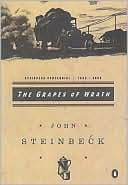
The Grapes of Wrath by John Steinbeck - Tammy's review

Title: The Grapes of Wrath

Author: John Steinbeck

First Published: 1939

No. of Pages: 464

Synopsis (from B&N): Although it follows the movement of thousands of men and women and the transformation of an entire nation, The Grapes of Wrath is also the story of one Oklahoma farm family, the Joads, who are driven off their homestead and forced to travel west to the promised land of California. Out of their trials and their repeated collisions against the hard realities of an America divided into Haves and Have-Nots, Steinbeck created a drama that is intensely human yet majestic in its scale and moral vision, elemental yet plainspoken, tragic but ultimately stirring in its insistence on human dignity.

Comments and Critique: John Steinbeck was a master storyteller. He had the ability to get you interested in the story and to hold your interest for page after page. The story of the Joads is heartbreaking but at the same time shows mankind’s strength of character in the face of overwhelming odds, especially in the character of Ma Joad. Without doubt, she was my favorite – she showed resilience through poverty, hunger, and death, all the while presenting a brave face to the outside world and trying everything she could to keep her family together.

It’s always been difficult for me to imagine what it was truly like to live through the Great Depression. The only family I have that was alive then is my grandmother. She’s told me a little about her life growing up on a central Florida farm as the 2nd oldest of 8 children, but has never wanted to talk much in detail about the experience. I’ve noticed that many elderly people do that, they either don't discuss it or they downplay the hardships that you know they suffered, often with the comment that, “We didn’t have much, but then neither did anyone else.” It’s almost like it wasn’t as bad because so many were suffering right alongside. That was also a theme in this book. Steinbeck really focused on the interaction of the migrants and showed how they looked out for one another, shared their food and lodgings, and provided moral support.

My copy of the book has extensive commentary, which provides a good look at the historical and social context of the story. My next step is to watch the movie version, which I’ve always heard is excellent, and see how it compares to the book.

Interesting facts:: John Steinbeck lived with an Oklahoma family and travelled with them to California as research for this book. The Grapes of Wrath won the Pulitzer Prize for fiction in 1940. John Steinbeck was awarded the Nobel Prize for Literature in 1962.

Would You Recommend This Book to Others: Yes

Interpreter of Maladies by Jhumpa Lahiri


Interpreter of Maladies by Jhumpa Lahiri, 1999
A Collection of Short Stories, 198 pages
Mariner Books/Houghton Mifflin Company

Winner of the 2000 Pulitzer Prize for Fiction and the PEN/Hemingway Award.

Interpreter of Maladies, Lahiri’s first book, is a collection of short stories depicting the lives of Indians or Indian immigrants. Some may immediately wonder how they could relate to the stories or characters. You may not to them individually, but what you will find is that the themes are universal thus eliminating such a concern.


“A Temporary Matter” centers on a couple estranged by the loss of a child:

But nothing was pushing Shukumar. Instead he thought of how he and Shoba had become experts in avoiding each other in their three-bedroom house, spending as much time on separate floors as possible.
“Sexy” about a woman having an affair with a married man and coming to terms with the choices she’s made:
There was no reason to put it on. Apart from the fitting room at Filene’s she had never worn it, and as long as she was with Dev she knew she never would. She knew they would never go to restaurants, where he would reach across a table and kiss her hand. They would meet in her apartment, on Sundays, he in his sweatpants, she in her jeans.
“Mrs. Sen’s” showing the hardships faced emotionally by someone having to adjust to a new life. One in a country where there is little to connect to on any level as there is no immediate family or a community of those with similar backgrounds to lean upon for support, thus the homesickness felt is as much as any one person can bear:
Mrs. Sen took the aerogram from India out of her purse and studied the front and back. She unfolded it and reread it to herself, sighing every now and then. When she had finished she gazed for some time at the swimmers.

“My sister has had a baby girl. By the time I see her, depending if Mr. Sen gets his tenure, she will be three years old. Her own aunt will be a stranger. If we sit side by side on train she will not know my face.”
There are nine stories in total and in each one there was always some aspect that touched me in some way that I could not picture myself, or anyone I know, caught up within those same circumstances and possibly having the same responses. I can say in truth, that I did not understand every nuance in some of the stories, as understanding the culture would have been helpful. But really, it does not detract from the enjoyment I had in reading this book. In fact, it was the first one I completed when participating in the recent Read-A-Thon.

As I stated in an earlier post, this book has got to be one of the better Pulitzer Prize Winners I have read in some time. In addition, I have not read many Short Story collections this year even though I had planned to.

I am glad I decided that this should change. This was a wonderful book and will be a nice addition to my personal library.

For this reason I am giving it 5 stars and a definite ‘must read’ recommendation.


Sunday, October 19, 2008

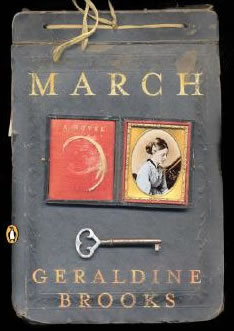
March by Geraldine Brooks

In reading Little Women, I never really gave much thought to Mr. March and his experiences as a chaplain in the Civil War. (In fact, when I read it at a much younger age, I didn't even know it was during the Civil War!) This 2006 Pulitzer Prize winner gives us a chronicle of what his experiences might have been, and the realities of war that he does not write about in his letters home. A lot of his experiences are based on Louisa May Alcott's father, a transcendentalist who rubbed shoulders with Emerson and Thoreau. March encounters racism, both from Northerners and Southerners, and other cruelty that he struggles to take action against, but fails. We learn in flashbacks about his courtship with Marmee (and learn where Jo gets her temper from!) and why the family has become so poor.
The best word I can use to describe this "listen" is "interesting." It didn't grab me in any way, it was just "interesting" to see the different perspectives of various individuals and groups during the Civil War. I like to meet famous people in works of fiction and experience what a conversation with them would be like, and there are a few instances of this in this book. The books I love usually fit into one of two catergories--great storytelling or great writing. Occasionally a book fits into both. March didn't fit into either one for me, but I don't regret reading it, if that makes sense.


Where I Stand Coming Into This

Here are the ones I have read previous to joining the Pulitzer Project:

1921 The Age of Innocence
1928 The Bridge of San Luis Rey
1932 The Good Earth
1937 Gone With the Wind
1940 The Grapes of Wrath
1945 A Bell for Adano
1961 To Kill a Mockingbird
1999 The Hours
2004 The Known World
2005 Gilead
2006 March
2007 The Road

I think I have a couple of these books reviewed in archives. I'll see if I can find and post them.

Gilead by Marilynne Robinson (Audiobook)

Read in November 2007:
I found this novel uplifting and deeply thoughtful. John Ames, a preacher in 1956 Gilead, Iowa, knows he is nearing the end of his life. The novel is a letter to his almost 7-year-old son who will not know or remember much of his father. He writes of his family's history, his thoughts on life and religion, and tells of some difficult experiences he has had learning forgiveness. This is one of the few audiobooks I've listened to that I loved the voice of the narrator. This was a good one to listen to, and reading it around Thanksgiving was appropriate, because you see the things that are important to John Ames at the end of his life. I checked out the books so I could quote some of my favorite passages, but there were just too many. It's far from a plot-driven book, but I see it as one that can sit on your nightstand and be read a little bit each night.

Sunday, October 12, 2008

Laura's Review - The Yearling


The Yearling
Marjorie Kinnan Rawlings
354 pages

The Yearling is a coming-of-age story about a boy, Jody, living in the Florida wilderness during the late 1800s. Over a year's time, Jody grows from a 12-year-old focused mostly on recreation, to a contributing family member working alongside his father to provide for his family. Jody's family lives off their crops, game hunted in the forest, and trades made in a nearby village. It's a tough life full of back-breaking labor.

At Jody's side during most of the year is Flag, a fawn adopted after being found orphaned. As an only child, Jody longs for companionship, and his parents long resisted allowing him to adopt wild animals as pets. For some reason, in this case, they relented. Flag is a devoted pet, often at Jody's side, but as he grows it becomes more and more difficult to keep him on their farm.

This book is well-written -- it won the Pulitzer Prize after all -- and the very descriptive language brought the landscape to life. However, I tired of the graphic hunting scenes, and I was never emotionally invested in Jody and his family. I was hoping for a more compelling read and was disappointed. ( )

My original review can be found here.

Saturday, September 20, 2008

Laura's 2008 Goals and Progress

I joined The Pulitzer Project because I love reading prize-winning books. I read 5 Pulitzer winners in 2007, which was a lot less than I hoped. I’ll start 2008 having read 12 of the 81 winners. Before the year is out, I’d like to read another 8-10, including:

Complete List of Pulitzers Read (with links to reviews where available)
2008 - The Brief Wondrous Life of Oscar Wao (Diaz) (DNF)

2007 - The Road (MacCarthy)
2006 - March (Brooks)
2004 - The Known World (Jones)
2003 - Middlesex (Eugenides)
2001 - The Amazing Adventures of Kavalier & Clay (Chabon)
2000 - Interpreter of Maladies (Lahiri)
1995 - The Stone Diaries (Shields)
1994 - The Shipping News (Proulx)
1992 - A Thousand Acres (Smiley)
1988 - Beloved (Morrison)
1973 - The Optimist’s Daughter (Welty)
1961 - To Kill a Mockingbird (Lee)
1958 - A Death in the Family (Agee)
1953 - The Old Man and the Sea (Hemingway)
1940 - The Grapes of Wrath (Steinbeck)
1939 - The Yearling (Rawlings)
1937 - Gone with the Wind (Mitchell)
1932 - The Good Earth (Buck)
1921 - The Age of Innocence (Wharton)

Laura's Review - The Amazing Adventures of Kavalier and Clay

The Amazing Adventures of Kavalier and Clay
Michael Chabon
636 pages

In 1939, Josef Kavalier's parents, wishing to keep him safe from persecution against the Jews, arranged for him to travel from Prague to the United States. On arrival in New York City, he met his cousin Sam Klayman and, through both talent and luck, the two young men were able to launch a superhero comic book just at the point when the genre was becoming popular. The Amazing Adventures of Kavalier and Clay is the story of their business partnership and their lifelong friendship.

The book covers a period of some twenty years and is both broad in its scope and deep in its many layers of character and plot. Joe is the most well-developed character in the novel. In Prague he trained as a magician and a Houdini-like escape artist. He is also a very talented artist. However, he is haunted by guilt and other demons. Tormented by leaving his family behind, he tries desperately to rescue them and acts out his anger on Germans he encounters in New York City. He finds love in Rosa Saks, but leaves her behind when, immediately after the bombing of Pearl Harbor, he enlists in the Navy to act out his need for revenge on the Germans.

Sam Klayman's character is somewhat less developed, but still appealing. Abandoned by his father and devoted to his mother, it is Sam who spots Joe's artistic talent and persuades his boss to launch a comic book featuring a character known as The Escapist. Sam is largely unaware of his sexual identity, and one of the more touching scenes involves both emerging awareness of his homosexuality, and his realization that society would not accept him if this were known. Sam proves himself a true friend when he sacrifices his own happiness in a selfless act for another person.

Despite its length, this book was an easy and fun read. In addition to the well-drawn characters, the book offers up historical detail concerning the comic book industry, the Empire State Building, World War II, and post-war New York City. It's easy to see why this book won the Pulitzer Prize. ( )

My original review can be found here.

Wednesday, September 10, 2008

The Good Earth by Pearl S. Buck

Pearl S. Buck's classic story of family and life in pre-revolutionary China. This did not take as long as I thought, and while sad at times, I liked the book. I think the prose is distinct, the story compelling and honest, and the characters very real. I liked the themes of the novel which explored man's relation to the earth, changing fortunes, China at the turn of the century, and women's role in society and family. She writes everything so deftly and without judgment; a very true story teller. I am very familiar with Chinese culture, family, and livelihood. Buck said she wrote about China because it was all she knew. She might have been a foreigner, but there is such an candid and wonderful perspective in her writing. Dare I say it, but this book is very Chinese. It is difficult to describe how she captured the Chinese characters and cultural identity so well. Once again, I found so much honesty in her writing. I liked how she painted the picture of O-Lan and the other women in Chinese society. While I appreciated the writing and the book, I do not think I will continue with the trilogy because I am not particularly attached to the characters beyond this book, and the stories can be rather sad. I would be interested in reading more of Buck's other stories.

Crossposted from aquatique.net.

Saturday, August 9, 2008

Laura's Review - The Old Man and the Sea


The Old Man and the Sea
Ernest Hemingway
128 pages


When reviewing a classic like The Old Man and the Sea, it's difficult to find something to say that hasn't already been said. This concise novella packs a punch in 128 short pages. Santiago is the old man in the title, a Cuban fisherman who has gone more than 80 days without a catch. He's a lonely man, ridiculed by other fishermen and forced to fish alone after losing his assistant (forced by his parents to fish with another, luckier, fisherman). Santiago decides to go further out into the sea than the other fishermen and, sure enough, snags a marlin larger than his boat.

The rest of the book recounts Santiago's efforts to reel in the fish (this task alone takes more than a day), and then bring the fish back to port. He demonstrates powerful mental and physical strength as he combats the marlin, sharks, hunger, fatigue, and loneliness. Much has been written about this work's themes of pride and redemption, and comparisons to Hemingway's late career. And while there are certainly symbols and messages in this book, it's also a great story that holds your attention the entire way through. ( )
My original review can be found here.

Tuesday, August 5, 2008

To Kill a Mockingbird by Harper Lee 1961

Harper Lee wrote one novel, To Kill a Mockingbird, and it won the Pulitzer prize in 1961. Its themes still resonate with readers and her novel has become a part of our culture. That, I believe, is success.

To Kill a Mockingbird by Harper Lee almost perfectly captures the main challenge of growing up: realizing human nature, both good and bad.

(I say "almost" perfect because I am sure there are faults in the novel, but I love this novel so much that I don't want to search for them.)